REIT investors who treat the sector as a single bet on falling interest rates are getting punished again, as divergent stock performance shows that financing costs, property quality and balance-sheet discipline now matter more than the broad real estate theme.
VNQ, Realty Income, Prologis Split as REITs Diverge
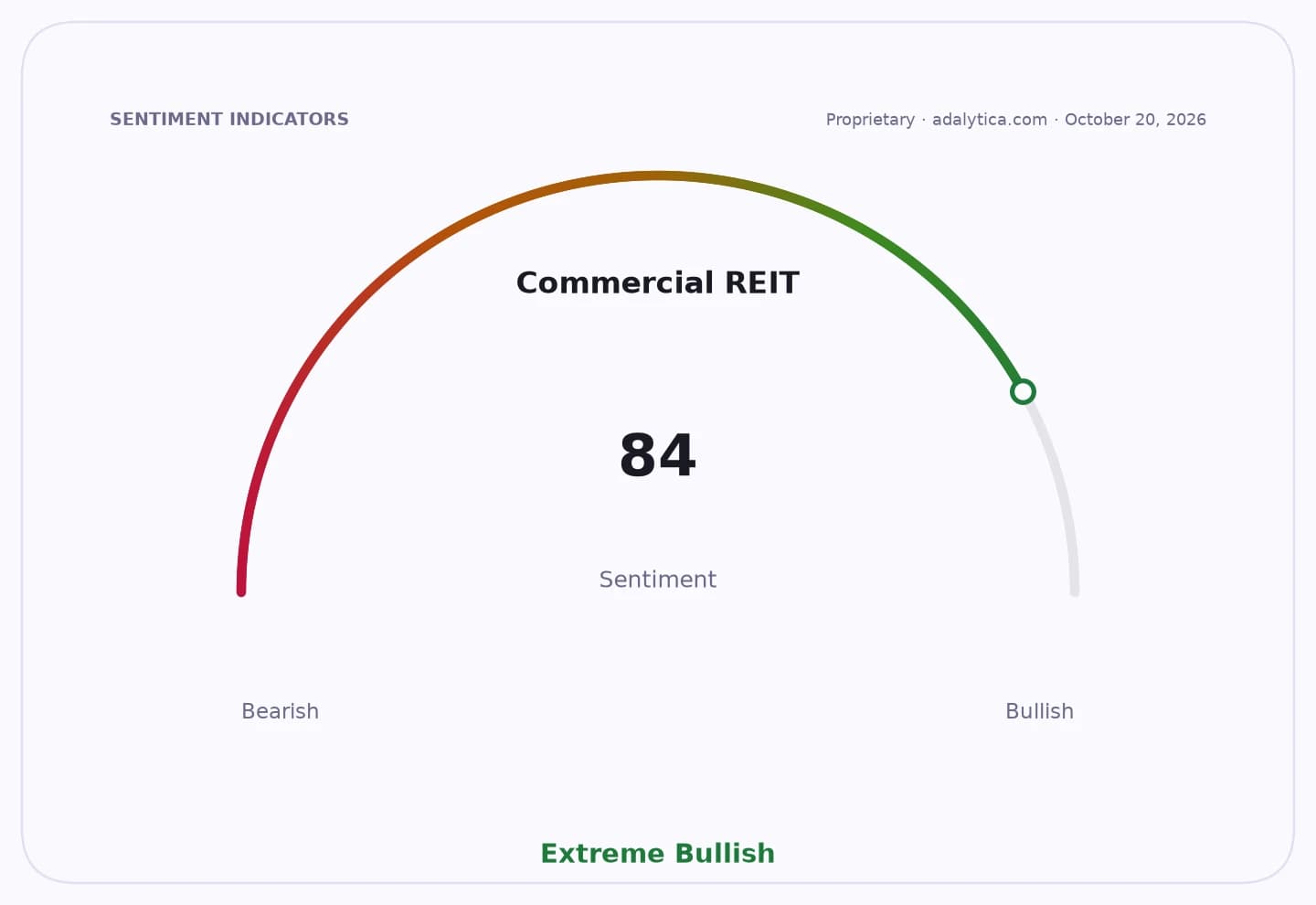
That is the core error behind many REIT losses: assuming lower bond yields alone will lift all property stocks. In reality, the market is rewarding only those landlords that can defend cash flow, fund growth without overleveraging and own assets that still attract capital even when borrowing remains expensive. The latest trading in VNQ, Realty Income and Prologis underscores the split between rate-sensitive sentiment and property-specific fundamentals.
The Vanguard Real Estate ETF, VNQ, is still trading below its recent high even after a sharp rebound, closing at 92.28 on Oct. 20 after a swing between 86.05 in early January and 97.55 in July. Its 50-day moving average remains above the current price, while the 200-day average is barely below it, a sign the broader REIT complex is still trying to prove the October recovery can hold. Technical readings are improving, but not enough to argue that the sector has fully repaired the damage from the rate shock that hit in September and early October.
That matters because REITs are unusually sensitive to the cost of capital. Higher Treasury yields pressure valuations directly by raising the discount rate on future rental income, and indirectly by making refinancing and acquisitions more expensive. For investors, the mistake is not just buying too early in a tightening cycle; it is buying the wrong names in the belief that all REITs will recover together once yields stabilize.
Realty Income, long viewed as one of the sector’s defensive blue chips, illustrates the point. The stock has fallen to 56.34 from 64.20 in mid-February and still trades below its 200-day moving average, even after rebounding from an October low near 53.35. Its RSI has recovered to 64.1 from deeply oversold levels, but the MACD remains negative, suggesting the shares are improving before the trend has fully turned. Investors are paying for a durable dividend stream, but they are still demanding proof that the payout can keep growing without being overwhelmed by financing costs.
Prologis tells a different story. The industrial landlord remains the strongest of the three on a longer horizon, but it too has surrendered ground from the summer peak. Shares fell to 127.47 on Oct. 20 from 148.76 in July, and the stock remains below both its 50-day and 200-day moving averages. That kind of pullback reflects a market that still likes logistics real estate’s structural growth, but is no longer willing to pay peak multiples for it while rates stay elevated.
The more interesting investment signal is not that REITs are broken, but that capital is becoming more selective. News around core commercial assets, including offshore REIT interest in prime properties such as Sydney’s tallest tower, shows there is still money for trophy assets with durable cash flow. What the market is rejecting is the lazy assumption that macro easing alone will rescue the entire sector.
That is why the biggest mistake REIT investors make is buying the index and calling it diversification. The next leg of performance is likely to depend on asset quality, lease duration, leverage and management’s ability to refinance without diluting shareholders. If bond yields fall, the whole sector may lift. But only the best-capitalized names are likely to turn that relief into lasting outperformance.
| Entity | Gains | Losses |
|---|---|---|
| High-quality REITs with strong balance sheets | ▲Lower refinancing risk | ▼Less-capitalized peers |
| Selective property buyers | ▲Better pricing on assets | ▼Sellers of weaker assets |
| VNQ holders waiting for rate relief | ▲Broader sector rebound potential | ▼Investors expecting a uniform rally |
| Realty Income and Prologis | ▲Defensive cash flows, eventual rerating | ▼Investors chasing quick beta rebounds |