A sharp swing in Treasury yields and inflation is forcing U.S. REIT ETF return models to care less about broad sector sentiment and more about when data are released, making temporal resolution and model specification the real edge in forecasting the next move.
VNQ, IYR, XLRE Fall on Treasury Yield Swings
That matters because real estate investment trusts are still one of the market’s most rate-sensitive asset classes. The 10-year Treasury yield was forecast at 5.227% for Oct. 9, just off the 5.22% reading on Oct. 8, while the consumer price index was projected at 333.8642 for Sept. 1 after a reading of 334.131 in August. Unemployment is seen easing to 4.09% in October from 4.2% in September. For REITs, those macro inputs do not just shape valuation multiples — they drive cap rates, financing costs and investor appetite in a way that can overwhelm company-specific fundamentals in the short run.
Sentiment IndicatorsⓘProprietary · adalytica.com · October 12, 2026
This is a snapshot — live sentiment, awareness and momentum for 130+ markets update continuously in the dashboard.Open AlphaPulse
The market is already behaving that way. VNQ, the Vanguard Real Estate ETF, closed at 90.65 on Oct. 9 after a recent slide from 97.55 in July, while IYR ended at 96.1, also well below its summer highs. XLRE, the real-estate Select Sector ETF, finished at 41.61 after trading as high as 44.86 in June. All three remain above their 200-day moving averages, but recent weakness, softer relative strength readings and declining momentum point to a sector that is being repriced around macro time series, not just property cash flows.
That is why release-aware forecasting matters. In REITs, the market does not trade inflation or jobs in the abstract; it trades the calendar. A CPI print or payrolls surprise can reset rate expectations immediately, while REIT ETF returns often react with lags that depend on whether the market is digesting the first revision, the headline, or the follow-through in Treasury yields. In practical terms, a model that ignores announcement timing, lag structure and regime shifts will miss the inflection points that matter most for entry and exit.
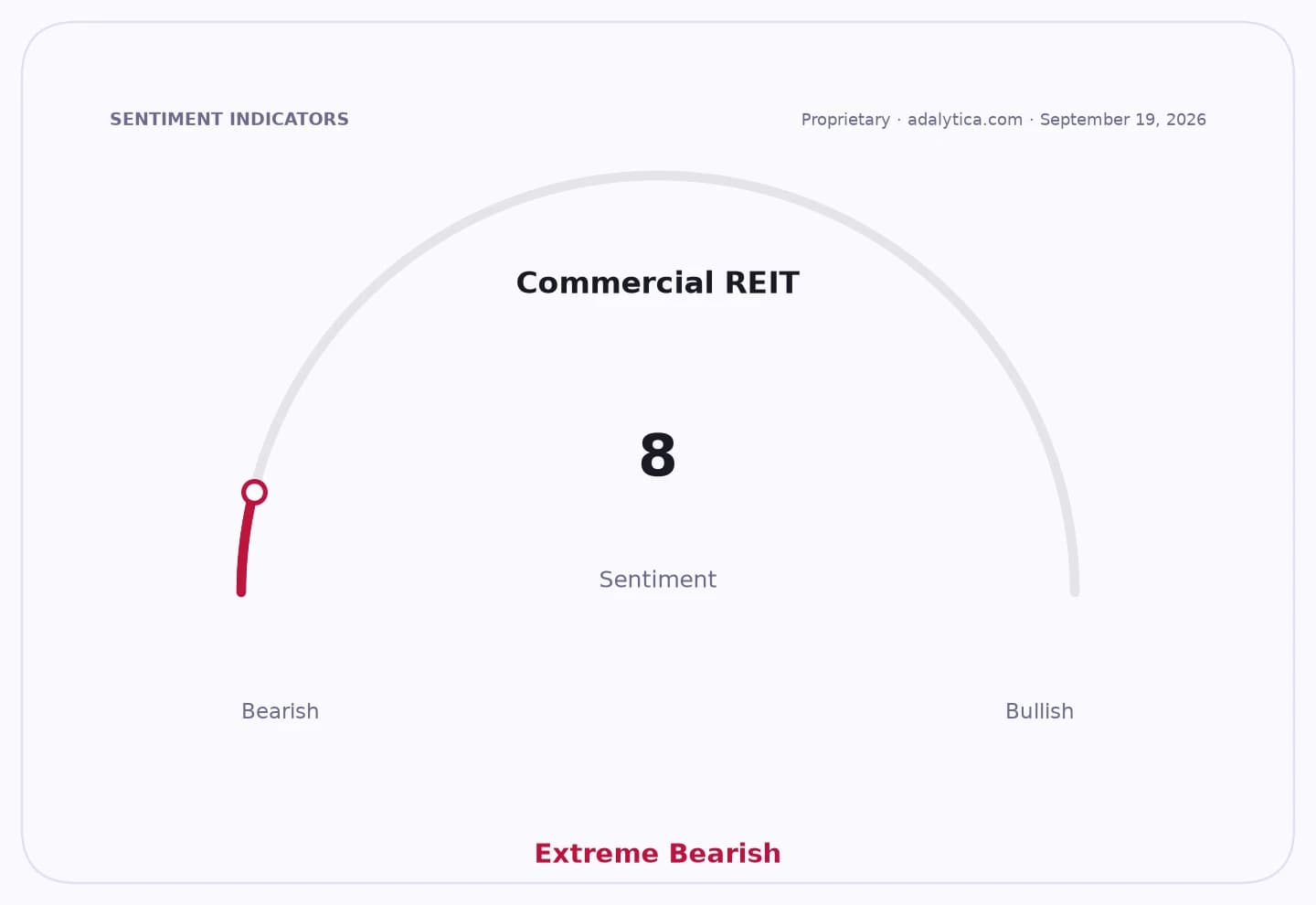
The wider setup also favors selective positioning over passive exposure. Adalytica’s commercial REIT sentiment reading for VNQ sits at 75, labeled Greed, even as technicals show the ETF still below its recent peak and momentum has weakened. TLT, the long-duration Treasury ETF, shows extreme fear awareness, underscoring how sensitive the market remains to rate volatility. That combination often creates the best setup for investors who can distinguish between a temporary yield shock and a genuine change in the rate regime.
The investment takeaway is straightforward: the next big edge in U.S. REITs is not guessing the sector direction in the aggregate, but modeling the timing of macro releases against yield moves and REIT ETF responses. Investors who focus on release-aware signals should be better positioned to buy weakness in high-quality REIT exposure when inflation and yields stabilize, while avoiding the trap of treating every macro print as equally important.
| Entity | Gains | Losses |
|---|---|---|
| Release-aware REIT modelers | ▲Better entry timing | ▼Noise from untimed signals |
| High-quality REIT ETF holders | ▲Opportunity on pullbacks | ▼Higher rate volatility |
| Treasury sellers / duration bears | ▲Yield-driven pressure on REITs | ▼REIT valuation support if yields fall |
| Passive REIT investors | ▲Simpler exposure | ▼Missed timing advantages |