U.S. stocks ended the week higher as buyers stepped in after Thursday’s selloff, but the real story for investors is that the rebound came despite another rise in bond yields, a combination that keeps pressure on equity valuations and leaves the market dependent on cooling inflation fears.
U.S. Stocks Rebound as Treasury Yields Rise

The Dow Jones Industrial Average gained 423 points, or 0.83%, while the S&P 500 rose 0.59% and the Nasdaq Composite added 0.64%. The late-week bounce followed a volatile stretch that saw traders digest a sharp selloff a day earlier and another leg up in Treasury yields on Friday. That matters because the market’s advance has been built on the assumption that growth can stay resilient even as borrowing costs remain sticky.
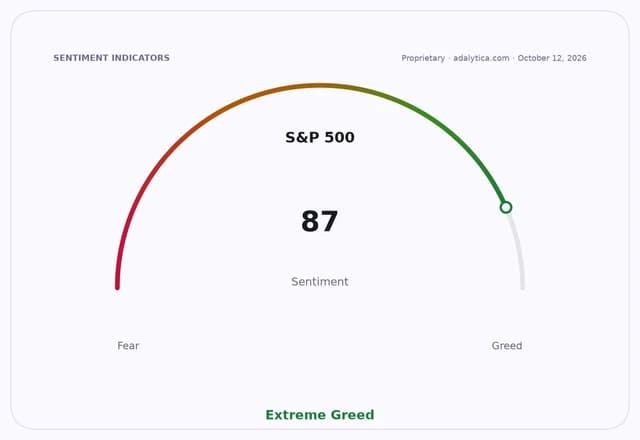
Sentiment IndicatorsⓘProprietary · adalytica.com · October 12, 2026
This is a snapshot — live sentiment, awareness and momentum for 130+ markets update continuously in the dashboard.Open AlphaPulse
The yield move is the more important macro signal here. When rates rise, the discount rate on future earnings rises too, which is exactly the kind of math that can compress multiples in the market’s highest-valuation names. That is why the rally was encouraging, but not yet convincing: it showed buyers are still willing to defend risk assets, even as inflation anxiety refuses to go away.
Oil slipping slightly helped ease some of the pressure, but the broader backdrop remains one of tight financial conditions and fragile confidence. The U.K.’s 30-year gilt yield touching 6% underscored that the bond-market stress is not just a U.S. problem. A stronger dollar also kept pressure on the yen and added another headwind for global liquidity.
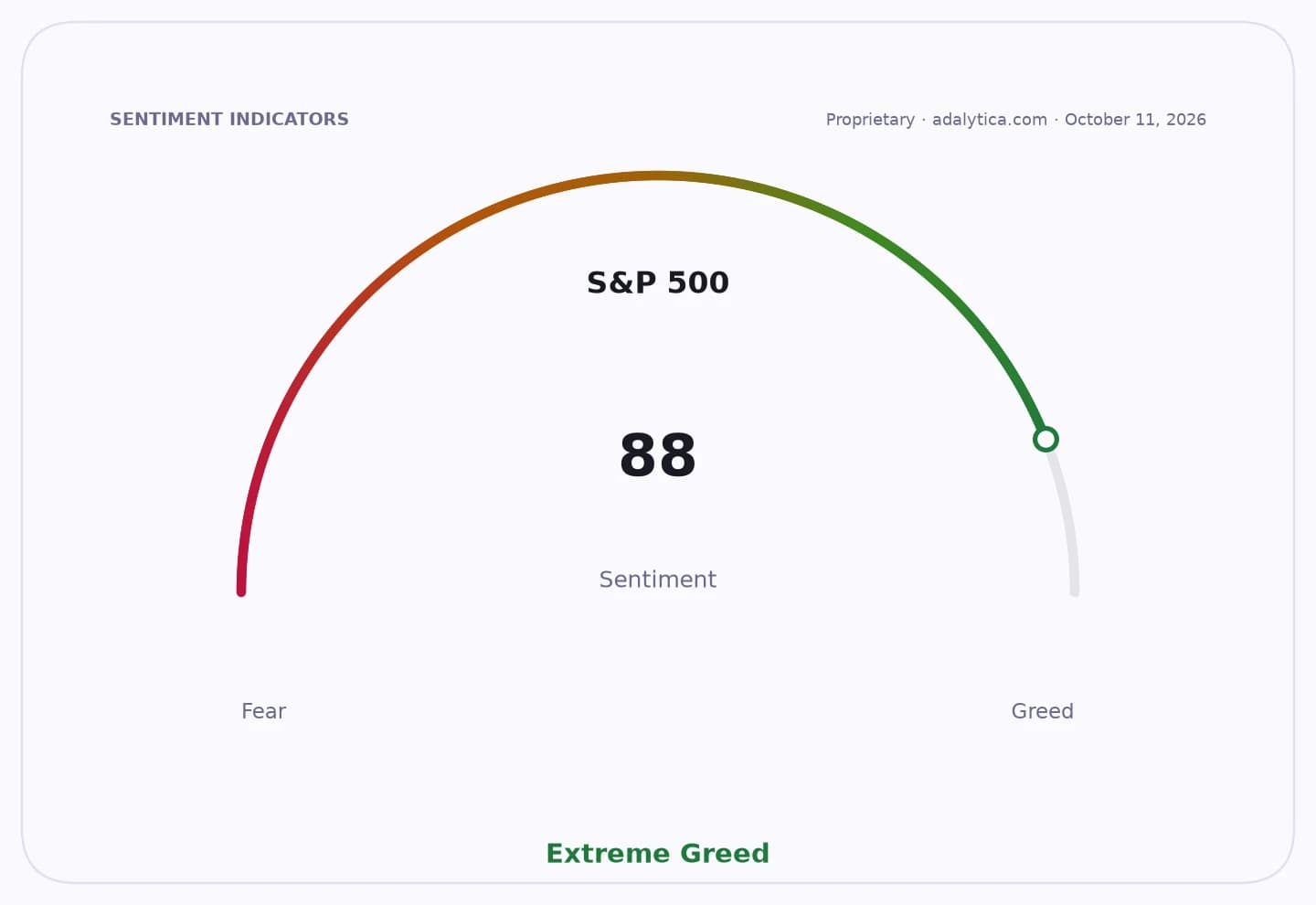
For investors, this is a market where the winners are likely to be selective rather than broad-based. The 50-day moving averages on major U.S. equity benchmarks remain intact, but momentum has become less one-way, and proprietary Adalytica trade signals still show extreme greed in the S&P 500 even as U.S. Treasury bonds sit in extreme fear. That kind of split usually means equities are vulnerable to sharp rotations whenever rates jump again.
The opportunity, in our view, is not to chase the index after one strong session, but to position for the next phase of the rate cycle. If yields keep climbing, defensive cash flow, energy, banks and other balance-sheet-heavy names should hold up better than long-duration growth. If inflation expectations stabilize, beaten-up rate-sensitive sectors can rebound quickly. Either way, the market is telling you the same thing: rate risk is still the dominant catalyst, and the next durable rally will belong to investors who respect it.
| Entity | Gains | Losses |
|---|---|---|
| U.S. equities | ▲Friday rebound | ▼Rate-sensitive valuations |
| Dow Jones Industrial Average | ▲423-point weekly finish | ▼Thursday sellers |
| Treasury bonds | ▲Short-duration safety demand | ▼Long-duration bond holders |
| Oil producers | ▲Lower input-cost fears ease | ▼Crude price bulls |
| Growth stocks | ▲Risk appetite returns briefly | ▼Rising-yield backdrop |