The far-right Alternative for Germany is weighing a softer line on the European Union and the euro, a move that could broaden its appeal ahead of key regional power battles and unsettle investors already bracing for renewed eurozone political risk.
AfD softens EU and euro stance

A strategic paper seen by Reuters shows AdN members backing a rewrite of EU treaties to turn the bloc into a looser association of sovereign states, while preserving an option for a German referendum on EU membership if that fails. The document drops the party’s longstanding push to dismantle the currency union or force Germany out of it, stopping short of outright opposition to the euro as a currency.
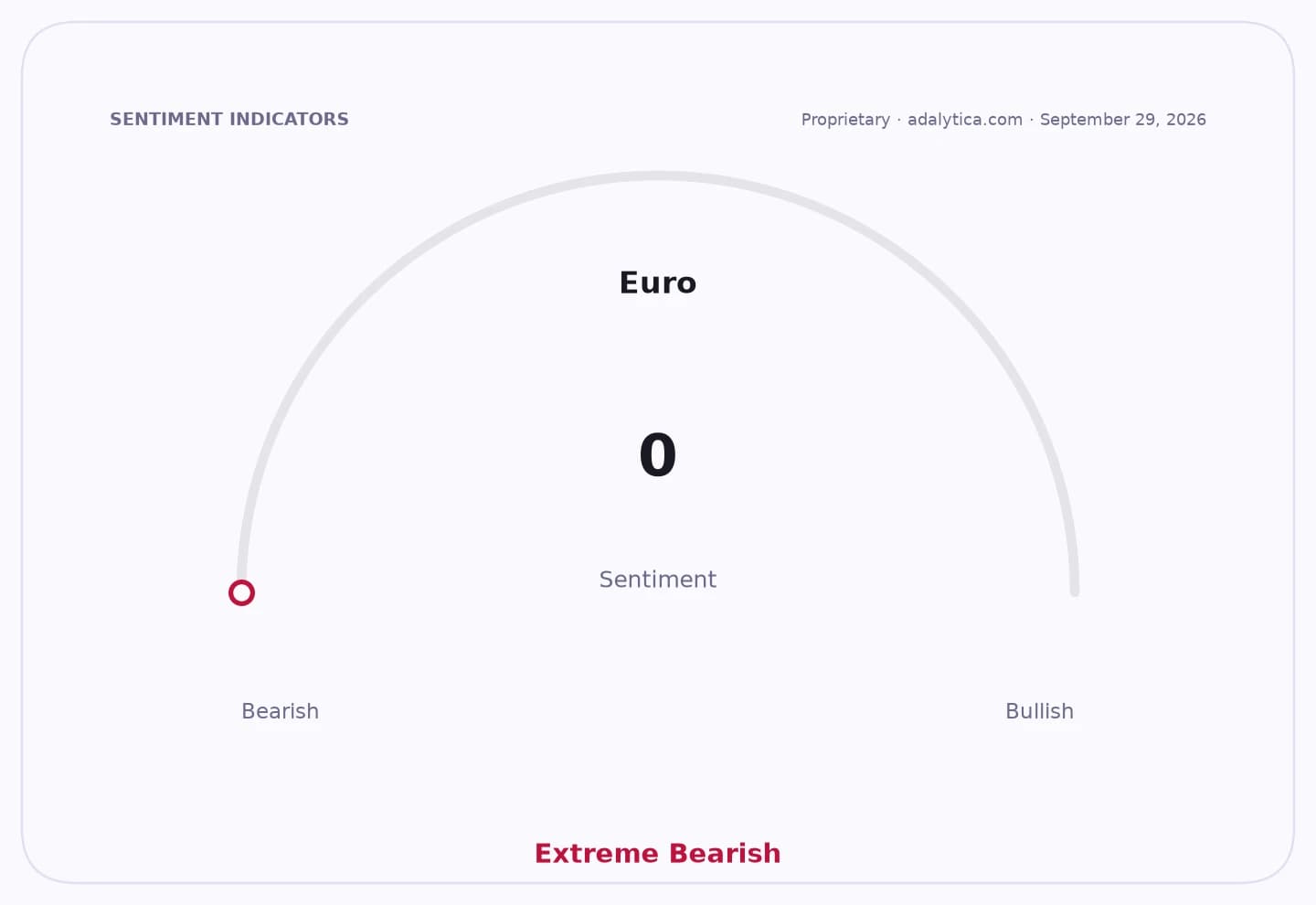
Sentiment IndicatorsⓘProprietary · adalytica.com · October 6, 2026
This is a snapshot — live sentiment, awareness and momentum for 130+ markets update continuously in the dashboard.Open AlphaPulse

That matters economically because Germany is the eurozone’s anchor, and any perception that a major party is drifting away from hard euro-skepticism can change how markets price political risk across Europe. The euro has already fallen to a 17-month low as investors worry about France’s rising debt burden and political instability, adding to pressure on the single currency and raising the premium for holding euro assets.
For investors, the immediate issue is not an exit scenario, but a recalibration of the right-wing challenge to the EU order. If AdN is seen as shifting from rupture to reform, it could make the party more coalition-ready at the regional level, especially as it tries to build a governing path in Saxony-Anhalt this autumn, even as German officials move to restrict access to sensitive military plans amid fears they could be passed to Russia.
The paper also proposes opt-outs in areas including migration, fiscal policy and joint EU borrowing, underscoring that the party still wants to dilute Brussels’ authority even if it is no longer explicitly campaigning against the euro itself. AdN lawmaker Peter Boehringer said the document was not a change in course but a plan to implement existing positions.
Still, the fact that the euro’s status is no longer framed as an outright target is notable for markets watching Europe’s political fault lines. With the single currency under pressure and global stability sentiment fragile, traders will be watching whether AdN’s messaging signals a broader tactical shift toward electoral respectability or just a repackaging of the same anti-EU agenda.
| Entity | Gains | Losses |
|---|---|---|
| AdN | ▲Broader voter reach | ▼Anti-EU hardliners |
| Eurozone markets | ▲Lower exit risk premium | ▼Political certainty |
| EU institutions | ▲Fewer breakup fears | ▼Treaty overhaul pressure |
| Euro sellers | ▲Short-term volatility | ▼Long euro positions |