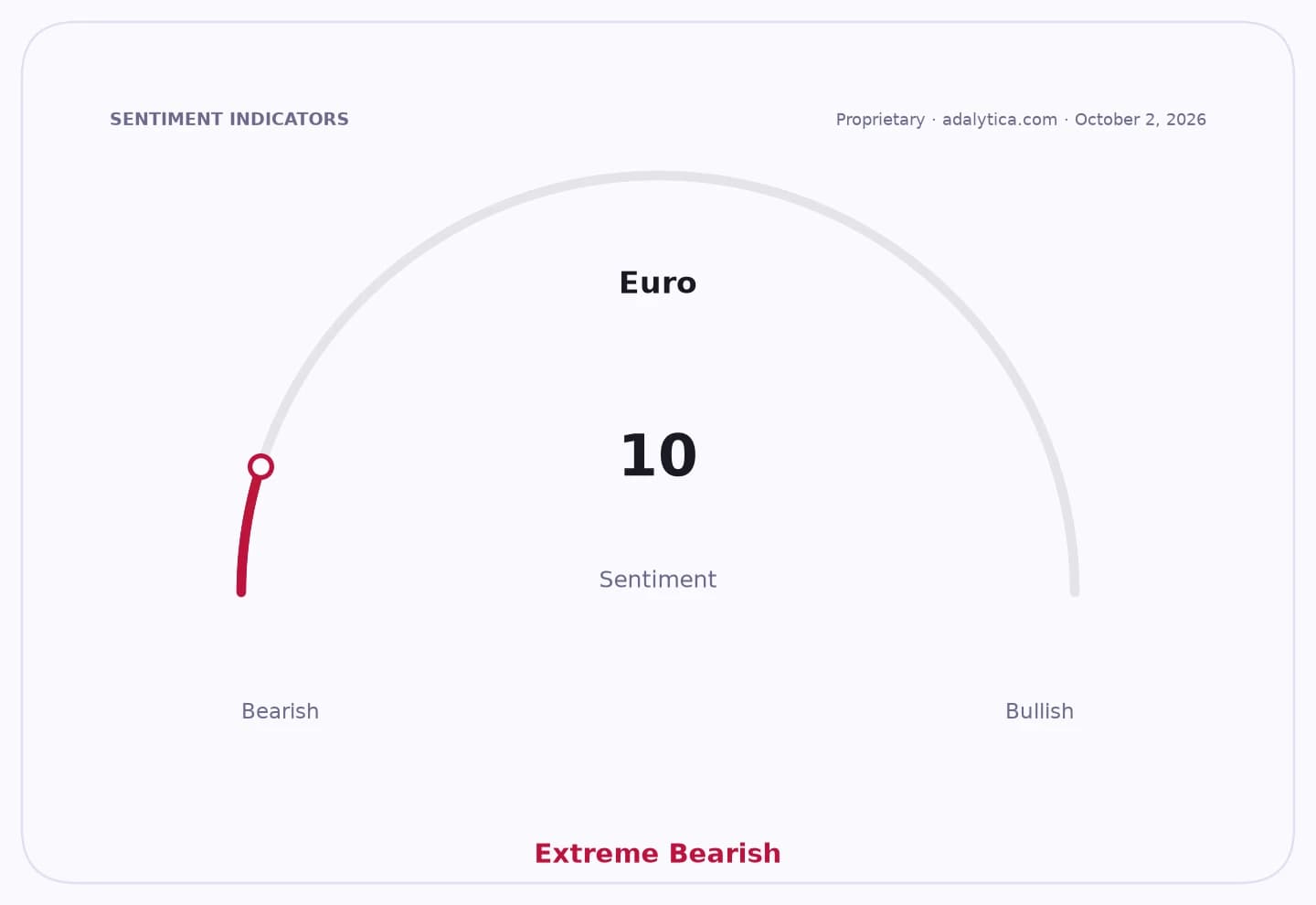
Europe is losing 120 billion euros in annual investment, a hole that helps explain why the region still struggles to turn political rhetoric into growth and why the euro’s recent strength may be running ahead of fundamentals.
Europe Faces 120 Billion Euro Investment Shortfall
That shortfall matters because capital is the fuel behind productivity, corporate spending and job creation. If Europe cannot keep more of its own investment at home, it risks falling further behind the US just as it is trying to finance defense, energy security and the buildout of AI infrastructure. The result is a weaker growth engine, thinner profit pools and a more fragile case for European assets commanding premium valuations.
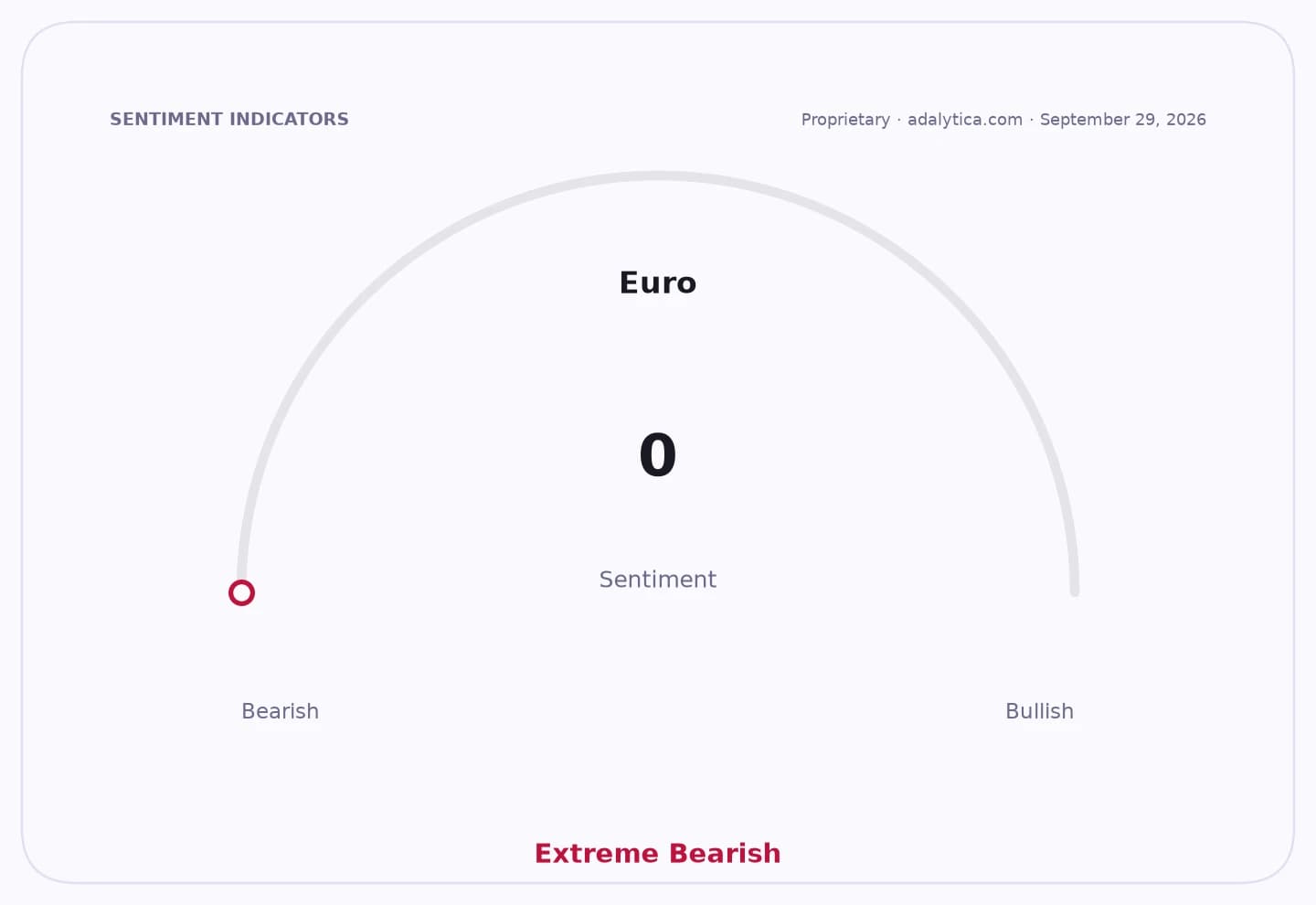
Sentiment IndicatorsⓘProprietary · adalytica.com · September 29, 2026
This is a snapshot — live sentiment, awareness and momentum for 130+ markets update continuously in the dashboard.Open AlphaPulse
The macro backdrop underscores the problem. US 10-year Treasury yields sit above 5%, while the 2-year note is near 4.9%, keeping American assets attractive even before you factor in scale and liquidity. In Europe, the euro has been bid recently, but FXE, the euro ETF, is trading below both its 50-day and 200-day moving averages, with RSI readings deep in oversold territory after a sharp slide. That suggests investors are losing conviction in the currency even as headlines around Europe’s strategic ambitions sound more ambitious.
For stocks, the split is becoming clearer. VGK, the Vanguard FTSE Europe ETF, has held up better than the euro, but it too remains below its 50-day average, a sign that European equities are not getting the kind of broad capital inflow that would normally follow a genuine growth re-rating. EFA, which tracks developed markets outside the US, has also lost momentum. The message from markets is blunt: Europe is still being treated more as a value and income market than as a secular growth story.
That is exactly why the 120 billion-euro investment leakage matters. Every euro of capital that leaves the region is a euro not spent on factories, grids, defense production, semiconductors or digital infrastructure. It also helps explain why Europe’s best-performing companies often look more like exceptions than a new regime. Without a durable domestic capex cycle, the continent remains dependent on policy support and external demand rather than building its own compounding engine.
The investable angle is straightforward. I believe the market is still underpricing the second-order beneficiaries of Europe’s scramble to reverse this drain: defense suppliers, grid and power equipment names, industrial automation, and companies tied to electrification and infrastructure renewal. The losers are obvious too — the euro, long-duration Europe-focused assets and any sector that depends on a strong domestic investment cycle without having pricing power or global reach.
The key catalyst now is whether policymakers convert concern into incentives that keep capital in Europe. If they do not, the investment gap will keep weighing on growth, the currency and equity multiples. If they do, the biggest winners will be the firms selling the shovels for Europe’s long-delayed industrial reset.
| Entity | Gains | Losses |
|---|---|---|
| US assets | ▲Capital inflows | ▼Europe’s retained savings |
| Europe defense/industrial firms | ▲Higher capex demand | ▼Underinvestment cycle |
| Euro | ▲Policy support if capital stays | ▼Outflows and weak growth |
| FXE / Europe ETFs | ▲Re-rating on reform | ▼Momentum break below moving averages |