An AfD-led government in Saxony-Anhalt would mark Germany’s first state run by the far right and could turn the eastern state into a test case for tougher migration policy, deeper social strain and a broader shift in the country’s political center of gravity.
AfD Leads Saxony-Anhalt Vote Before Sunday Election
Polls point to the Alternative für Deutschland winning the most votes in Sunday’s election, raising the prospect that the party could govern the state outright and break a postwar taboo in Germany. For minorities, migrants and refugees, the economic and social stakes are immediate: housing, schools, hospitals and local labor markets all depend heavily on foreign residents in a state already struggling with depopulation and an aging population.
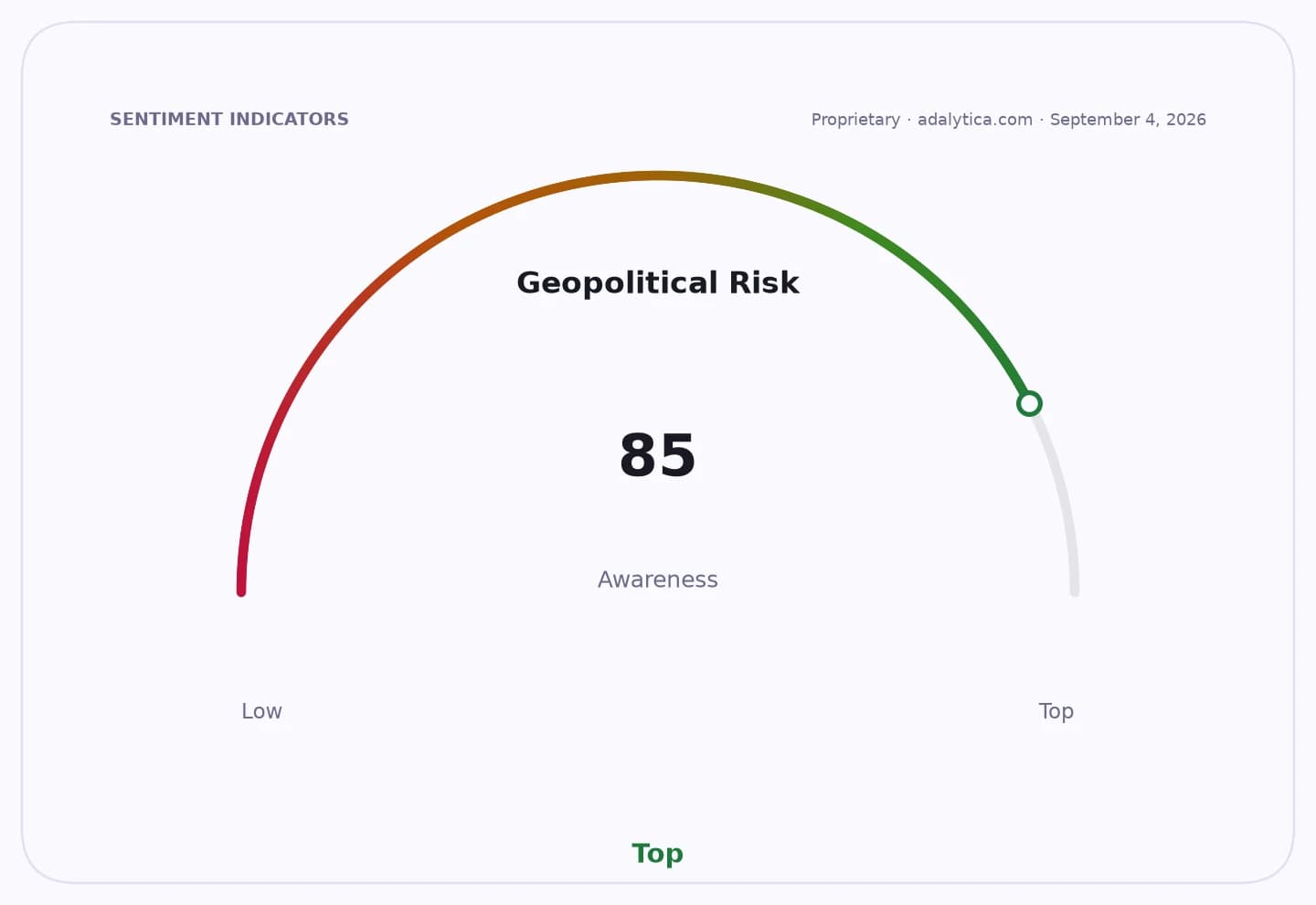
Sentiment IndicatorsⓘProprietary · adalytica.com · September 4, 2026
This is a snapshot — live sentiment, awareness and momentum for 130+ markets update continuously in the dashboard.Open AlphaPulse
Saxony-Anhalt’s average age of 48.2 is the highest in Germany, and foreign nationals make up about 9% of the population versus roughly 15% nationwide. In healthcare alone, the state medical association said 27.1% of doctors in hospitals do not hold a German passport, warning that rural coverage could become impossible without foreign staff.
That makes the election a labor-market story as much as a political one. Migrants are concentrated in hospitality, elder care and medicine, sectors that are already short of workers in much of eastern Germany. Any exodus after the vote would tighten labor supply further, risking longer waiting times, service cuts and pressure on already fragile local economies.
The AfD has campaigned on a sweeping rollback of migration policy, including separate schooling for refugee children, a “remigration” unit and an end to recognition of Ukrainians as war refugees. Critics say those pledges, together with the party’s hard-line rhetoric, are already intensifying racism and fear on the ground.
The social temperature has risen since the deadly December 2024 car attack on Magdeburg’s Christmas market, after which migrant groups reported a surge in racist abuse and assaults. Community leaders say many residents with migrant backgrounds are now weighing whether to leave, a warning that a far-right breakthrough could trigger a self-reinforcing flight of people the state can least afford to lose.
For investors, the immediate impact is indirect but real. Germany’s demographic squeeze is already a drag on long-term growth, and Saxony-Anhalt is a microcosm of the labor shortages confronting industry, healthcare and local services across the country. A sustained AfD advance could also deepen political uncertainty in Europe’s largest economy, with potential implications for regional business confidence, public spending priorities and the euro’s policy backdrop.
The near-term catalyst is Sunday’s vote, but the bigger risk for policymakers and markets is that Saxony-Anhalt becomes a blueprint for far-right gains elsewhere in Germany.
| Entity | Gains | Losses |
|---|---|---|
| AfD | ▲Historic state breakthrough | ▼Postwar political taboo |
| Migrants and refugees | ▲None | ▼Deportation risk, social backlash |
| Saxony-Anhalt employers | ▲None | ▼Labor shortages, staffing losses |
| German centrist parties | ▲Warning shot to mobilize | ▼More far-right momentum |