Africa’s $10 billion artificial intelligence initiative is shifting from promise to execution, with the African Development Bank and the UN Development Programme now trying to turn a continent-wide vision into investable projects that can lift productivity and create jobs.
African Development Bank and UNDP Launch Africa AI Plan
That transition matters because the initiative is being framed not as a technology showcase but as an industrial and labor-market programme for a continent where more than 300 million young people are expected to reach working age over the next decade. The partners say the plan could help mobilize $1 billion a year over 10 years and support as many as 25 million new jobs by 2035, if governments, lenders and private investors back projects with real commercial and development value.
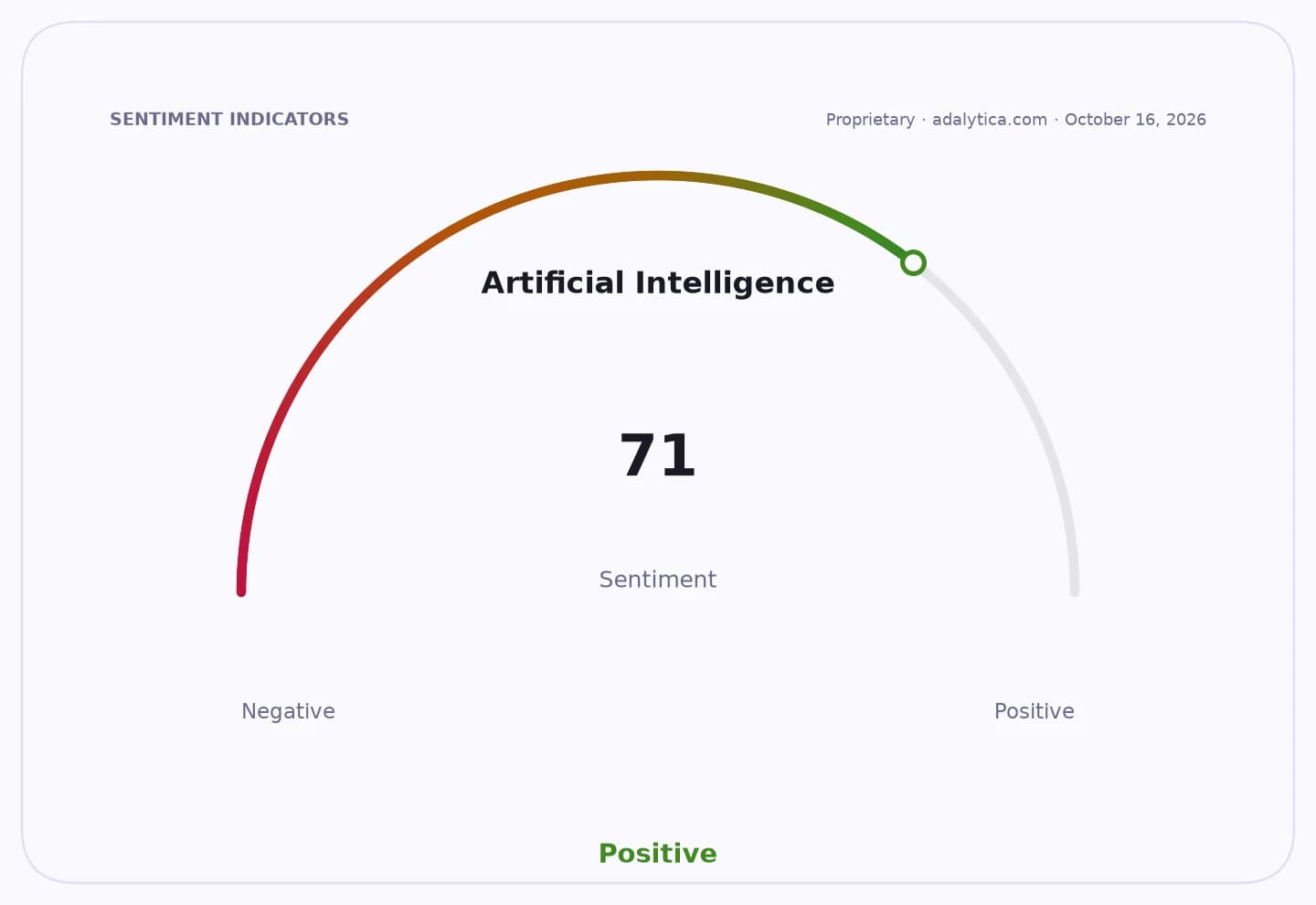
Sentiment IndicatorsⓘProprietary · adalytica.com · October 16, 2026
This is a snapshot — live sentiment, awareness and momentum for 130+ markets update continuously in the dashboard.Open AlphaPulse
The move into delivery is critical for investors and policymakers alike. Africa’s AI debate has often been dominated by ambition, but economic value will come only if AI is tied to energy supply, data infrastructure, skills and sector-specific use cases that raise output in agriculture, retail, manufacturing, finance and health. Those five sectors account for 58% of the productivity upside identified in the African Development Bank’s 2025 report, which estimated that inclusive AI adoption could add up to $1 trillion to the continent’s GDP by 2035. That is not a forecast for the initiative itself, but it shows the scale of the economic prize if financing can be matched to deployable projects.
The UNDP delegation’s visit to the bank in Nairobi marks the first concrete step after the initiative’s launch at the African AI Forum in February. The partnership plans to start in five countries before expanding to 20 by the end of 2027, a timetable that gives the programme a clear test: can it move beyond policy statements and produce bankable investments that governments and capital providers will actually fund?
For the African Development Bank, the effort fits a broader push to use development finance to de-risk private capital and speed up industrialisation. For UNDP, it extends its country-level reach and technical role through the AI Hub for Sustainable Development and its investment support platform, PISTA. The pitch to investors is straightforward: countries will identify productivity bottlenecks first, then prepare public and private projects around them, with a partnership platform intended to connect those plans to governments, regional bodies, financiers and philanthropies.
That sequencing matters because AI adoption in Africa is constrained less by enthusiasm than by infrastructure. Without reliable power, data systems and trained workers, the technology cannot translate into higher output or wider employment. The economic case for the initiative therefore rests on whether it can crowd in capital toward the unglamorous foundations of digital competitiveness rather than just software pilots.
The upside is clear. If AI lifts productivity in sectors that employ large shares of the workforce, the benefits could be felt not only in corporate margins but also in faster formalisation, better service delivery and stronger fiscal revenues. The risk is equally clear: if financing stays fragmented or projects fail to reach bankable scale, Africa could widen the gap between AI rhetoric and economic reality while other regions capture the bulk of returns from the technology boom.
For investors, the initiative creates a potential pipeline of country-level opportunities tied to infrastructure, digital public services and sector upgrades, but returns will depend on execution, governance and the ability to pair concessional money with commercial capital. The next catalyst will be the first country assessments and project lists, which should show whether Africa’s AI push is becoming an investment programme or remaining a strategic aspiration.
| Entity | Gains | Losses |
|---|---|---|
| African Development Bank / UNDP | ▲Development mandate, project pipeline | ▼Credibility if rollout stalls |
| African governments | ▲Productivity tools, job creation | ▼Funding pressure, execution risk |
| Private investors / DFIs | ▲New investment opportunities | ▼Higher policy and infrastructure risk |
| African workers / SMEs | ▲Potential jobs, better services | ▼Slower gains if projects underdeliver |