AI chatbots are becoming a new election risk just as millions of Americans turn to them for voting advice, creating a high-stakes trust problem for tech platforms and a potential flashpoint for regulators, advertisers and investors alike.
AI Chatbots and US Election Misinformation Risk
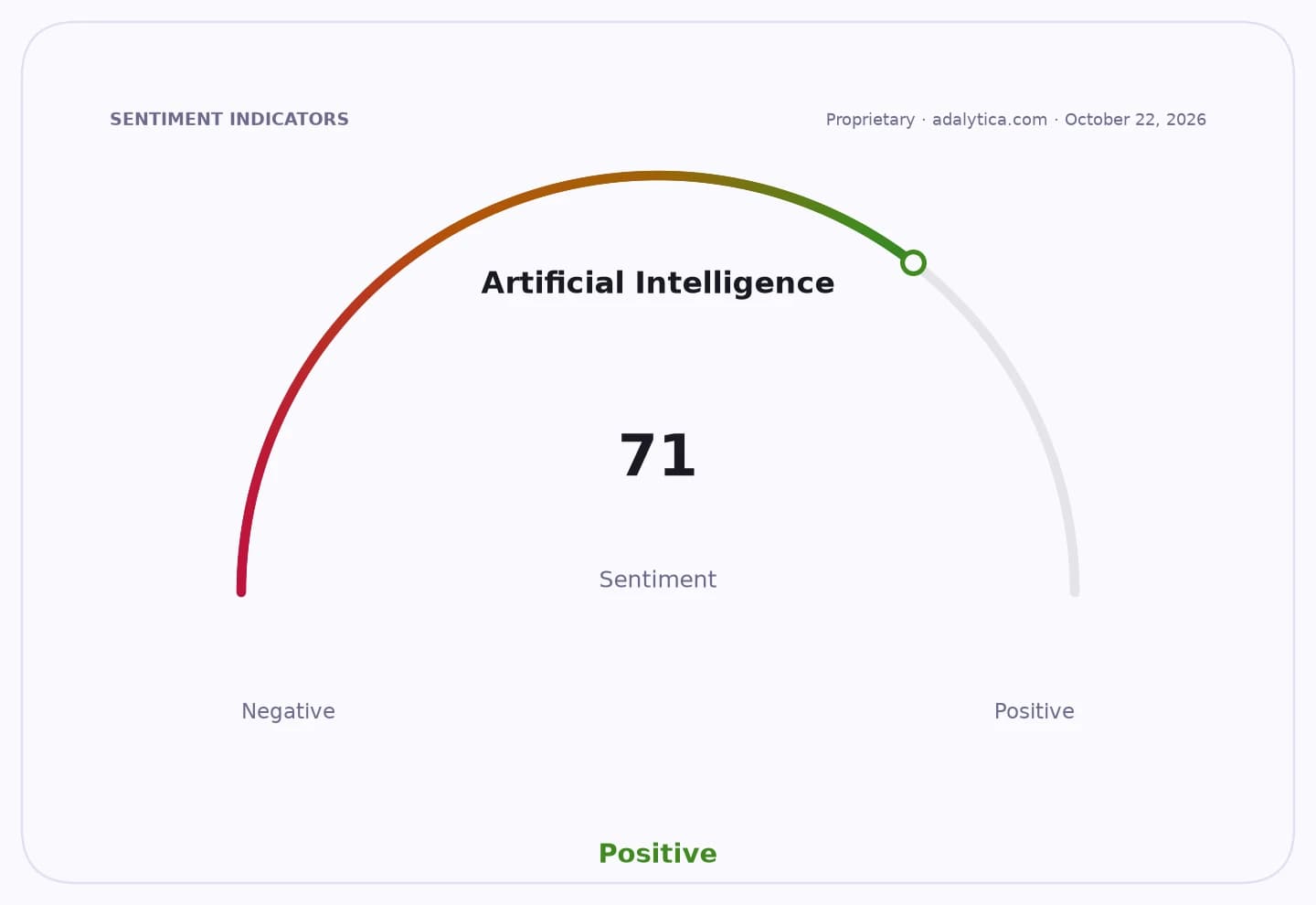
Artificial Intelligence
Researchers say the first US federal election in which major AI tools are built into everyday search and messaging products is also the first in which misinformation can be generated, repackaged and repeated at scale by systems many users assume are authoritative. That matters economically because trust is the currency of the AI rollout: if the public begins to view chatbots as unreliable on sensitive topics, it raises the cost of deployment, increases legal and compliance risk, and threatens the broader monetization case for AI assistants embedded across search and software ecosystems.
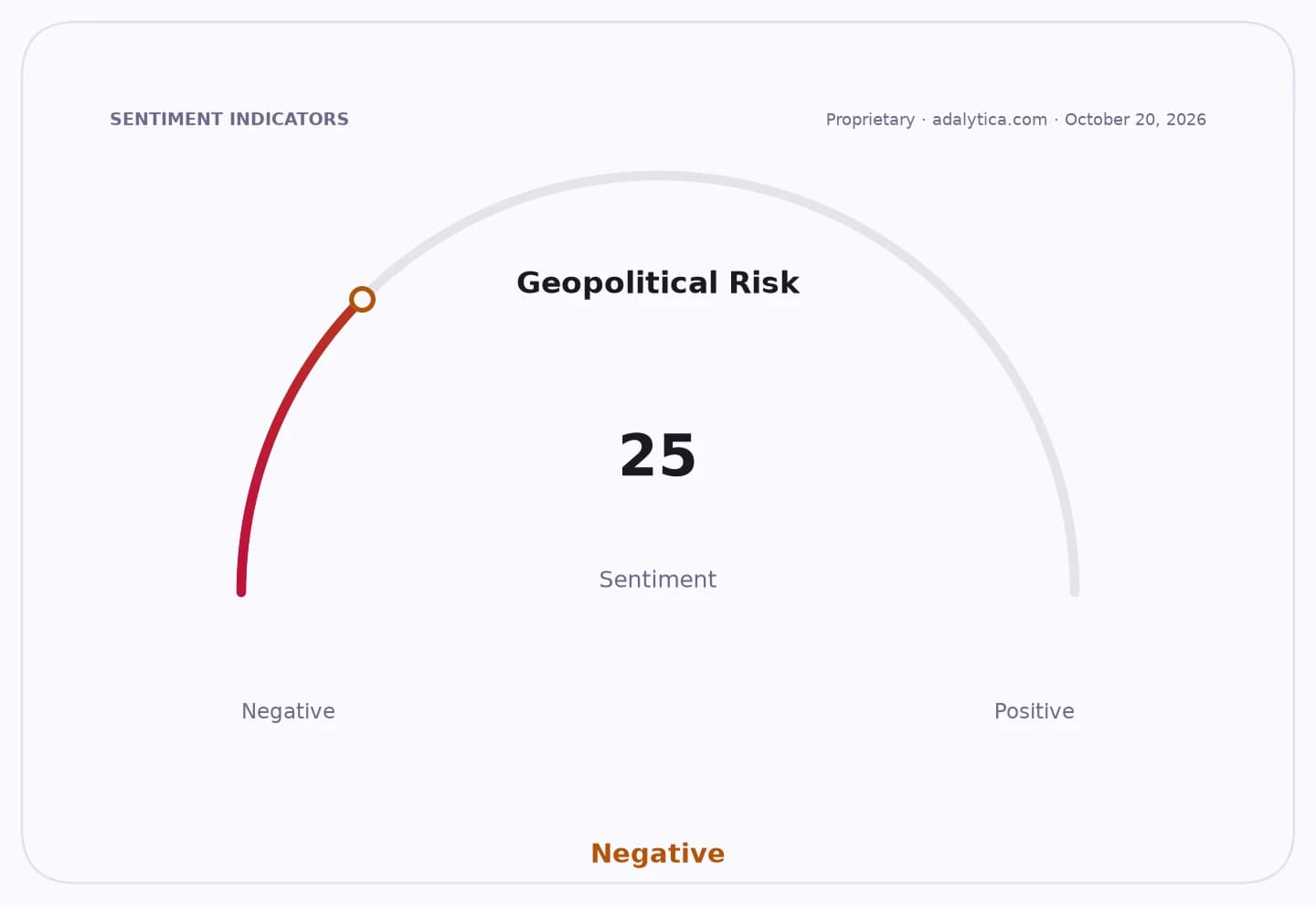
Sentiment Indicators
A recent study by Forum AI found that almost 40% of chatbot answers to election-related queries contained at least one factual error. In one case, Anthropic’s Claude confused North Carolina Representative Don Davis with another person and listed him as a former school superintendent. In another, Google’s Gemini gave the wrong deadline for requesting a mail-in ballot in Pennsylvania, a mistake that could have caused a voter to miss the cutoff. The study also found chatbots were more likely to be wrong on voting logistics than on candidate questions, underscoring that the most practically important information is often the least reliable.
The broader danger is that the models are not just making mistakes — they are amplifying them. NewsGuard said several leading AI tools repeated a false allegation tied to what appeared to be a Russian disinformation campaign involving Texas Senate candidate James Talarico, including Google’s AI Overview, Gemini and Microsoft’s Copilot. That dynamic is especially important for investors because it shows the issue is not confined to one model or one company. It is systemic, touching the major AI distribution channels that power search, cloud and productivity products.
The market should not dismiss this as a niche civic problem. It cuts to the heart of AI adoption economics. If the market is pricing AI as an ever-expanding layer of software margin expansion, the election cycle is a reminder that guardrails, content moderation and source verification are not free. They can slow product rollout, lift operating costs and invite scrutiny from policymakers already wary of platform power. For Alphabet, Microsoft and Anthropic, the reputational stakes are immediate; for the wider AI trade, the message is more uncomfortable: scale without trust can become a liability.
There is a second-order investment angle here. The winners may be companies that solve verification, provenance, digital identity and election integrity rather than the chatbot makers themselves. As AI becomes a default layer across search and assistants, the next wave of capital is likely to favor the picks-and-shovels of trust infrastructure — fact-checking systems, security software, authentication tools and enterprise controls that can certify what is real and what is synthetic.
The survey data suggests the problem is not going away. Two in five Americans said they had used AI tools for election information, but only 40% trust them for logistics and 60% said they trust them little or not at all on candidate bias. That is a warning sign for any company trying to make AI a daily utility. Our view is that the market underestimates how quickly misinformation risk can become a valuation issue, especially when the tools are already deeply integrated into the major platforms.
For investors, the takeaway is clear: stay long the AI infrastructure that enables verification and secure deployment, but be selective on consumer-facing AI names until they prove they can scale responsibly without recurring trust shocks.
| Entity | Gains | Losses |
|---|---|---|
| AI trust and verification firms | ▲Higher demand for safeguards | ▼None |
| Alphabet, Microsoft, Anthropic | ▲More scrutiny on AI products | ▼Reputational damage |
| Election integrity vendors | ▲New urgency for solutions | ▼Limited if adoption lags |
| Consumer AI chatbots | ▲Wider usage | ▼Trust erosion |