Artificial intelligence has moved from a productivity story to a public-risk story in the US, with a new Chapman University survey showing Americans now fear its impact on politics and the economy almost as much as war or serious illness.
AI fear rises in Chapman survey of Americans
Artificial Intelligence
That matters because public anxiety is increasingly shaping the regulatory and commercial backdrop for AI adoption. When more than half of respondents say they fear AI’s effect on political processes and nearly half worry about its economic consequences, the technology is no longer just a corporate capex theme or a stock-market catalyst. It is becoming a political issue that could influence rules on model deployment, deepfakes, election integrity and labor displacement.
Sentiment Indicators
Chapman University’s 12th annual Survey of American Fears, which polled more than 1,200 people, found 51.9% of respondents were afraid of AI’s impact on politics and the same share feared the possibility of another world war. Concern about serious illness in loved ones was nearly identical at 51.8%, while 49.7% said they worried about AI’s effect on the economy. It is the first time two AI-related concerns have entered the survey’s top 10, underscoring how quickly the technology has shifted from novelty to national anxiety.
The broader significance is that public fear can harden into policy pressure. Governments in the US and abroad are already debating rules around transparency, content labeling and model safety, and a population that increasingly associates AI with misinformation and systemic risk will make it easier for lawmakers to justify tighter oversight. That could raise compliance costs for developers and slow the rollout of some consumer-facing applications, even as firms continue to race to commercialize the technology.
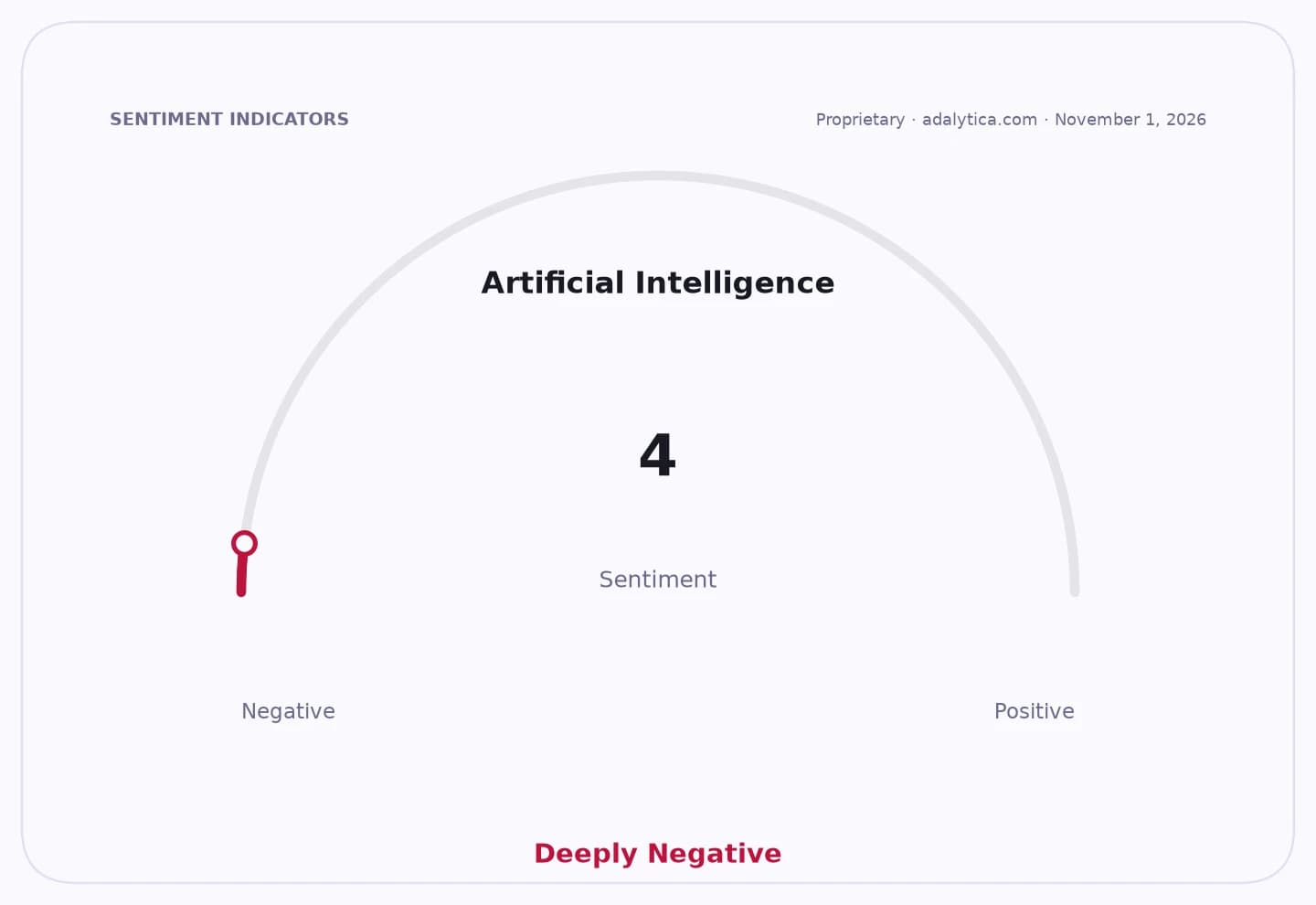
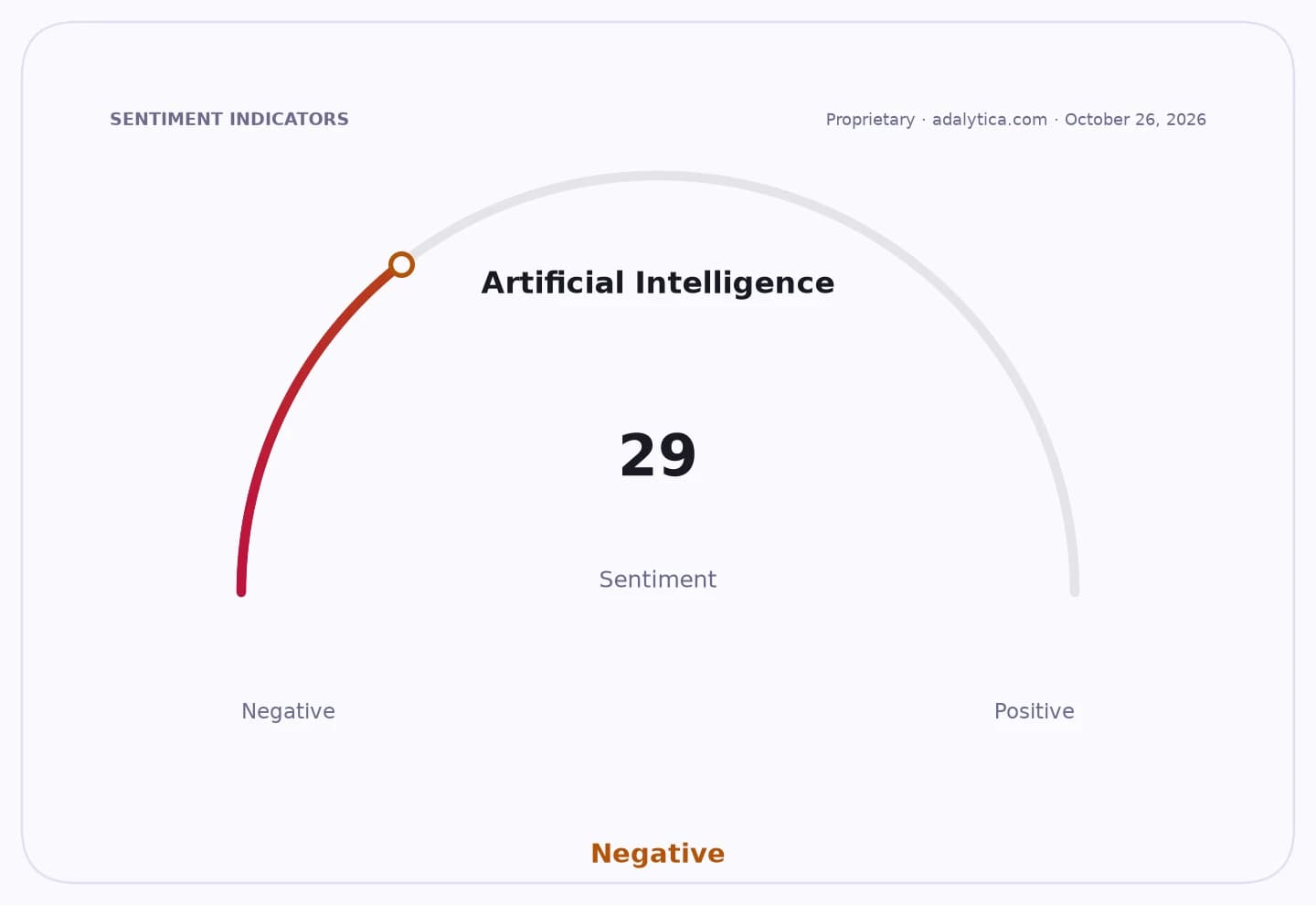
Artificial Intelligence — 30-day sentimentadalytica.com
Explore this data interactively — full history, time series and cross-market comparisons.
For investors, the survey highlights a growing tension between AI’s earnings promise and its social costs. The market has largely rewarded companies tied to AI infrastructure, software and chips, but a rising backlash could eventually weigh on adoption, delay enterprise deployments or increase the expense of governance and safeguards. It also strengthens the case for beneficiaries that can monetize AI without being front and center in public controversy, while putting pressure on firms most exposed to reputational risk, misinformation concerns or labor disruption.
The result is a narrative shift that matters beyond opinion polling: AI is now being judged not only on efficiency and growth, but on whether society believes it can be controlled. If that skepticism deepens, the next phase of AI expansion may be defined as much by regulation and trust-building as by computing power and revenue growth.
| Entity | Gains | Losses |
|---|---|---|
| AI safety regulators | ▲More support for oversight | ▼Less resistance to tighter rules |
| AI incumbents with strong compliance | ▲Trust premium | ▼Faster scrutiny |
| AI developers pushing rapid release | ▲Public acceptance | ▼Policy flexibility |
| Workers and voters worried about disruption | ▲More attention to risks | ▼Less enthusiasm for unchecked rollout |