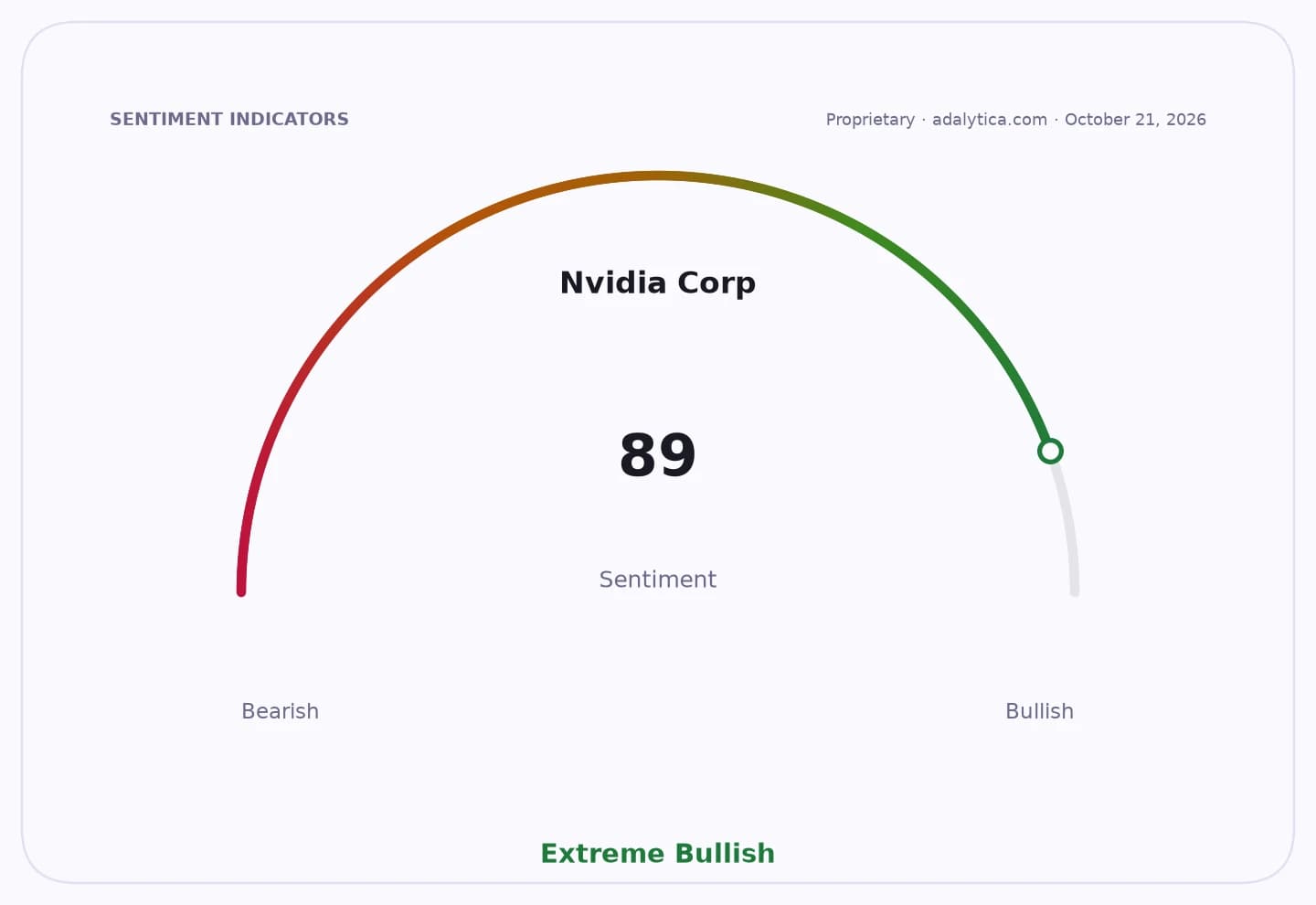
Americans are becoming more skeptical of the AI buildout just as the industry is pouring billions into the infrastructure needed to power it, with a new poll showing a majority view artificial intelligence as bad for society and two-thirds opposing more data centers in the U.S.
Americans Oppose AI Data Centers, Poll Finds
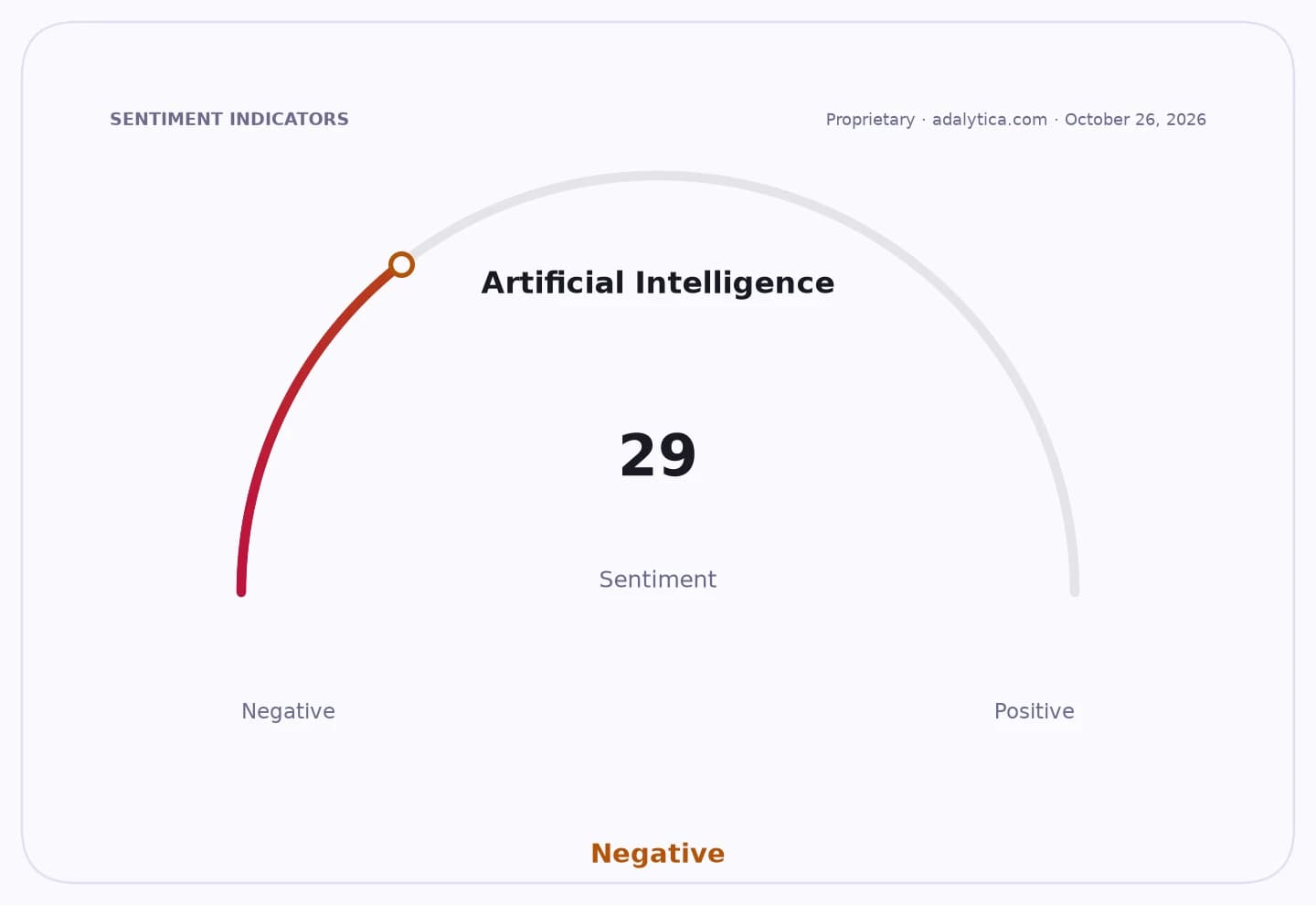
That combination matters because it points to a widening gap between Wall Street’s enthusiasm for AI capital spending and Main Street’s tolerance for the power, land and regulatory burden that comes with it. The ABC News/Washington Post/Ipsos poll found 57% of Americans say AI is bad for society, versus 42% who say it is good. Even more striking for the industry’s physical expansion, 66% oppose construction of new data centers nationally and 72% oppose one in their own community.
Sentiment IndicatorsⓘProprietary · adalytica.com · October 26, 2026
This is a snapshot — live sentiment, awareness and momentum for 130+ markets update continuously in the dashboard.Open AlphaPulse
The backlash is not just abstract. Data centers are the backbone of the AI economy, requiring heavy spending on chips, servers, cooling systems, electricity and transmission capacity. That makes them central to the investment case for companies such as Microsoft, Nvidia and Alphabet, but also increasingly exposed to public resistance over energy use, water consumption, noise and local grid strain. In the poll, opposition cut across demographics, with 81% of Democrats, 76% of independents and 58% of Republicans opposed to a data center in their community.
The timing is politically important. AI has become a live issue ahead of midterm elections, and the White House has aligned itself with the sector’s expansion even as lawmakers debate whether the technology needs tighter guardrails. Trump has championed data centers as a strategic asset in the race with China, but the poll suggests that message is not translating into broad public support. Two-thirds of Americans say the federal government is not doing enough to regulate AI, and 66% disapprove of Trump’s handling of the issue.
Investor implications are mixed. The near-term bull case for AI remains intact: demand for compute is still being driven by cloud spending, model training and enterprise adoption, and the latest poll does not show Americans rejecting AI outright in personal use. Half say AI is good for them personally, even if they fear broader social costs. But the bear case is that rising local opposition could slow permitting, raise utility costs and deepen political pressure for restrictions on new projects, especially if communities begin linking AI expansion to higher electricity bills or strained infrastructure.
The poll also underlines why the policy debate is likely to intensify rather than fade. Americans see major risks from hacking, job losses and loss of human decision-making, while far fewer see strong upside in productivity or job creation. That skepticism increases the odds of tougher oversight, more zoning fights and more scrutiny of the companies building the next wave of infrastructure. For investors, the key question is no longer just who wins the AI race, but whether the physical buildout can keep scaling fast enough to meet demand without provoking a broader public and political pushback.
| Entity | Gains | Losses |
|---|---|---|
| AI regulators | ▲stronger case for oversight | ▼pressure to act slowly |
| Data center developers | ▲little short-term support | ▼zoning and permitting resistance |
| Big tech AI spenders | ▲continued compute demand | ▼higher political and operating friction |
| Local communities | ▲leverage over projects | ▼exposure to infrastructure strain |