The Trump administration is pressing for faster data center buildouts in the name of beating China in artificial intelligence, but the strategy is running into a widening local revolt that is already forcing state-level restrictions and threatening projects tied to Big Tech.
Data Center Backlash Slows U.S. AI Buildout
The fight matters economically because data centers have become a core piece of U.S. industrial policy, absorbing billions of dollars in capital, power and land while promising tax revenue and construction jobs. It also matters to investors because the push is directly linked to the spending plans of Microsoft, Amazon and Alphabet, which are pouring money into technical infrastructure even as permitting, power access and community opposition slow execution.
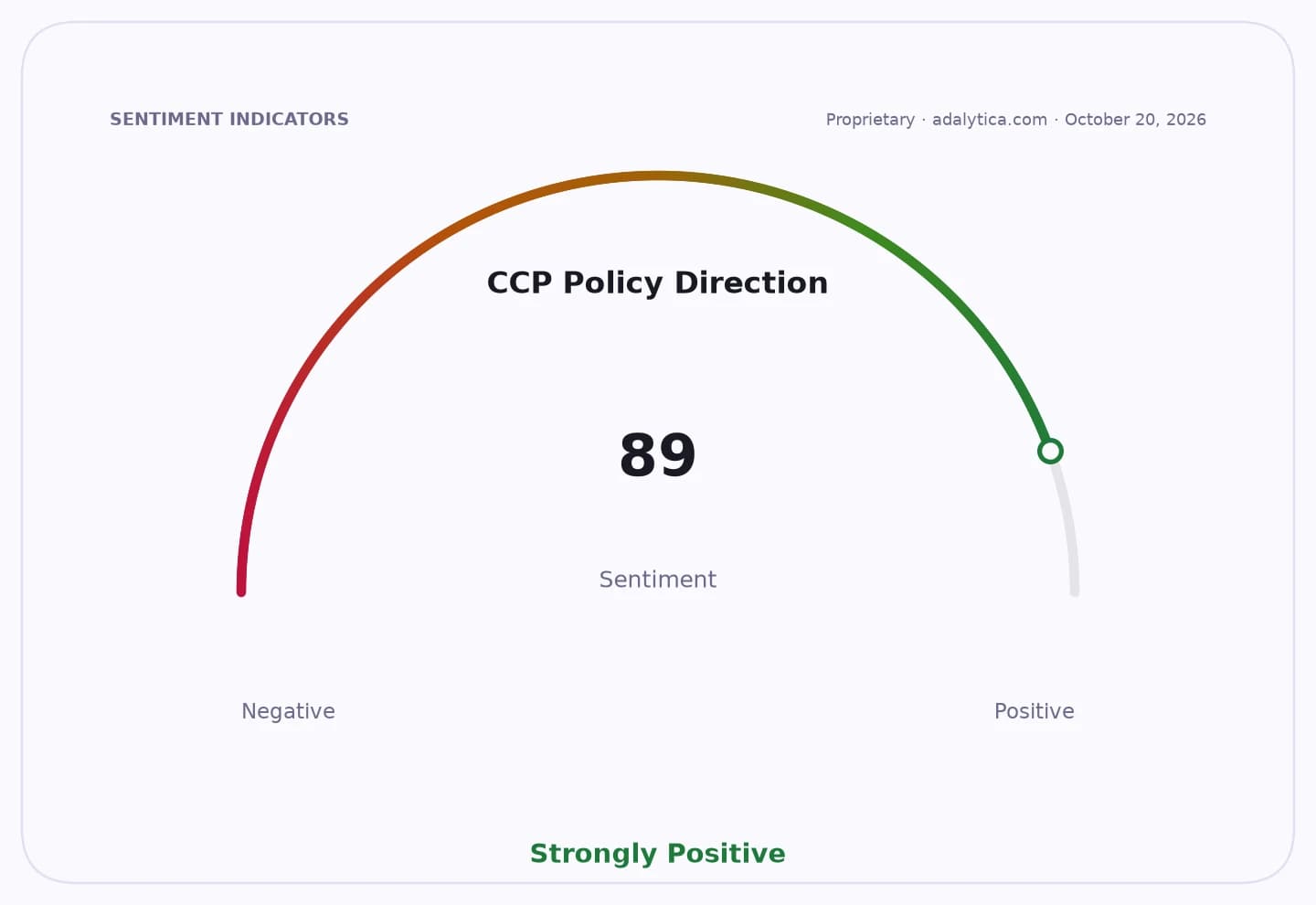
Sentiment IndicatorsⓘProprietary · adalytica.com · October 20, 2026
This is a snapshot — live sentiment, awareness and momentum for 130+ markets update continuously in the dashboard.Open AlphaPulse
In Pennsylvania, a developer proposed 15 data centers across about 520 hectares in Hazel Township and offered each household $10,000 to win support. Residents near the site say the money does little to offset fears about higher power bills, noise, water use and falling home values. The township had already rejected the project last year on land-use grounds.
The tension is spreading beyond one town. In Ohio, a homeowner near Columbus said he has been offered money to move for a data center site but does not want to leave a house he has lived in for about 45 years. In Kentucky, Republican voters joined a protest against another proposed project, underscoring that resistance is no longer confined to Democratic-leaning areas.
State governments are responding. New York in July became the first state to pause environmental permitting for large new data centers for up to a year, while Texas Governor Greg Abbott ordered regulators in September to halt new permitting tied to the sector. A Reuters poll published this month found 56% of voters supported freezes or construction limits, versus 19% opposed.
The pushback is a direct challenge to the Trump administration’s narrative that the U.S. must accelerate data center construction or risk letting investment and AI capacity “go to China.” The White House has already moved to streamline approvals, but the local politics are turning into a bottleneck that could slow new capacity, lift compliance costs and lengthen timelines for developers and their cloud customers.
That has implications for utilities, power equipment suppliers, real estate owners and semiconductor firms that depend on data center expansion. Microsoft, Alphabet and Amazon all flag power constraints, permitting delays and infrastructure limits as risks in their SEC filings, while Nvidia has said it is securing land, power and capacity for customers building out AI infrastructure.
For investors, the issue is less about whether AI demand exists than whether the physical buildout can happen fast enough and at acceptable cost. If local resistance keeps spreading, the winners may be jurisdictions that can offer power and permits without political friction, while the losers are developers and hyperscalers facing longer lead times, higher financing needs and more uncertainty around returns.
The next catalyst is political as much as corporate: with the U.S. midterms approaching, state and local fights over land use, energy and tax revenue are likely to decide where the next wave of AI infrastructure gets built — and where it stalls.
| Entity | Gains | Losses |
|---|---|---|
| Cloud giants | ▲Faster AI capacity | ▼Permitting delays |
| Data center developers | ▲Tax incentives | ▼Community resistance |
| Host communities | ▲Potential tax revenue | ▼Noise, water, land concerns |
| China | ▲Slower U.S. buildout | ▼U.S. infrastructure push |