Artificial intelligence is turning data centers into one of the fastest-growing industrial drains on electricity and water, raising costs for utilities, local governments and the technology companies racing to build the infrastructure behind the boom.
AI data centers strain power and water resources
What looks like a digital query or image prompt is now translating into real-world pressure on power grids, reservoirs and air quality. The scale matters for investors because AI is no longer just a software story: it is increasingly a capital-intensive infrastructure cycle that can lift demand for utilities, gas, cooling equipment and chips while squeezing margins, delaying projects and intensifying regulatory scrutiny.
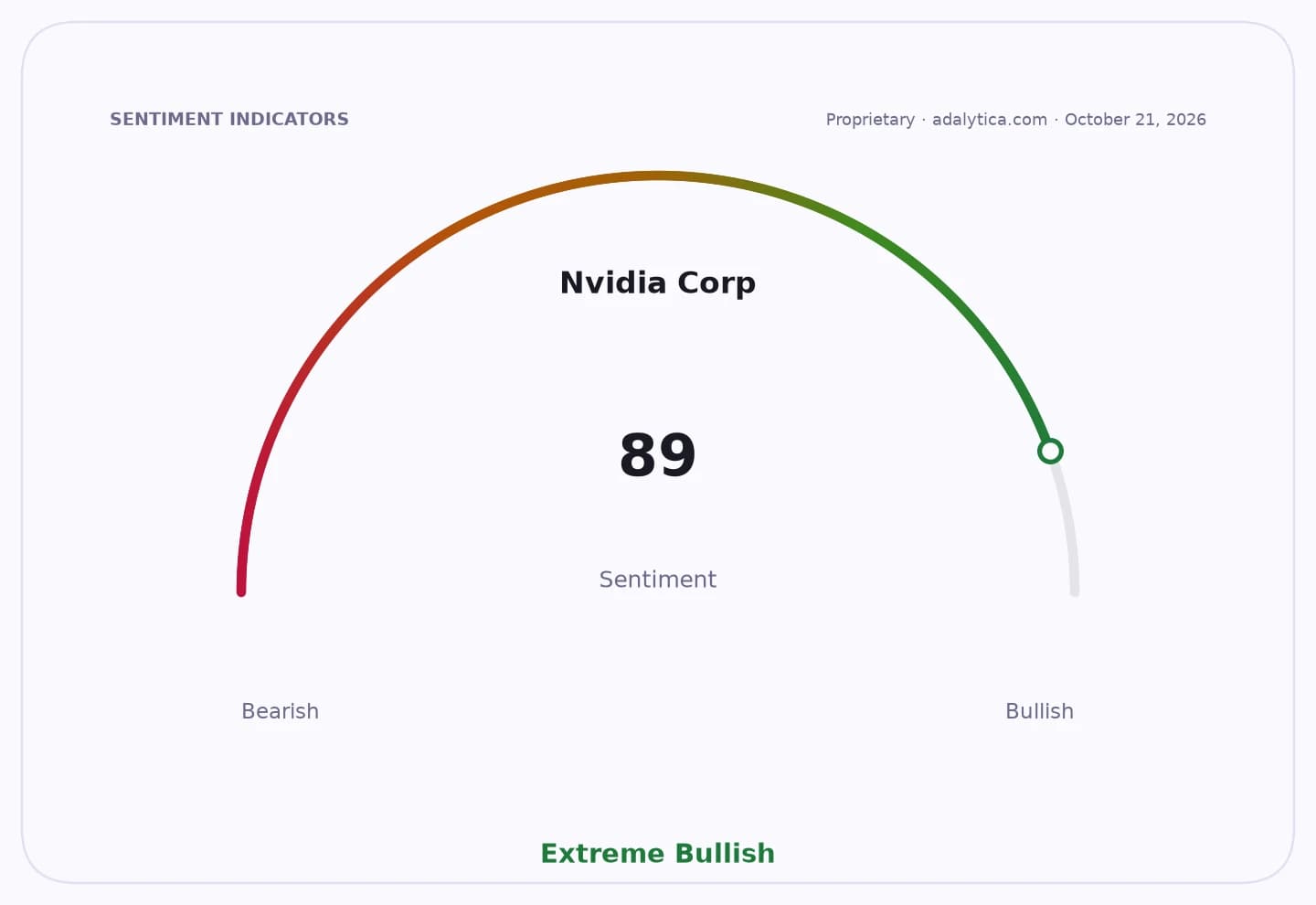
Sentiment IndicatorsⓘProprietary · adalytica.com · October 19, 2026
This is a snapshot — live sentiment, awareness and momentum for 130+ markets update continuously in the dashboard.Open AlphaPulse
The IEA says a simple text prompt usually uses less electricity than a television running for the same time, but AI video generation can require thousands of times more. Overall electricity use by AI data centers rose 50% last year, and Our World in Data estimates they consumed about 0.5% of global electricity in 2025, a share that could triple to 1.5% by 2030.
That burden is concentrated. Nearly half of global data center power use is in the US, where Lawrence Berkeley National Laboratory says data centers could account for as much as 12% of national electricity demand by 2028 as AI expands. For companies already spending heavily on cloud and model training, that means tighter access to power, higher energy bills and a need to secure long-dated supply contracts.
The energy mix makes the climate impact harder to ignore. Globally, electricity for data centers comes mainly from coal at 30%, renewables at 27% and natural gas at 26%. In the US, gas is emerging as a key fuel for new capacity, and Global Energy Monitor says more than a third of the country’s under-construction gas generation is intended to serve AI demand.
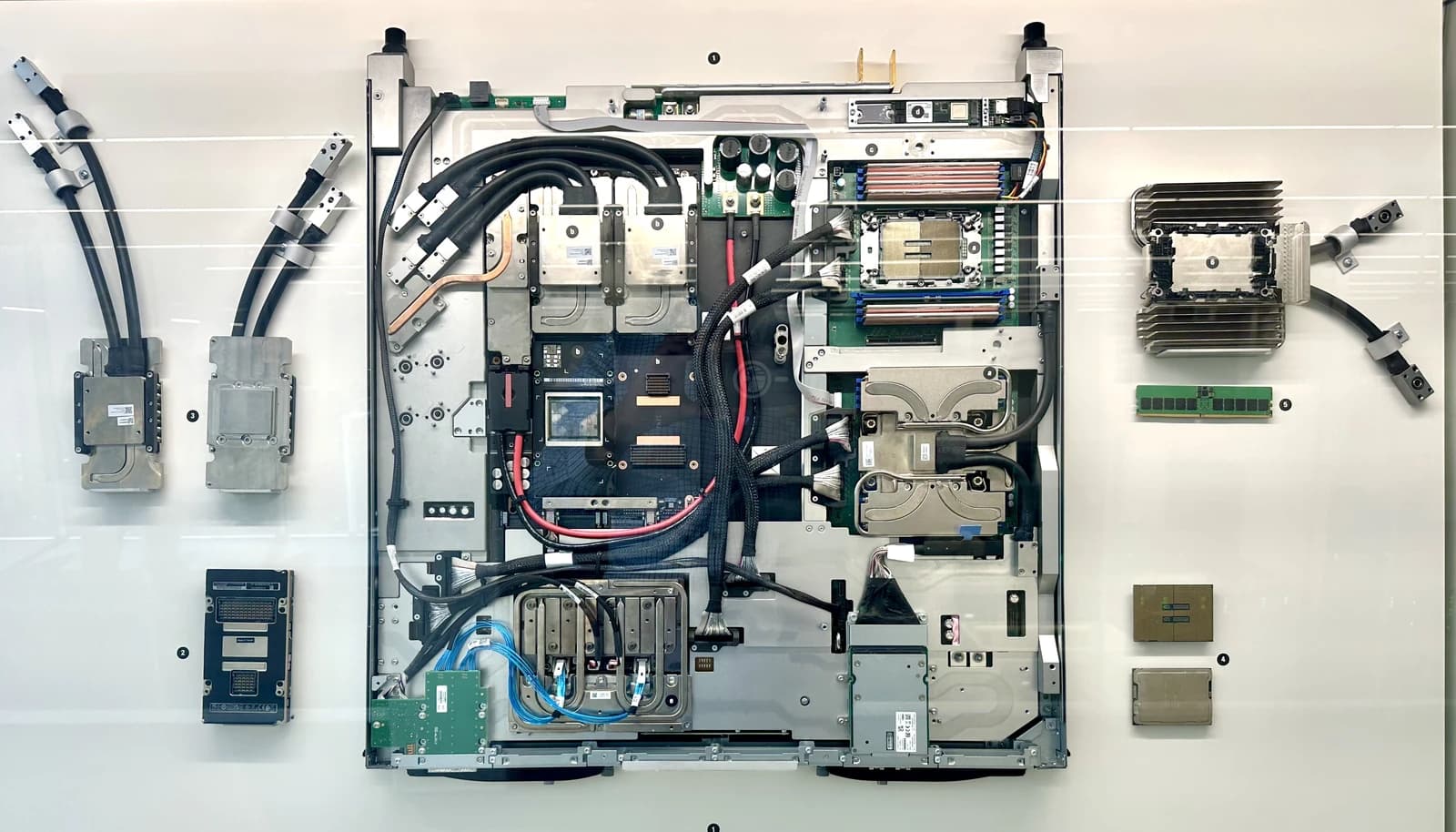
That is showing up in corporate disclosures. Microsoft has warned in its annual filing that AI development raises energy use and emissions and that power availability, transmission constraints and higher energy costs could limit infrastructure growth. Nvidia, meanwhile, is benefiting from the AI buildout but has also flagged the multi-year challenge of securing land, power and energy resources needed to meet demand.
Water is becoming an equally important constraint. CNN cites Bloomberg analysis showing roughly two-thirds of US data centers built or under construction since 2022 are in water-stressed areas, while a University of California Riverside-led study estimated US data centers could use as much as 110 billion gallons of water a year by 2030, or 7% of public water-system consumption.
The indirect water burden could be far larger. Ceres estimated that generating the electricity used by data centers in seven US states required about 3.4 trillion gallons of freshwater a year, a figure that underscores how AI’s footprint extends well beyond the cooling systems inside server halls.
For communities near these facilities, the costs are already tangible. Residents in parts of the US have complained about noise from cooling equipment, diesel generators and gas turbines, and researchers in Arizona found data center heat in Phoenix raised temperatures in downwind neighborhoods by as much as 4 degrees Fahrenheit, or about 2.2 degrees Celsius.
The issue is also landing in markets. Shares of Nvidia were at $217.09 on Monday, above their 200-day moving average of $202.81 but below the 50-day average of $222.83, while Microsoft closed at $533.52, near its 50-day average of $506.05 and above its 200-day average of $434.29. Alphabet finished at $344.18, close to its 50-day average of $344.29. The technical setup shows investors still favor the AI trade, even as the physical costs of that expansion become harder to dismiss.
For investors, the key question is no longer whether AI demand will keep rising, but who pays for the electricity, water, cooling and grid upgrades needed to support it. The next catalysts are more utility approvals, local zoning fights, water restrictions and corporate capex updates as AI infrastructure shifts from narrative to bottleneck.
| Entity | Gains | Losses |
|---|---|---|
| Nvidia | ▲More demand for AI chips | ▼Higher scrutiny on power access |
| Microsoft | ▲Cloud and AI revenue growth | ▼Rising energy and emissions costs |
| Utilities and gas suppliers | ▲New load growth, new contracts | ▼Grid strain and capex pressure |
| Local communities | ▲Limited direct gains | ▼Noise, water stress, heat and pollution |