A Greek-born MIT researcher is pushing one of the AI boom’s most economically important frontiers: how to run data centers with less electricity at a time when hyperscalers are spending heavily on power, chips and new capacity to meet surging demand.
MIT researcher targets AI data center power use
The significance is larger than a single lab breakthrough. Data centers have become one of the binding constraints on the AI trade, with energy availability, cooling costs and grid access increasingly determining how fast companies such as Microsoft, Alphabet and Amazon can expand. Any technology that lowers consumption improves margins, eases pressure on power markets and could help extend the life of existing facilities without the same scale of new capital spending.
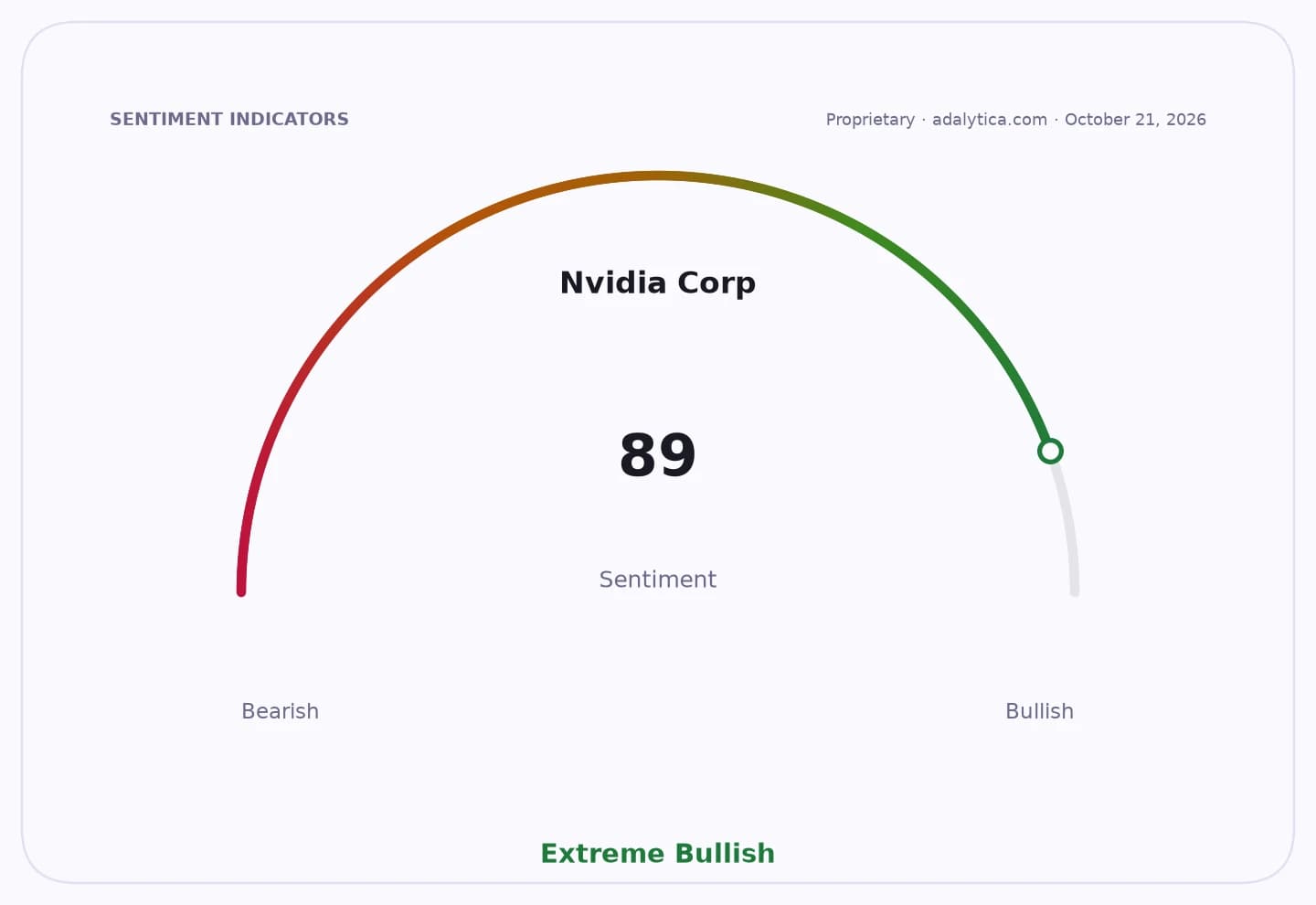
Sentiment IndicatorsⓘProprietary · adalytica.com · October 21, 2026
This is a snapshot — live sentiment, awareness and momentum for 130+ markets update continuously in the dashboard.Open AlphaPulse
That matters because the biggest cloud and AI operators are already under strain from the infrastructure race. Microsoft has warned in recent filings that it depends on the timely availability of critical hardware, power systems and buildable land, while Amazon and Meta have said their technology and infrastructure costs continue to rise as they expand AI capacity. Nvidia, meanwhile, has highlighted how customers need land, power and shell capacity just to deploy its systems, underscoring how the bottleneck has shifted from chips alone to the broader physical stack that supports them.
For investors, the question is not whether AI demand is real — the recent strength in Microsoft, Nvidia and other AI-linked names suggests it is — but how much of the value created by that demand gets absorbed by utility bills, depreciation and financing costs. Microsoft’s shares have climbed back above $530 in recent trading, and Alphabet and Amazon have also regained ground, yet all three remain exposed to the same structural risk: if AI workloads keep scaling faster than efficiency gains, free cash flow could come under pressure even as revenue grows.
The market has begun to price that tension more visibly. The broader S&P 500 has shown extreme fear in Adalytica’s trade signals, while the AI gauge has remained in greed territory, reflecting a market that still likes the theme but is becoming more selective about the economics behind it. That divergence fits the current setup in data centers: the story is no longer just about building more capacity, but about building it profitably.
That is why AI tools aimed at reducing energy consumption carry outsized strategic value. A smaller power footprint can improve site selection, reduce dependency on scarce grid connections and lower operating costs for hyperscalers facing longer payback periods on AI infrastructure. It also has second-order implications for utilities, equipment suppliers and local governments, which are already grappling with the surge in demand for electricity, permits and cooling resources.
The bear case is that efficiency gains may be quickly offset by demand. The more AI usage falls in price, the more computation customers consume, a classic rebound effect that can keep total energy demand rising. The bull case is that incremental savings at scale can be huge: even small percentage reductions across fleets of data centers can translate into billions of dollars in avoided power and capex over time.
The strategic narrative, then, is not simply a scientist improving an algorithm. It is the AI industry trying to reconcile exponential demand with finite power. If researchers at MIT and elsewhere can materially reduce the energy intensity of data centers, they could ease one of the biggest constraints on the next phase of AI growth — and change who captures the economics of the boom.
| Entity | Gains | Losses |
|---|---|---|
| Microsoft, Alphabet, Amazon | ▲Lower data-center operating costs | ▼Less pressure relief if efficiency lags |
| Data-center operators | ▲Better margins, easier scaling | ▼Higher power bills, capex strain |
| Utilities and grid developers | ▲New long-term demand | ▼Congestion and permitting pressure |
| AI investors | ▲More durable AI economics | ▼Valuation risk if power costs bite |