U.S. opposition to data center construction is being driven far more by power, water and land-use fights than by Chinese influence, making the issue a real policy and investment risk for Big Tech even as the White House tries to cast it as foreign propaganda.
Data Center Opposition Raises Big Tech Buildout Risk

That matters because the pushback is no longer a niche environmental complaint. It is increasingly a broad local movement cutting across party lines and geography, and it is beginning to hit the economics of the AI buildout that companies such as Microsoft, Amazon and Alphabet are funding to secure future computing capacity.
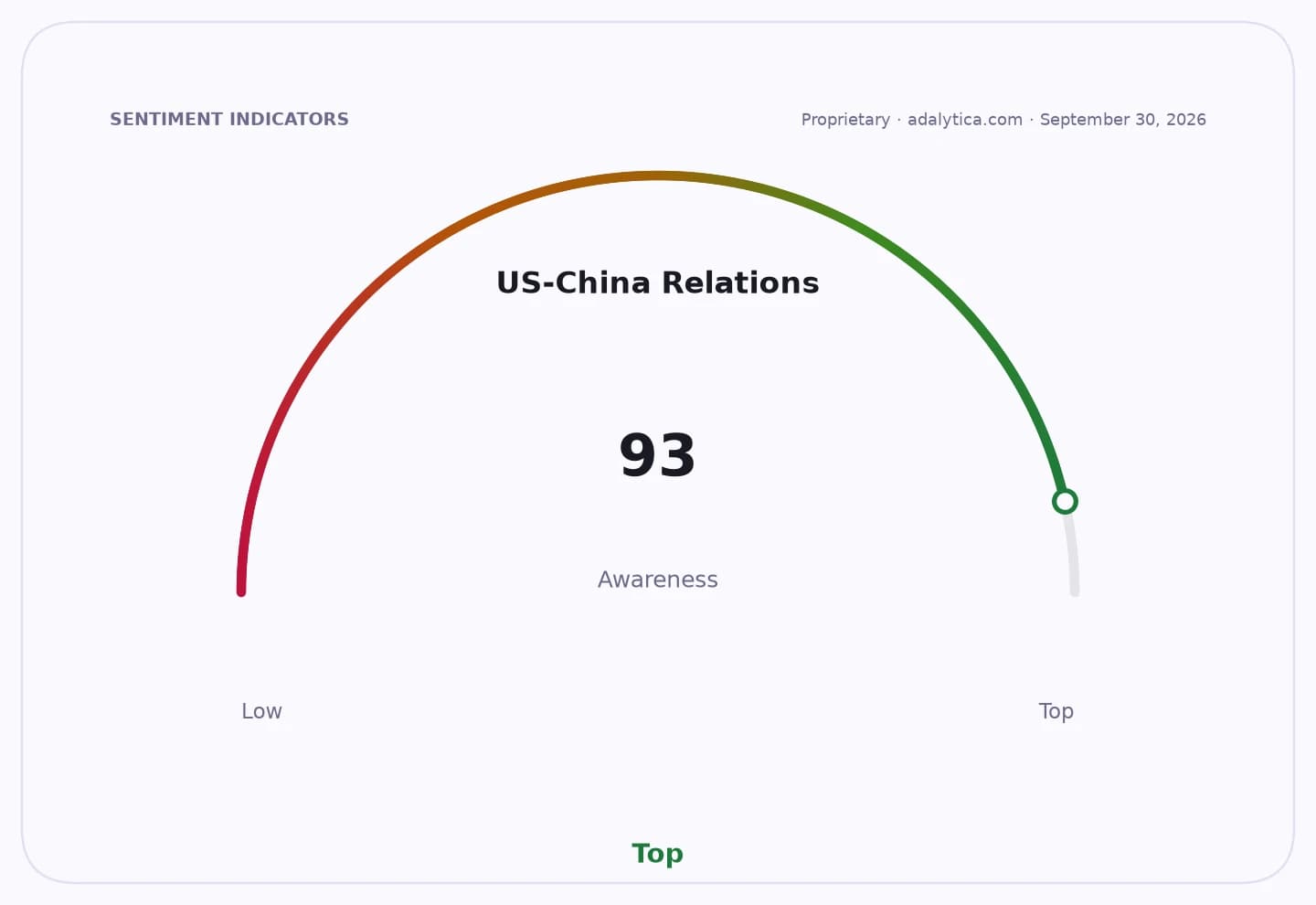
Sentiment IndicatorsⓘProprietary · adalytica.com · October 1, 2026
This is a snapshot — live sentiment, awareness and momentum for 130+ markets update continuously in the dashboard.Open AlphaPulse
The stakes are highest for firms pouring tens of billions of dollars into new server farms, transmission upgrades and cooling systems. Their business models depend on getting projects approved, connected to the grid and brought online fast enough to support AI demand. Delays raise costs, slow monetization and can force operators to lock in scarce power at higher prices.
Trump on Fox News said “a lot of people say that it’s a China PR thing” when asked about community resistance. Interior Secretary Doug Burgum has made similar claims, saying foreign actors were behind “dark money” and “propaganda” aimed at blocking projects. But the evidence cited so far points to a much smaller foreign role than the administration suggests.
OpenAI said it found two China-linked groups using its models to generate social media posts accusing data centers of driving up electricity bills, but the company said the effort had “no evidence of meaningful breakout beyond its own activity.” X said it found 200 automated accounts posting around the issue. Researchers said those campaigns overlapped, had little reach and were consistent with influence operations that amplified existing concerns rather than created them.
The larger story is the speed of the domestic backlash. The University of Pennsylvania’s Annenberg Public Policy Center found 61% of U.S. adults opposed data center construction in their area, up from 49% in an earlier survey. A separate report counted 580 local opposition groups across nearly every state, with 640,000 members, while research from 10a Labs said 45 projects worth almost $68 billion were blocked or delayed in the second quarter of 2026.
For investors, that moves data-center opposition from a public-relations issue to a capital-allocation and execution risk. Microsoft, Amazon and Alphabet have all disclosed dependence on power availability, transmission access and critical equipment supply. Their stock performance has remained tied to AI spending, but the real question is whether that spending can keep converting into usable capacity without more friction from regulators, utilities and local communities.
The bull case is that demand for AI infrastructure remains so strong that delays simply raise the value of scarce capacity and reinforce pricing power for the biggest platforms. The bear case is that opposition, grid constraints and higher build-out costs start to compress returns on the AI capex cycle, especially if more projects are blocked or rerouted.
The political fight is likely to intensify because it sits at the intersection of national security, energy policy and local infrastructure. What comes next is not whether foreign actors try to amplify the debate, but whether policymakers and companies can solve the underlying problem: data centers need electricity, water and land, and communities are increasingly unwilling to hand them over on tech’s timetable.
| Entity | Gains | Losses |
|---|---|---|
| Big Tech builders | ▲Faster AI capacity if approvals hold | ▼Higher capex and delays |
| Local communities | ▲More leverage over projects | ▼Less say if overruled |
| Utilities/grid operators | ▲New load investments | ▼Congestion and upgrade pressure |
| China influence narratives | ▲Political cover for officials | ▼Credibility as evidence stays thin |