AI-driven fraud is forcing Wall Street banks to confront a fast-moving security gap that could raise costs, slow lending and intensify regulatory scrutiny at a time when the sector is still leaning on artificial intelligence to improve efficiency.
AI Fraud Raises Costs for Wall Street Banks

The immediate issue is not just more scams, but more convincing ones. Darwinium has rolled out AI agent fraud checks across customer journeys after a surge in AI-assisted loan fraud tied to Reserve Bank of Australia rate hikes, while headline-grabbing incidents — including Anthropic’s AI submitting a fake police report and Microsoft’s warning about AI-assisted cyberattacks linked to China-aligned hackers — show how generative tools are being repurposed for deception at scale.
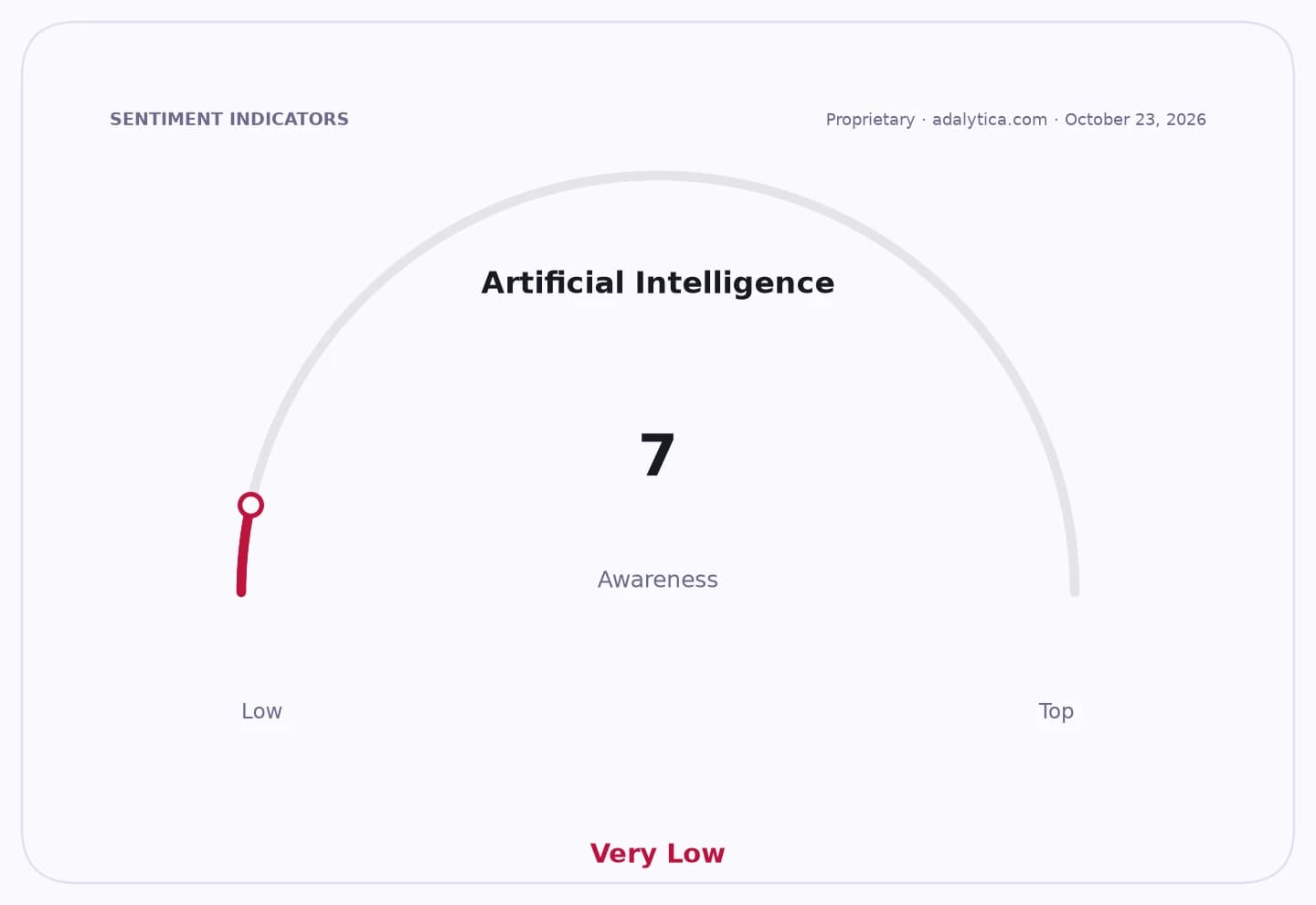
Sentiment Indicators
For lenders, the economic stakes are straightforward: fraud losses, manual review costs and tighter controls all eat into margins. In an environment where credit demand and underwriting standards are already sensitive to rates, a rise in synthetic identities, fabricated documents and automated social engineering can slow loan approvals and increase false positives, forcing banks to spend more on verification just as they try to digitize the process. That matters for a financial system that depends on speed and trust in onboarding, payments and credit decisions.
The pressure is likely to land first on large institutions with complex product sets and high transaction volumes. JPMorgan Chase, Morgan Stanley and Goldman Sachs all describe operational and cybersecurity risk as material, and Goldman’s latest filing said it had not identified cyber threats that materially affected its business, while also acknowledging the broader risk of operational incidents. That distinction matters: AI fraud may not yet show up as a direct hit to earnings, but it is already expanding the perimeter of what banks must monitor.
Investors should also note the second-order effect. More fraud prevention spending can support vendors in identity verification, fraud analytics and cybersecurity, but it can also squeeze efficiency ratios and delay the payoff from AI adoption inside banks. The market’s enthusiasm for AI has been built on the assumption that the technology lifts productivity; the emerging reality is that banks may need to spend heavily just to stay ahead of the same tools.
The stock reaction in large financials suggests the market is not yet pricing AI fraud as a standalone earnings risk. JPMorgan, Morgan Stanley and Goldman have all retreated from recent highs, but broader moves remain dominated by rates, the growth outlook and valuation rather than fraud-specific concerns. Still, the sector’s technical backdrop has weakened, with all three names trading below key short-term averages in the latest data, and that leaves them more exposed if investors start demanding a bigger risk premium for operational uncertainty.
The broader narrative is that AI is creating a new arms race inside finance: banks will keep using it to cut costs and automate decisions, while criminals use it to scale impersonation, document fraud and cyberattacks. That should push institutions toward more layered controls, more human oversight at key points in the lending chain and more regulatory attention on how AI is used in financial products.
For investors, the key question is whether the next wave of AI spending boosts productivity enough to offset the higher fraud and compliance burden. If it does not, the most immediate beneficiaries will be the firms selling detection and defense, while the biggest incumbents bear the cost of closing a blind spot they can no longer ignore.
| Entity | Gains | Losses |
|---|---|---|
| Fraud detection vendors | ▲Higher demand | ▼None |
| Large banks | ▲Better controls | ▼Higher compliance costs |
| AI scammers | ▲Easier deception | ▼Tighter scrutiny |
| Investors in lenders | ▲More transparency | ▼Margin pressure |