Interpol is warning that artificial intelligence is making phone and video scams far more convincing, and that matters because the cost of fraud is no longer just a nuisance for celebrities or big companies — it is increasingly an everyday consumer risk that can drain savings, compromise identities and hit payment networks with more fraud attempts.
Interpol warns AI deepfakes boost scam risk
The new campaign from the international police agency is aimed at a simple but powerful problem: AI tools can now imitate a relative’s voice or a colleague’s face with just a small amount of material pulled from the internet. That means the old tells of a scam — awkward phrasing, spelling mistakes, clumsy formatting — are disappearing fast. In other words, the burden of proof is shifting back to the victim.
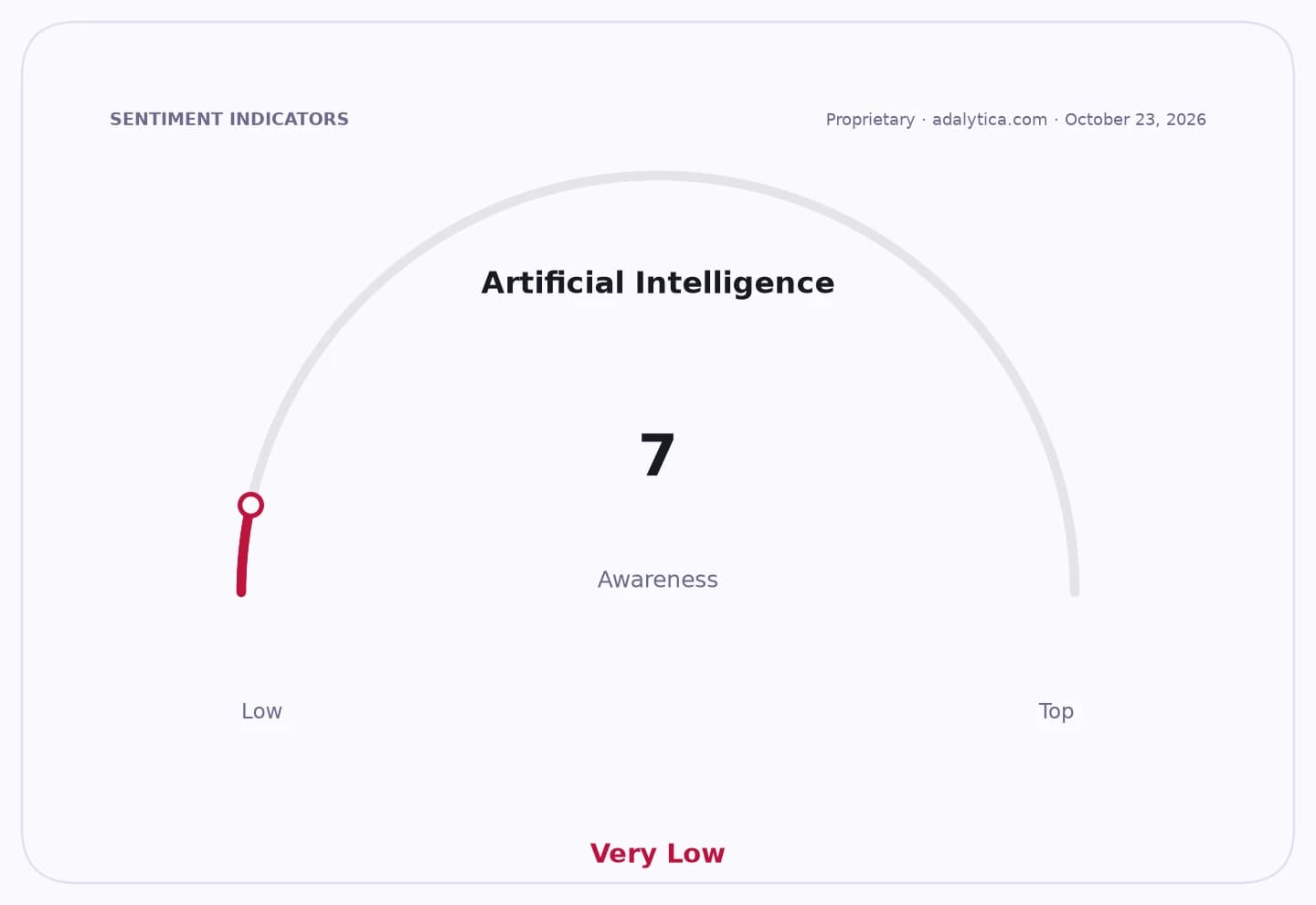
Sentiment IndicatorsⓘProprietary · adalytica.com · October 23, 2026
This is a snapshot — live sentiment, awareness and momentum for 130+ markets update continuously in the dashboard.Open AlphaPulse
Interpol says common tactics include a video call from someone posing as a co-worker asking for a bank transfer, a frantic phone call from a supposed family member in trouble, or even a fake online romance designed to extract money or personal data. The agency says these synthetic-media crimes are moving beyond public figures and are increasingly aimed at ordinary people, with fraud, impersonation, romance scams, extortion and investment schemes all getting a boost from AI.
That is why the simplest defense may be the most effective: a shared “secret word” or question known only to close friends and family. If a caller claims to be a loved one and cannot answer correctly, you hang up. Interpol also advises people to end suspicious calls and dial back using a verified number, enable two-factor authentication, and never be rushed into sending money through bank transfers, crypto or gift cards.
For investors, this is more than a consumer-safety story. Fraud prevention is becoming a bigger operating priority for banks, payment processors and digital identity firms, which face rising pressure to improve verification without making transactions painful for legitimate users. Companies such as PayPal, for example, have already warned that fraud methods keep evolving and are hard to stop entirely, while identity-verification providers can benefit if businesses and consumers demand stronger safeguards.
The long-term takeaway is straightforward: AI is creating a trust problem as much as a productivity boom. That is bad news for scammers’ victims, but it is also creating opportunity for firms that can verify identity, detect synthetic media and protect transactions at scale. For investors, the best response is to stay diversified, think in years rather than days and watch for the companies turning trust into a durable business advantage.
| Entity | Gains | Losses |
|---|---|---|
| Consumers | ▲Better scam awareness | ▼Higher exposure to deepfake fraud |
| Banks and payment firms | ▲More demand for verification tools | ▼More fraud losses and false alarms |
| Identity-security companies | ▲Stronger demand for anti-fraud tech | ▼More pressure to keep pace with attackers |
| Scammers | ▲Easier social engineering tools | ▼Greater scrutiny from police and platforms |