Artificial intelligence is turning a labor-market anxiety into a policy fight in Washington, with lawmakers proposing longer unemployment benefits, retraining money and new disclosure rules as companies increasingly use AI to automate work.
AI job fears drive U.S. worker-protection bills
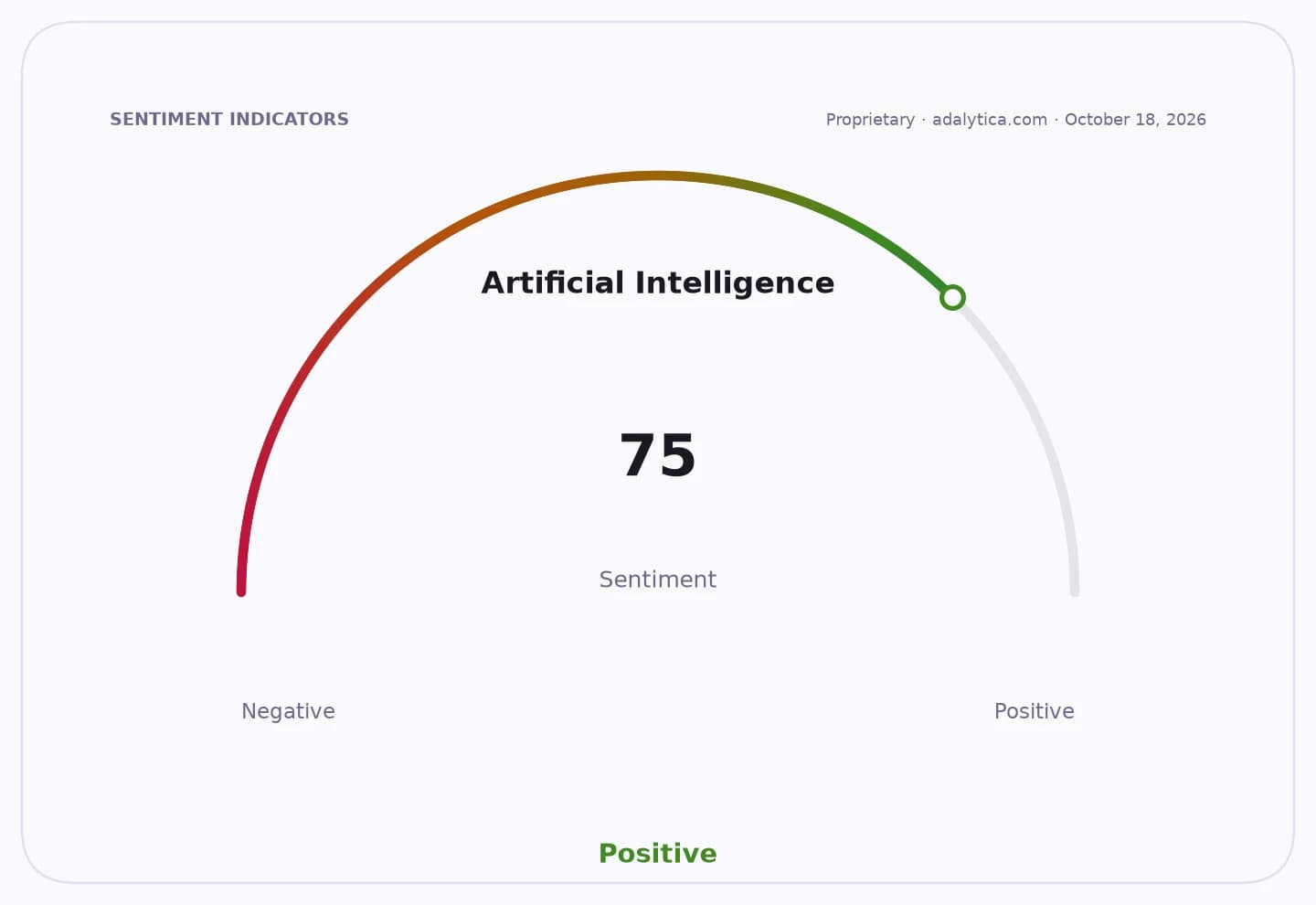
Artificial Intelligence
The latest push matters because the economic impact of AI so far has been more visible in corporate restructuring than in broad job losses, but Congress is already moving to prepare for a worse-case scenario. A bill from Sen. Ron Wyden would extend unemployment benefits to 52 weeks if the jobless rate reaches 8.5%, double the current cap of 26 weeks, and would channel help toward workers displaced by AI into education and retraining for higher-paying jobs.
Sentiment Indicators
That urgency reflects a widening gap between what companies say AI can do and what workers say they fear it will do. Anthropic chief executive Dario Amodei has warned AI could wipe out half of entry-level white-collar jobs and lift unemployment to 10% to 20% over the next one to five years, while Microsoft co-founder Bill Gates has said millions of jobs could be at risk.
For now, economists say those warnings have not yet translated into mass displacement. The unemployment rate was 4.2% in September, near full-employment territory, and job openings stood at 7.1 million in August, suggesting labor demand remains resilient even as firms reshape staffing around AI tools.
Artificial Intelligence — 30-day sentimentadalytica.com
Explore this data interactively — full history, time series and cross-market comparisons.
Still, the political pressure is building. Nearly 80% of Americans said protecting workers in the age of AI is extremely or very important in an AP-NORC poll earlier this month, giving lawmakers cover to advance proposals that would make the industry pay for the disruption it may eventually cause.
The bills now circulating in Congress would do that in different ways. Sen. Mark Kelly’s Make AI Work for Americans Act would impose a 5% tax on digital advertising revenue, an AI usage tax and a 50% excess profits tax, with proceeds funding worker retraining. A separate bill from Democratic Reps. Greg Casar, Valerie Foushee and Sara Jacobs would tax AI companies based on token usage, with the rate rising as unemployment rises. Another measure from Sens. Mark Warner and Josh Hawley would require large companies and federal agencies to report AI-related layoffs to the Labor Department.
The stakes for investors are broader than unemployment benefits. The proposals point to a future in which AI regulation may not stop at model safety and data privacy, but could also hit operating costs, disclosure burdens and even industry taxes. That would matter most for mega-cap technology companies leading the AI buildout, including Microsoft and Nvidia, which are already being watched for whether AI-driven efficiency gains come with political backlash.
For now, Washington is reacting to a risk that has not yet fully arrived. The next test is whether AI adoption keeps showing up as incremental efficiency gains, or whether company layoffs and broader labor-market weakness force Congress to turn worker protection from a precaution into a permanent policy response.
| Entity | Gains | Losses |
|---|---|---|
| Workers displaced by AI | ▲Longer benefits, retraining aid | ▼Job security |
| AI companies | ▲Clarity if rules stay limited | ▼Higher taxes, compliance costs |
| Lawmakers | ▲Political capital with voters | ▼None if reforms stall |
| Large tech employers | ▲Productivity gains from AI | ▼Risk of backlash and regulation |