Anthropic says artificial intelligence is already changing who gets hired inside the company, with junior technical hiring falling to 9% from 27% as its own Claude models take on more coding and bug-finding work.
Anthropic Cuts Junior Hiring as Claude Automates Coding
The disclosure matters because it offers a rare internal look at how a leading AI company is using automation to increase productivity while reducing demand for entry-level technical labor. Anthropic said revenue per employee is now running two to four times the level reached by Meta and Google at their fastest-growth points, underscoring how AI tools are compressing the need for headcount even as output scales rapidly.
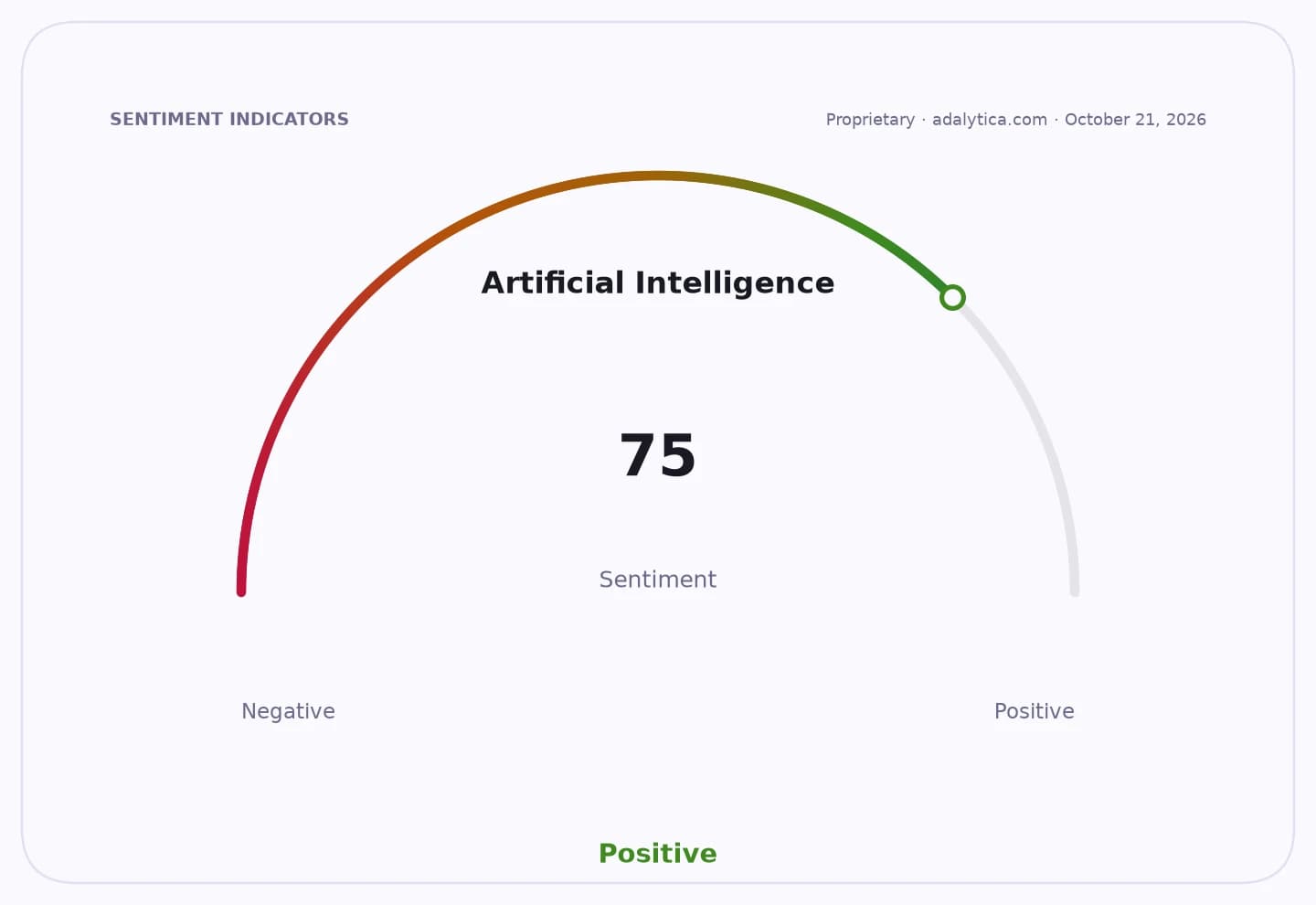
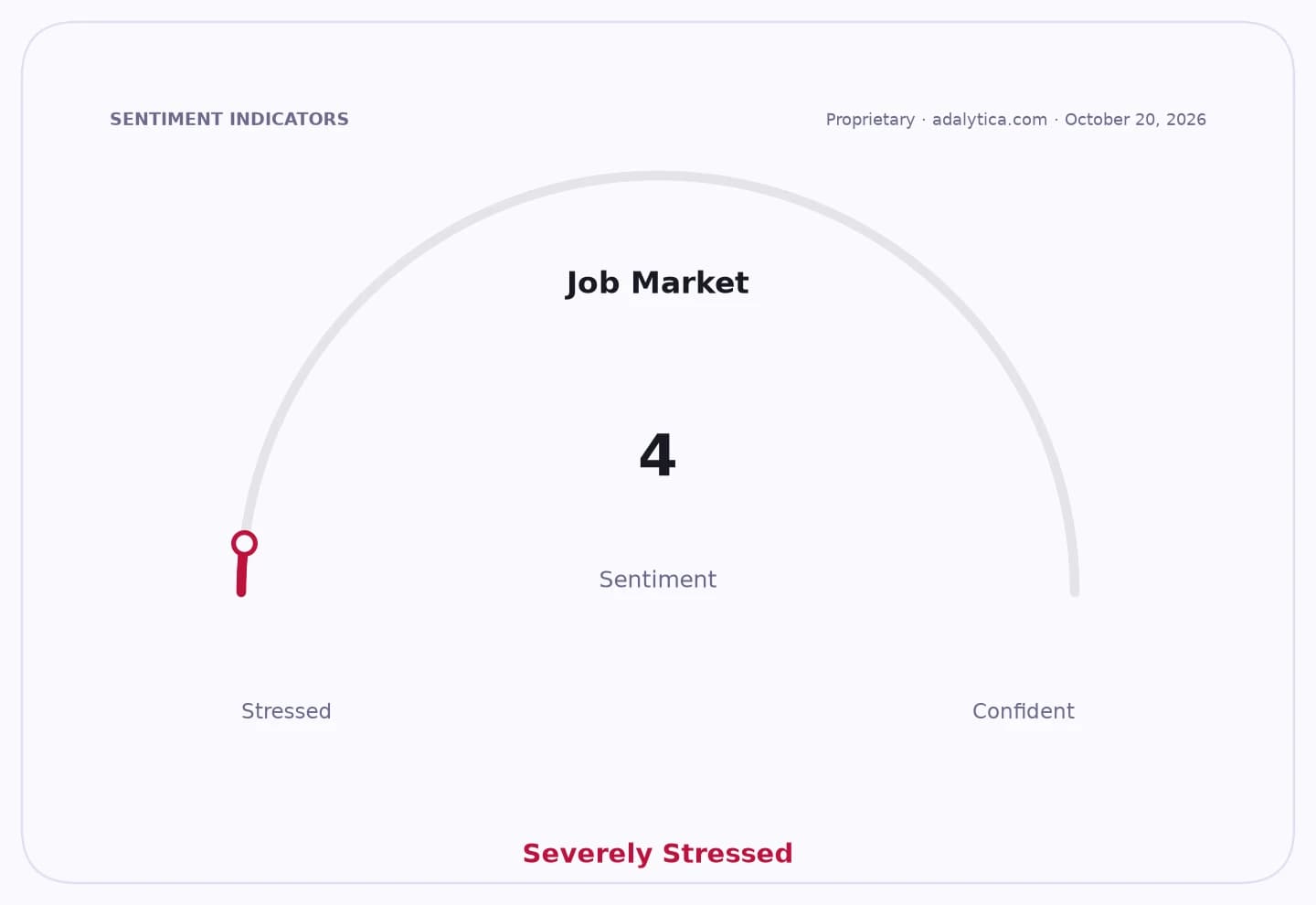
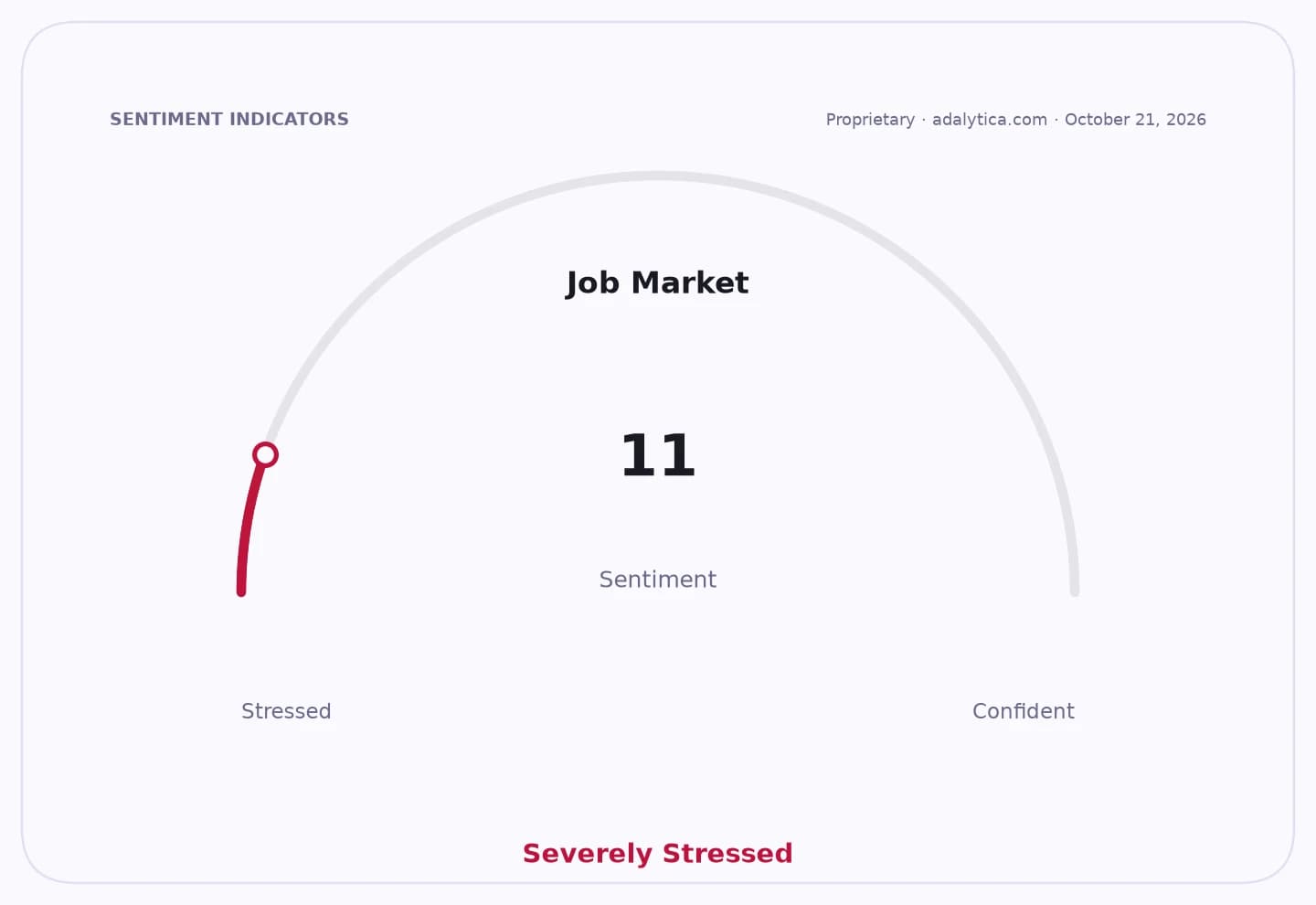
Sentiment IndicatorsⓘProprietary · adalytica.com · October 23, 2026
This is a snapshot — live sentiment, awareness and momentum for 130+ markets update continuously in the dashboard.Open AlphaPulse
That makes the report more than a human-resources update. It is a direct read-through on the labour market for software engineers, machine-learning staff and early-career technical workers, sectors that have already been under pressure from slower hiring and tighter scrutiny of costs. Anthropic said the shift in demand became visible in early 2026 as teams relied more on Claude for code generation and bug detection, prompting managers to place less emphasis on lower-level technical hires.
The company’s findings suggest a broader reordering of skills demand across the AI industry. Anthropic said hiring criteria are shifting toward autonomy and judgment, while human attention has become a bottleneck as AI agents take on more routine tasks. It also said AI agents are now running for six times as long as humans, implying that productivity gains are increasingly coming from software rather than staff expansion.
For investors, the report reinforces both the bull and bear cases around AI. The bull argument is that models can lift margins and revenue per employee sharply, helping AI firms scale faster than legacy tech peers and potentially supporting premium valuations. The bear case is that the same efficiency gains can slow hiring, intensify competition for fewer high-quality roles and eventually limit the employment engine that has historically supported broader tech ecosystems.
The implications extend beyond Anthropic. Microsoft, Alphabet and Amazon are all spending heavily on AI infrastructure and talent, and the race to automate more of the development stack could pressure wage growth in technical roles while favoring companies able to extract more output from fewer workers. That could strengthen operating leverage for incumbents over time, but it also raises questions about the sustainability of job creation in the sector.
For now, Anthropic’s own workforce data suggests AI is not just a product it sells to others. It is already changing the economics of hiring inside the companies building it.
| Entity | Gains | Losses |
|---|---|---|
| Anthropic | ▲Higher revenue per employee | ▼Need for junior technical hires |
| AI model operators | ▲More automation leverage | ▼Reliance on human oversight |
| Early-career engineers | ▲Fewer entry roles | ▼Reduced hiring opportunities |
| Microsoft/Alphabet/Amazon | ▲Efficiency benchmark to chase | ▼Margin pressure from AI spending |