Sberbank is telling job seekers to embrace artificial intelligence in the hiring process, a sign that AI is no longer just screening résumés — it is reshaping how candidates present themselves, compete for openings and move through the labor market.
Sberbank pushes job seekers to use AI

That matters economically because hiring is becoming more automated at the same time employers are receiving a flood of applications. Sberbank talent executive Anna Ovchinnikova said applicants should use large-language-model assistants to “package” their experience better and tailor résumés for each employer so they can get past the first AI filter. In other words, the burden is shifting toward workers to learn the tools that machines now use to sort them.
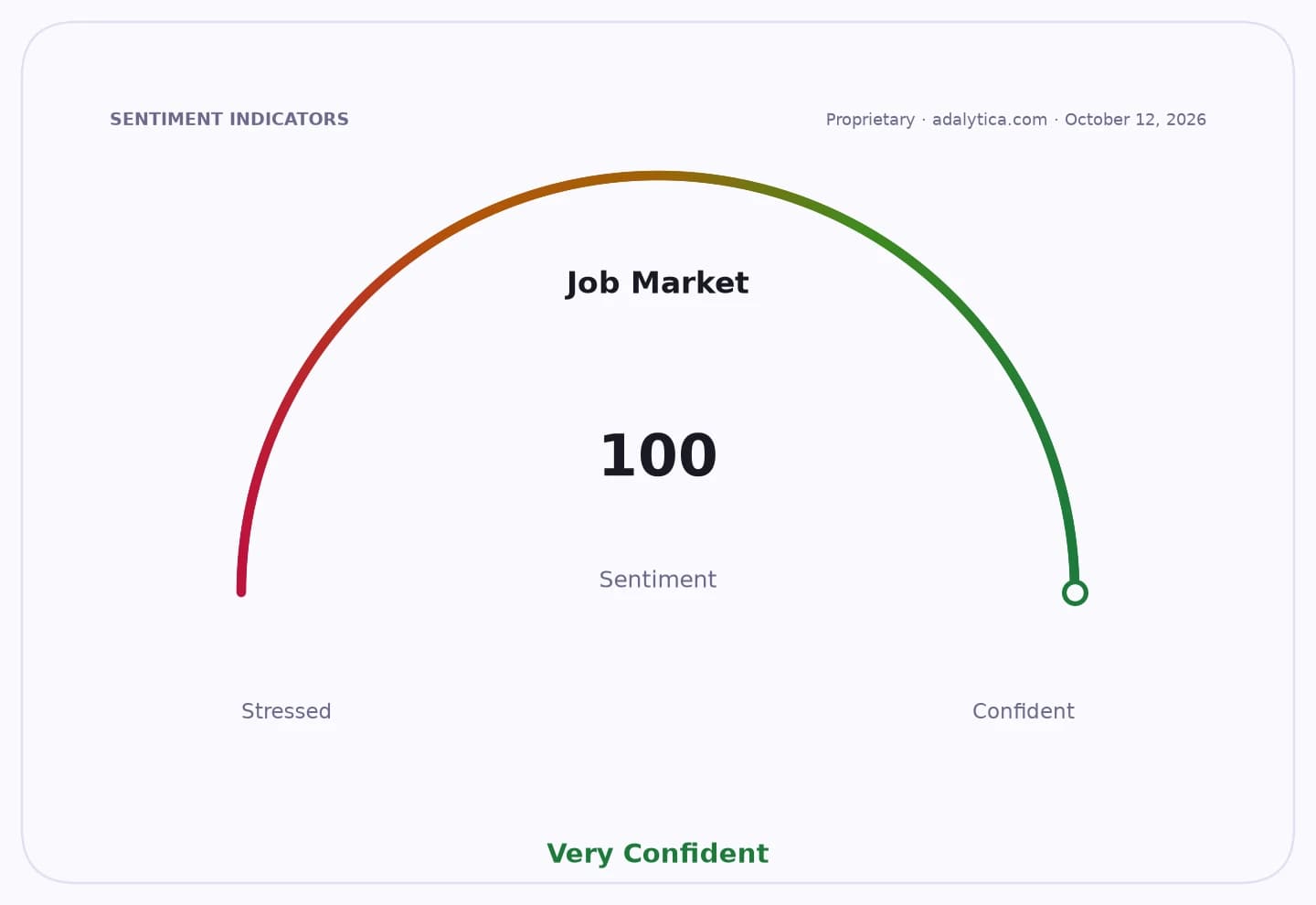
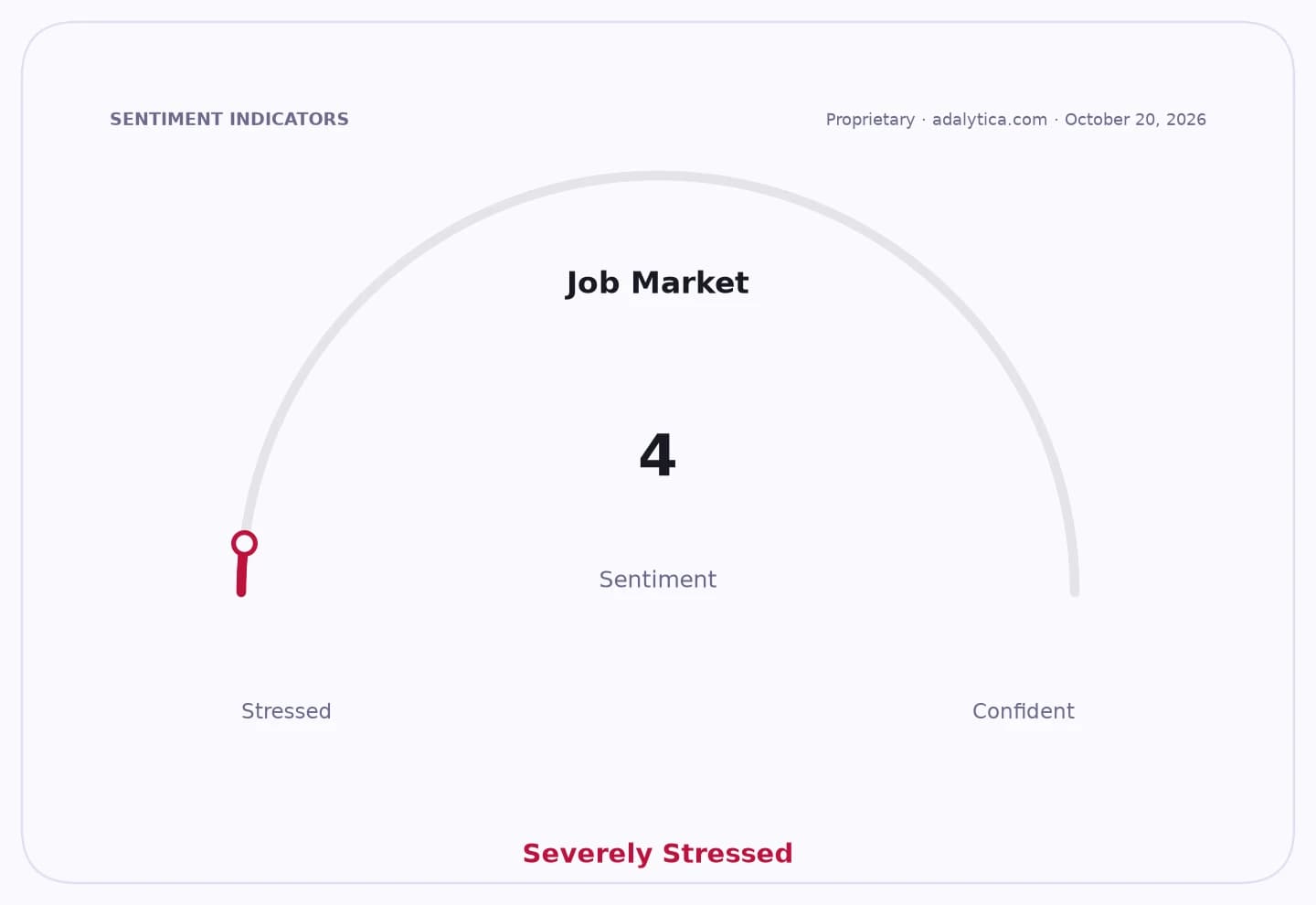
Sentiment IndicatorsⓘProprietary · adalytica.com · October 22, 2026
This is a snapshot — live sentiment, awareness and momentum for 130+ markets update continuously in the dashboard.Open AlphaPulse
For investors, the bigger message is that AI in human resources is moving from experiment to standard operating practice. Sberbank said its own Gigarecruiter system has become better at handling career changers than when AI recruiting first emerged, and that the chatbot is designed to gather follow-up information rather than simply accept or reject candidates. HeadHunter, Russia’s leading recruitment platform, plans to launch an AI assistant for applicants in 2026 after already rolling out a neural network for employers. That puts HR software, staffing platforms and data-rich recruiters squarely in the path of a long-term automation trend.
The economic logic is straightforward. Companies want to cut the time and cost of sorting through applications, while workers want a fair shot in a system increasingly shaped by algorithms. Ovchinnikova argued that technology “stands on the side of job seekers,” but she also criticized the common practice of bypassing HR and approaching line managers directly through social networks. Her comments underscore the tension at the heart of AI recruiting: it can widen access by processing more candidates, but it can also raise the bar for how well applicants optimize themselves for the machine.
There is also a labor-market message investors should not miss. Sber researchers previously found that 39% of people aged 18 to 30 are worried about how neural networks will transform work, a reminder that AI adoption is already affecting worker expectations and behavior. That anxiety may push more candidates to use AI to rewrite résumés, rehearse interviews and sharpen job searches — exactly the kind of behavior that makes the recruiting stack more automated over time.
For long-term investors, the takeaway is not to fear AI recruiting, but to recognize where the durable value may accrue: to platforms with scale, proprietary data and workflow integration. As hiring becomes more algorithmic, the winners are likely to be the firms that sit between employers and workers and can monetize both sides of the market. For everyone else, this is a reminder that the job hunt itself is being reinvented. Worth watching.
| Entity | Gains | Losses |
|---|---|---|
| Sberbank / Gigarecruiter | ▲More efficient hiring workflow | ▼Greater scrutiny over fairness |
| HeadHunter | ▲New AI product growth | ▼Legacy HR processes |
| Job seekers using AI | ▲Better résumé targeting | ▼Those slow to adapt |
| Candidates rejected by filters | ▲Little | ▼First-pass automation |