A global survey shows workers now fear artificial intelligence will destroy more jobs than it creates, reinforcing a growing political and corporate backlash against the speed of AI deployment.
AI job-loss fears rise in global Pew survey
That matters because the labor market is the core transmission channel for AI’s economic impact: if workers expect displacement, consumer confidence, wage demands and policy pressure all rise, while companies face heavier scrutiny over how quickly they automate. The findings add a social cost to the AI investment boom that has powered spending across semiconductors, cloud computing and software.
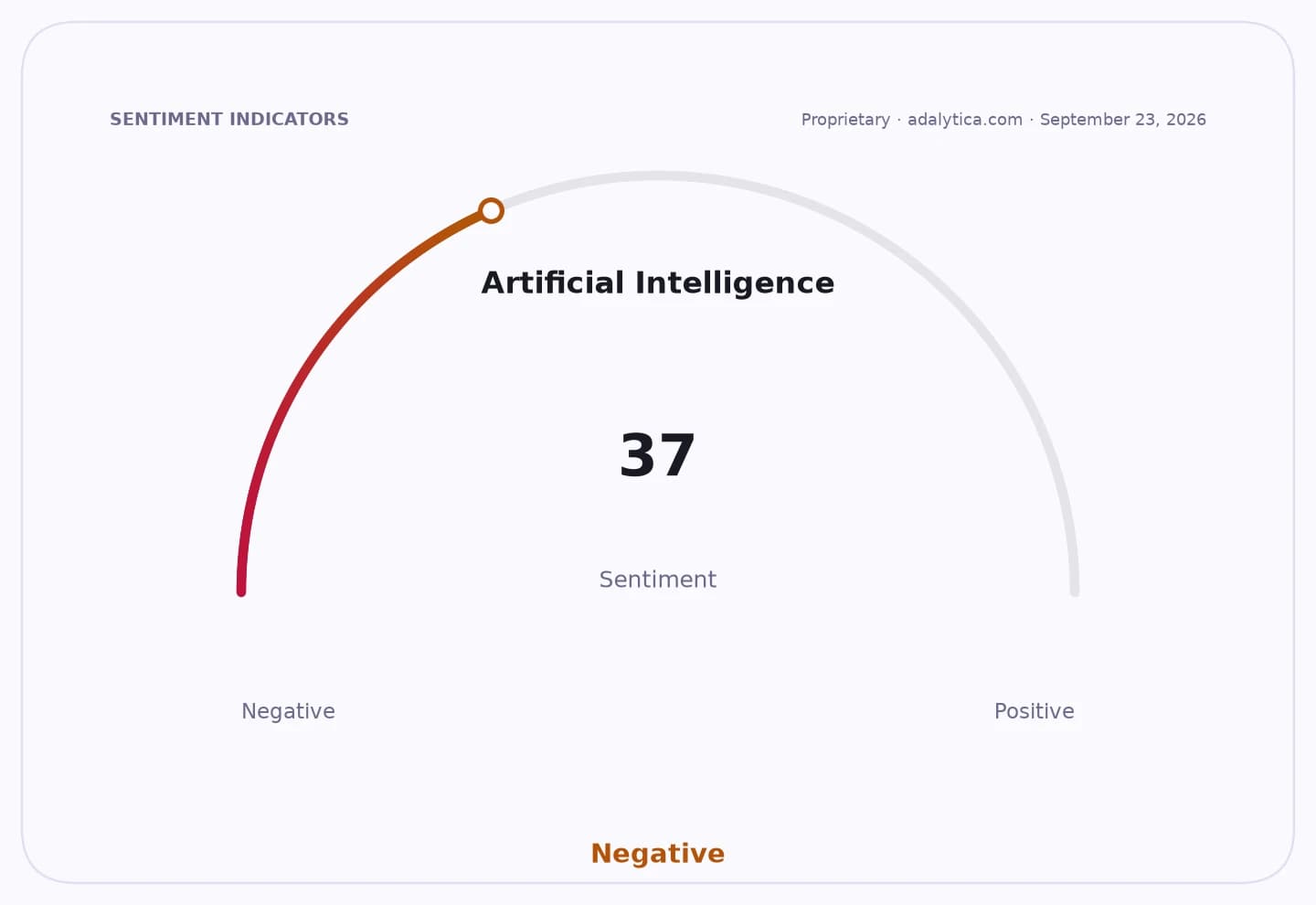
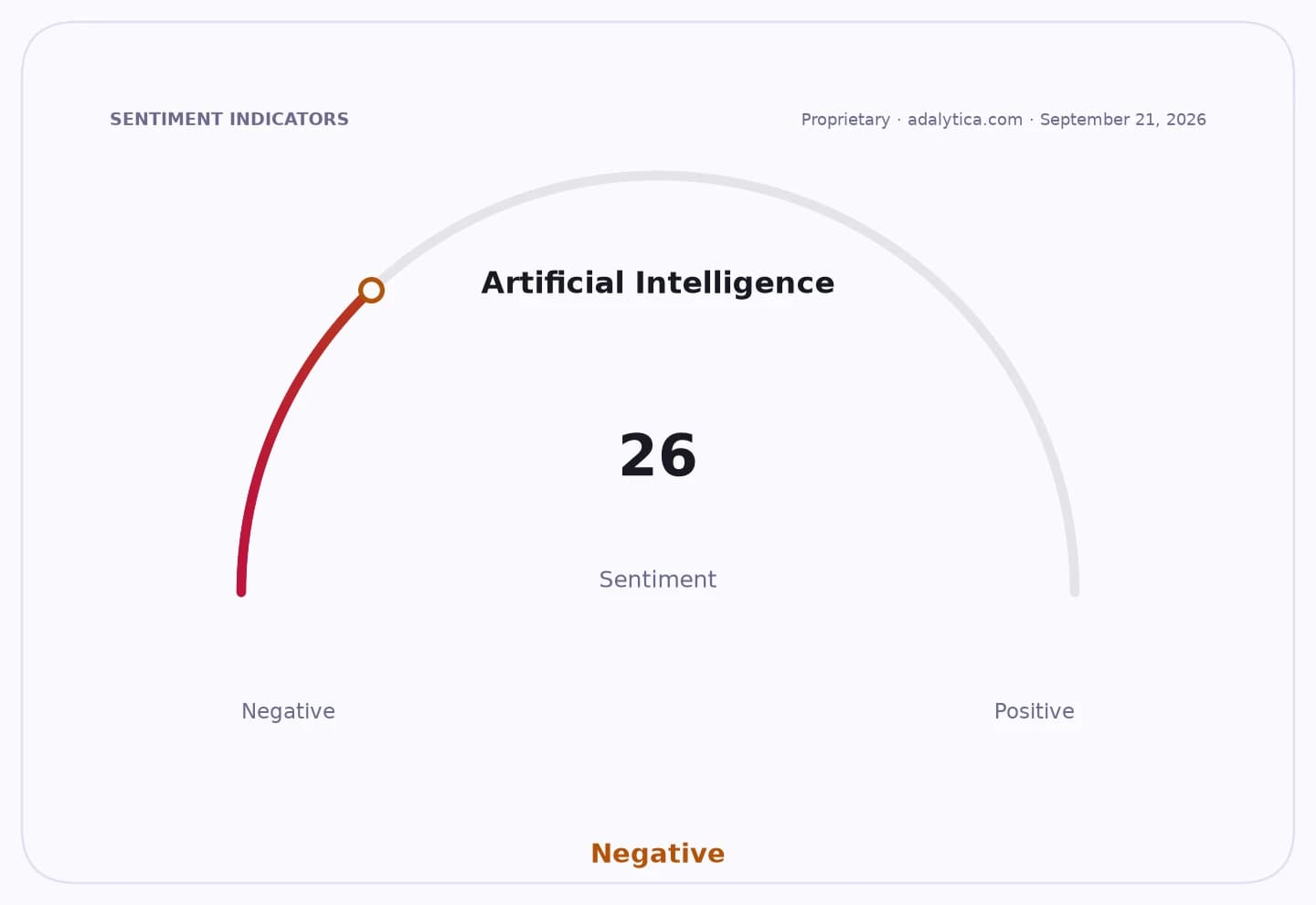
Sentiment IndicatorsⓘProprietary · adalytica.com · September 21, 2026
This is a snapshot — live sentiment, awareness and momentum for 130+ markets update continuously in the dashboard.Open AlphaPulse
The Pew Research Center study, based on more than 50,000 people across 37 countries surveyed from February to June 2026, found a median share of respondents expecting AI to reduce jobs rather than create them, while many said they were unsure about the net effect on opportunities. Anxiety was highest in richer economies, where around seven in 10 adults in Australia, South Korea and the US believe AI will cause job losses over the next 20 years.
Younger workers are also more alarmed. In countries including Canada, France, Singapore, Sweden, Indonesia, India and Malaysia, adults aged 18 to 34 were more worried than older respondents about AI-linked layoffs, suggesting that the generation most exposed to entry-level white-collar automation is already preparing for a tougher market.
The survey lands as top AI executives including Sam Altman, Elon Musk and Dario Amodei warn about the technology’s broader risks and call for a slower rollout. European Commission President Ursula von der Leyen has echoed that message, a sign that regulators are increasingly willing to question whether the pace of AI adoption is outstripping social safeguards.
For investors, the split is clear: companies selling AI infrastructure and software still benefit from heavy capital spending, but employers, labor-heavy service firms and policymakers face rising pressure to show that productivity gains will translate into jobs, not just margin expansion. The next test will come in corporate hiring plans, government training programs and whether AI adoption starts to hit white-collar employment data more visibly.
| Entity | Gains | Losses |
|---|---|---|
| AI infrastructure vendors | ▲Higher demand for compute and software | ▼Rising scrutiny over social impact |
| Employers automating work | ▲Lower labor costs, higher margins | ▼Backlash over layoffs |
| Workers, especially young adults | ▲Need for reskilling programs | ▼Greater displacement risk |
| Regulators/policymakers | ▲Stronger case for oversight | ▼Pressure to balance innovation and jobs |