A small but growing group of exchange-traded funds is betting that AI can pick stocks faster, cheaper and with less emotion than humans — and early returns suggest investors may eventually have to take the idea seriously.
AI-managed ETFs gain assets and beat benchmarks

That matters because the shift goes beyond a novelty ETF. If machine-driven stock selection starts compounding even modestly better than traditional active management, it could pull fees, assets and market share away from human stock pickers while pushing more capital toward the firms building the models, data pipes and trading infrastructure behind them.
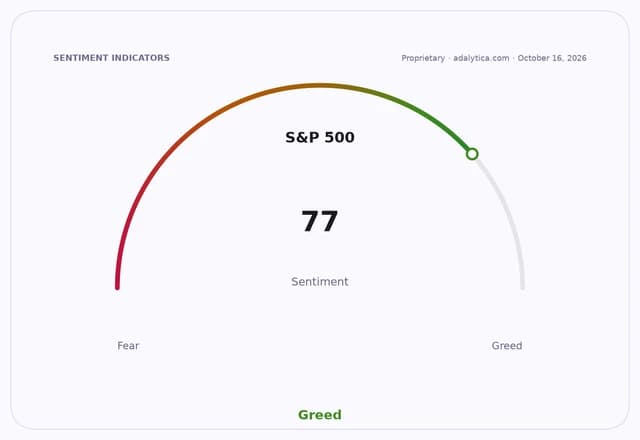
For now, the opportunity is tiny. Fewer than half a dozen ETFs rely entirely on AI to control research and stock selection, with only about $30 million in assets among them, a rounding error inside the ETF industry’s nearly $17 trillion asset base. But the early performance has been strong enough to attract attention: Tal Schwartz’s High Conviction US Equity AI-Managed ETF, launched in August, is up 2.7% since inception, beating the S&P 500’s 1.1% rise over the same period. FinQ’s AI-managed U.S. large-cap ETFs have climbed 25.35% and 23.98% since February, while Pacer’s 3AI funds are also ahead of the S&P 500 since launching in May.
That is exactly how new investment categories start — not with huge flows, but with a performance edge that forces allocators to pay attention. Mercer found earlier this year that 91% of asset managers plan to increase use of AI-based portfolio tools, a sign that the real trade is not whether AI enters investing, but how quickly it moves from back-office analytics to live capital decisions. The market is underestimating how sticky that adoption can become once the first products prove themselves through a full cycle.
The catch is that investors still want human judgment at the point of failure. Advisers say they are comfortable with AI that informs a decision, but not AI that makes it. That caution is warranted: these funds have short track records, higher fees and little proof yet that their models can survive a sharp drawdown, a liquidity shock or an extreme macro regime. The real test will not be whether bots can win in a favorable tape. It will be whether they can control risk when markets break.
Still, this is where the asymmetric opportunity lies. If AI stock selection keeps beating broad benchmarks, even by a little, the winners may not be just the funds themselves. BlackRock, Franklin Resources and T. Rowe Price — along with quantitative managers such as Man Group and Pictet — stand to benefit if AI-enhanced portfolio tools become standard across active management. Pictet already says it has been running live capital with AI for about four years, while more cautious “AI-enhanced” ETFs are gathering substantially more assets than fully autonomous peers. That suggests the market’s first capital flow is likely to favor firms that can package AI as a risk tool before it fully becomes a replacement for human stock pickers.
Investors should treat this as a multi-year adoption story, not a one-quarter trade. The first phase is proof of concept; the second is distribution; the third is scale. If the funds keep posting benchmark-beating returns, even skeptics may be forced in by performance. That makes AI-driven asset management one of the more interesting structural shifts in finance — not because it is futuristic, but because it may quietly take share from one of Wall Street’s oldest businesses.
| Entity | Gains | Losses |
|---|---|---|
| AI-managed ETF issuers | ▲Early performance, asset gathering | ▼Skeptics, fee pressure |
| Traditional active managers | ▲AI-enhanced tools, better risk control | ▼Pure stock-picking franchises |
| ETF investors | ▲Potentially higher returns | ▼Higher fees, model risk |
| Human portfolio managers | ▲Decision support from AI | ▼Displacement risk |