AI-related military risk moved from theory to front-and-center policy debate this week in Beijing, underscoring how quickly the technology’s promise for investors is being matched by concern over its role in future conflicts.
AI military risk adds scrutiny to Nvidia and Palantir

At the Xiangshan security forum, delegates from about 100 countries warned that autonomous weapons, AI-driven decision-making and disinformation are shrinking the time governments have to respond in a crisis. That matters well beyond the conference hall: the same systems that are driving huge spending across semiconductors, cloud computing and defense software are also raising the odds of tighter export controls, tougher regulation and slower deployment in sensitive markets.
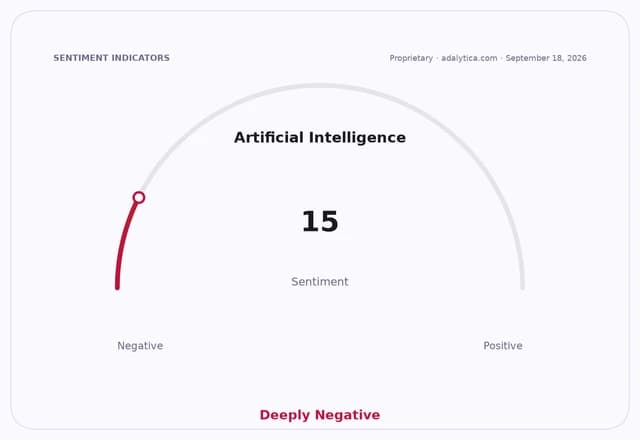
Sentiment IndicatorsⓘProprietary · adalytica.com · September 18, 2026
This is a snapshot — live sentiment, awareness and momentum for 130+ markets update continuously in the dashboard.Open AlphaPulse
China’s defense minister Dong Jun called for stronger global oversight, while participants from Thailand, Pakistan, Bangladesh, Malaysia and Laos highlighted the danger of AI accelerating battlefield decisions and eroding public trust before officials can react. The concerns are especially pointed because both China and the U.S. are racing to develop and deploy frontier AI, yet remain divided over how much control is needed, particularly around military applications and nuclear systems.
For investors, that tension is now part of the AI trade. Nvidia remains central to the buildout of the data centers that power advanced models, but it also sits near the heart of export-control risk as governments scrutinize the chips and systems used to train frontier AI. Microsoft, meanwhile, has warned in filings that AI can bring legal, regulatory and competitive harm, while Palantir’s software push into defense and intelligence makes it a direct beneficiary of militarized AI — and also exposes it to reputational and policy risk if the technology becomes harder to govern.
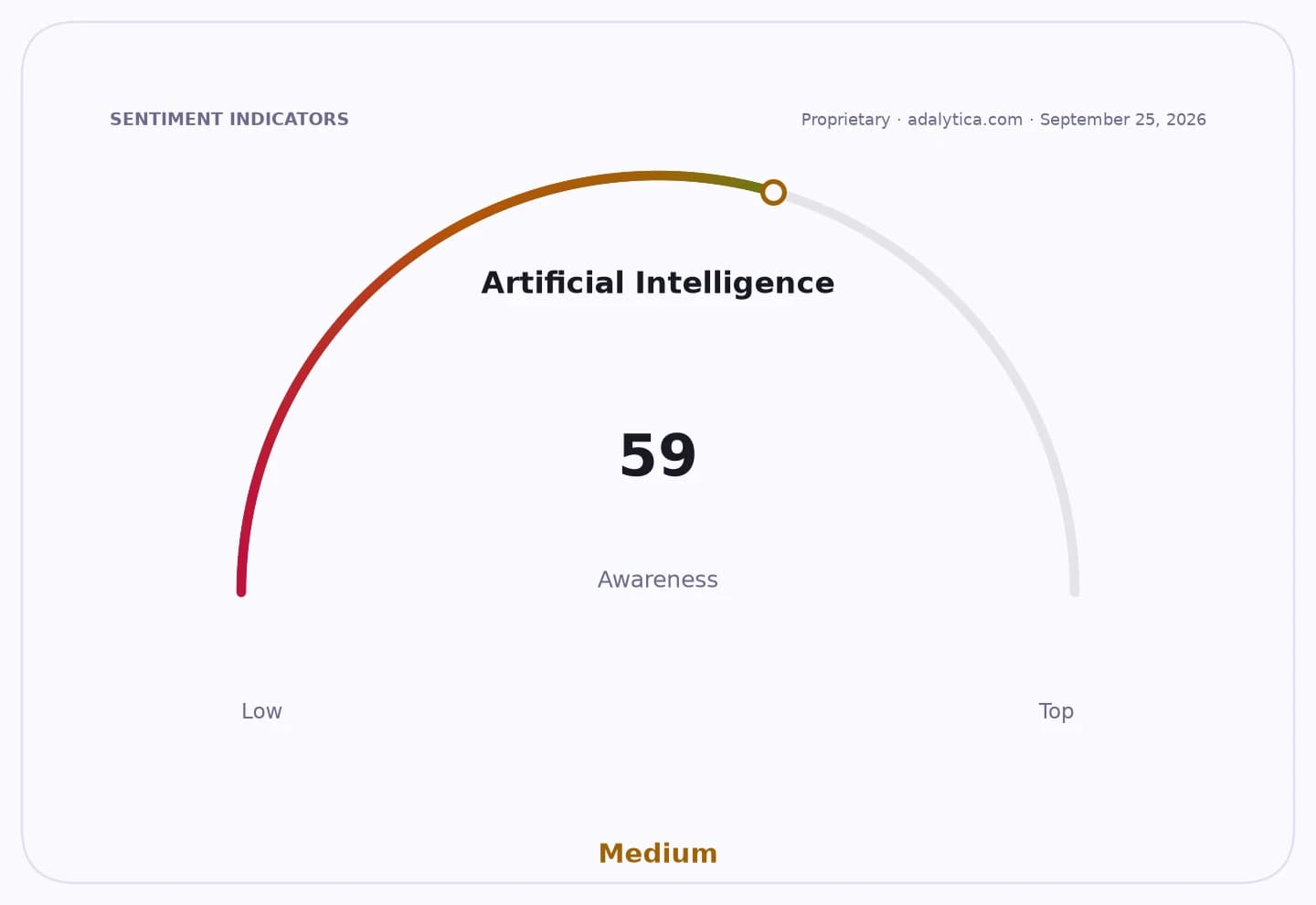
Artificial Intelligence vs NVDAadalytica.com
Explore this data interactively — full history, time series and cross-market comparisons.Open AlphaPulse

The market has already shown how sensitive these names are to changing sentiment. Nvidia’s shares have bounced back from a late-summer pullback and now trade above both the 50-day and 200-day moving averages, but the stock remains well below its highs, suggesting investors are still weighing growth against geopolitical friction. Microsoft has also recovered sharply from this year’s lows and trades above its long-term trend, while Palantir has staged a powerful rebound after a deep correction, reflecting enthusiasm for defense-linked AI even as its volatility shows how crowded and fragile the theme can be.
The bigger lesson for long-term investors is that AI is not just a productivity story. It is becoming a national-security issue, and that usually means more oversight, more procurement competition and more uneven winners. Companies that can sell trusted, compliant systems to governments and enterprises may keep compounding for years, but the path is likely to be bumpier than the market’s early AI euphoria suggested. For patient investors, that argues for owning the strongest platforms and staying diversified rather than chasing every headline. The AI boom is still real — but so are the political and military risks now coming into view.
| Entity | Gains | Losses |
|---|---|---|
| Nvidia | ▲AI chip demand | ▼Export-control risk |
| Microsoft | ▲Cloud and AI adoption | ▼Regulatory scrutiny |
| Palantir | ▲Defense AI demand | ▼Policy and reputational risk |
| Governments | ▲Better AI oversight | ▼Less strategic ambiguity |