AI-linked political groups spent at least $4.8 million trying to sway Tuesday’s midterm elections, but the results were uneven enough to underscore how hard it is to buy influence in the fight over federal AI rules.
AI PACs Spend $4.8 Million in Midterm Races
The biggest losses came on the industry side. American Mission and Building the Future, the two PACs tied to pro-AI group Leading the Future, spent $4.8 million backing South Carolina Senate candidate Darline Graham, who lost, and more than $500,000 each on Republican House candidates Aaron Flint in Montana and Laurie Buckhout in North Carolina, both of whom also fell short.
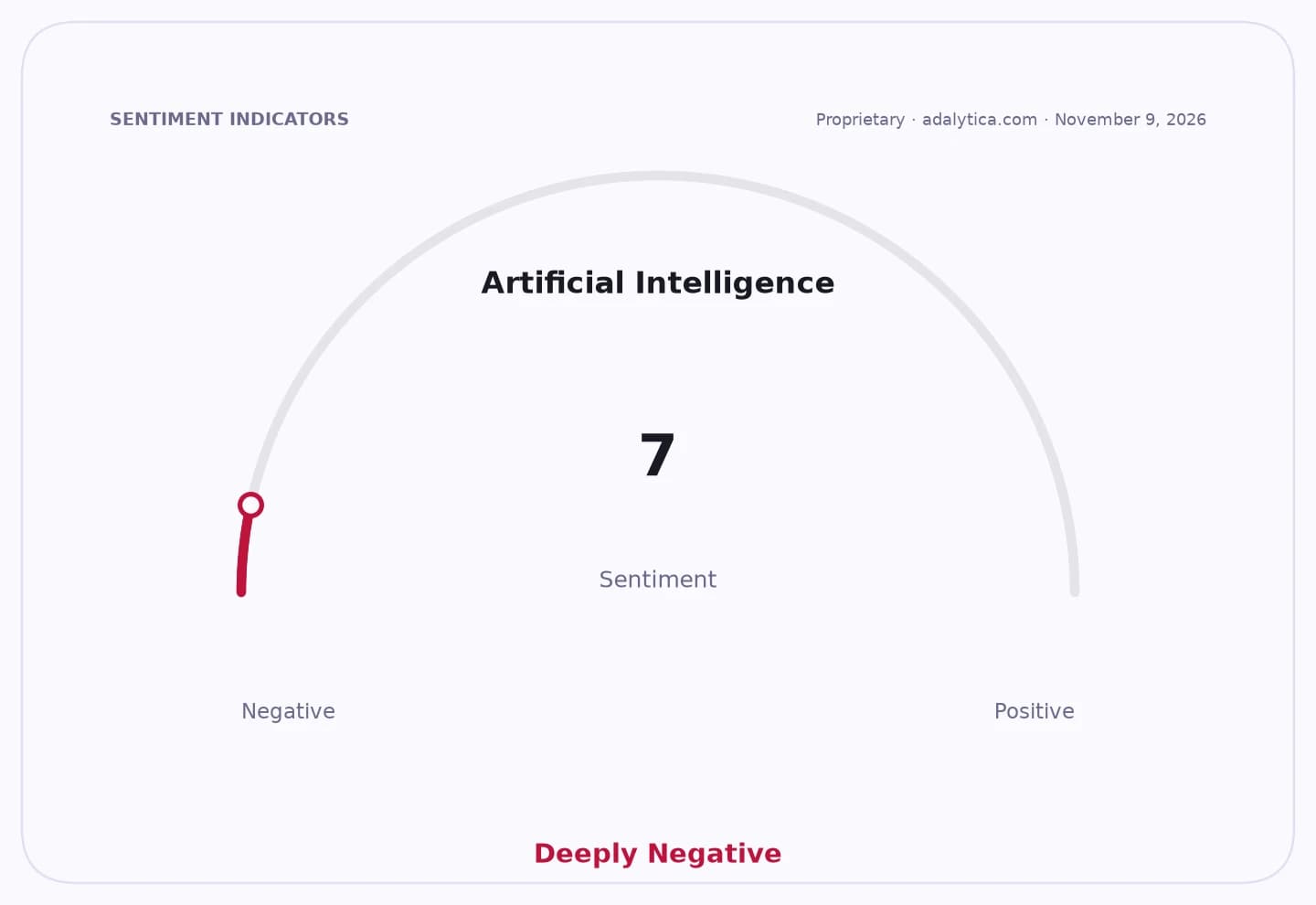
Sentiment Indicators
That matters because the stakes go well beyond a handful of campaigns. The lobbying battle is really about whether Congress creates a single national AI framework that overrides state laws, or whether states keep broad authority to impose their own safeguards. For companies pouring billions into AI infrastructure and model development, a patchwork of state rules would raise compliance costs, complicate product launches and potentially slow deployment across the U.S.
Leading the Future’s Democratic arm, Think Big, fared better in Florida, where it backed Rep. Jared Moskowitz in his reelection win. On the other side, Public First, backed by Anthropic, had mixed results as well, while Guardrails Alliance, which aims to make AI industry money politically toxic, helped defeat California Rep. Jimmy Gomez and backed Angela Gonzales-Torres over him.
The election results suggest neither camp has a clean path to shaping AI policy through raw spending alone. AI PACs can still amplify candidates in primaries and help frame the debate, but general-election money appears less decisive when broader partisan tides are moving against a candidate.
For investors, the episode is another reminder that AI regulation remains a political risk, not just a technological one. Large platforms including Microsoft, Alphabet and Nvidia already face pressure from export controls, antitrust scrutiny and AI-related disclosure and liability risks, and any move toward stricter state-level oversight could add another layer of uncertainty to capital spending and monetization plans.
Leading the Future said it will keep spending through 2028, while Guardrails Alliance said it will continue targeting candidates it sees as too close to the industry. The next test is whether either side can turn election-season spending into durable leverage before Congress and regulators decide how much freedom the AI industry gets to operate under one national rulebook.
| Entity | Gains | Losses |
|---|---|---|
| Leading the Future / AI industry PACs | ▲some Democratic wins | ▼high-profile Republican losses |
| Guardrails Alliance / AI-skeptics | ▲defeats AI-backed candidates | ▼limited reach outside targeted races |
| AI companies | ▲possible national framework push | ▼risk of patchwork state regulation |
| Investors | ▲clearer policy watchlist | ▼higher regulatory uncertainty |