Chip makers rebounded on election day in the U.S. as traders wagered that a divided Congress would blunt the odds of aggressive new restrictions on the AI and semiconductor industries.
Semiconductor stocks rebound on U.S. election day

The Nasdaq rose 0.8% even as the Dow Jones slipped 0.4%, with chip names among the day’s strongest performers. AMD, Broadcom, Nvidia and Micron gained 2% to 4% after a punishing stretch that had left the sector under heavy pressure. The iShares Semiconductor ETF, which tracks the group, had just endured one of its sharpest drawdowns in years, making Tuesday’s bounce look less like a random pop and more like a positioning reset.
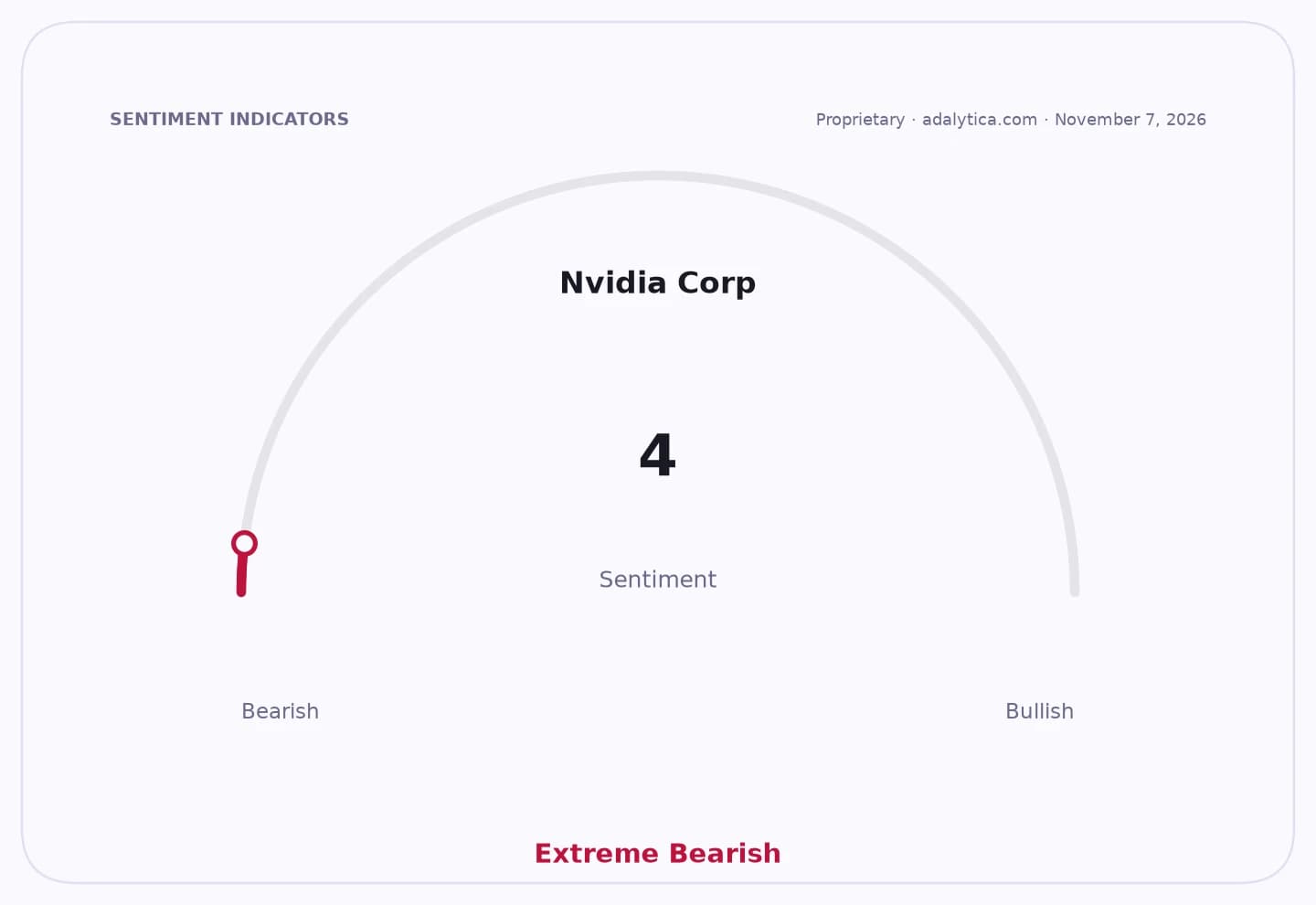
Sentiment Indicators
That matters because semiconductors are no longer just another corner of technology; they are the market’s highest-beta proxy for AI capital spending. When investors buy chips, they are really buying into the next leg of data-center buildout, cloud infrastructure and accelerated computing. When they sell them, they are signaling doubt about how long that spending surge can last, or whether Washington will get in the way.
The political backdrop is the key catalyst. Prediction markets showed Democrats with more than a 70% chance of winning control of both chambers, raising the prospect of a tougher stance on AI chip regulation. But even with those odds, many investors appear to be betting the election will not bring an immediate policy shock. In the near term, markets tend to trade earnings, rates and liquidity more than election outcomes. Over a longer horizon, however, investors often prefer a split in power in Washington, because it can slow sweeping legislation and reduce the odds of abrupt regulatory changes.
That is why the move matters for portfolio construction. A softer regulatory path would be a direct tailwind for Nvidia, AMD, Broadcom and Micron, but it would also support the broader AI supply chain — equipment makers, foundries, advanced packaging and data-center infrastructure. The market has been quick to punish chip stocks on any sign of policy risk; it may now be equally quick to re-rate them if that risk looks manageable.
There is still plenty of volatility in the sector. The recent selloff showed how fast valuation can compress when the market questions the durability of AI demand or starts pricing in political interference. But Tuesday’s rotation suggests investors are not abandoning the theme — they are buying the dip in the names most levered to AI spending and, by extension, to the next phase of digital infrastructure investment.
For investors, the message is clear: this is not just an election-day trade. If Washington ends up constrained, the semiconductor complex could regain its leadership role much faster than skeptics expect. I believe the better opportunity remains in the picks-and-shovels of AI infrastructure, and any pullback tied to politics rather than fundamentals is a chance to build exposure.
| Entity | Gains | Losses |
|---|---|---|
| Nvidia, AMD, Broadcom, Micron | ▲Election-day rebound | ▼Regulatory overhang |
| AI infrastructure suppliers | ▲Renewed capex optimism | ▼Policy uncertainty |
| Short semiconductor positions | ▲— | ▼Squeeze risk |
| Democrats favoring tighter oversight | ▲— | ▼Easier path to new restrictions |