U.S. stocks opened higher after Democrats took control of Congress, a result that investors read as a check on President Donald Trump’s legislative agenda and a brake on the most disruptive policy swings.
U.S. Stocks Rise on Democratic Congress Results

That matters because markets are not just betting on who governs, but on how much Washington can actually change. A divided capital is usually friendlier to equity valuations than a policy shock cycle, and that is exactly the message from the opening trade: the Dow Jones rose 1.2%, the S&P 500 gained 0.88% and the Nasdaq climbed 1.1% as traders priced in more gridlock and fewer sweeping moves.
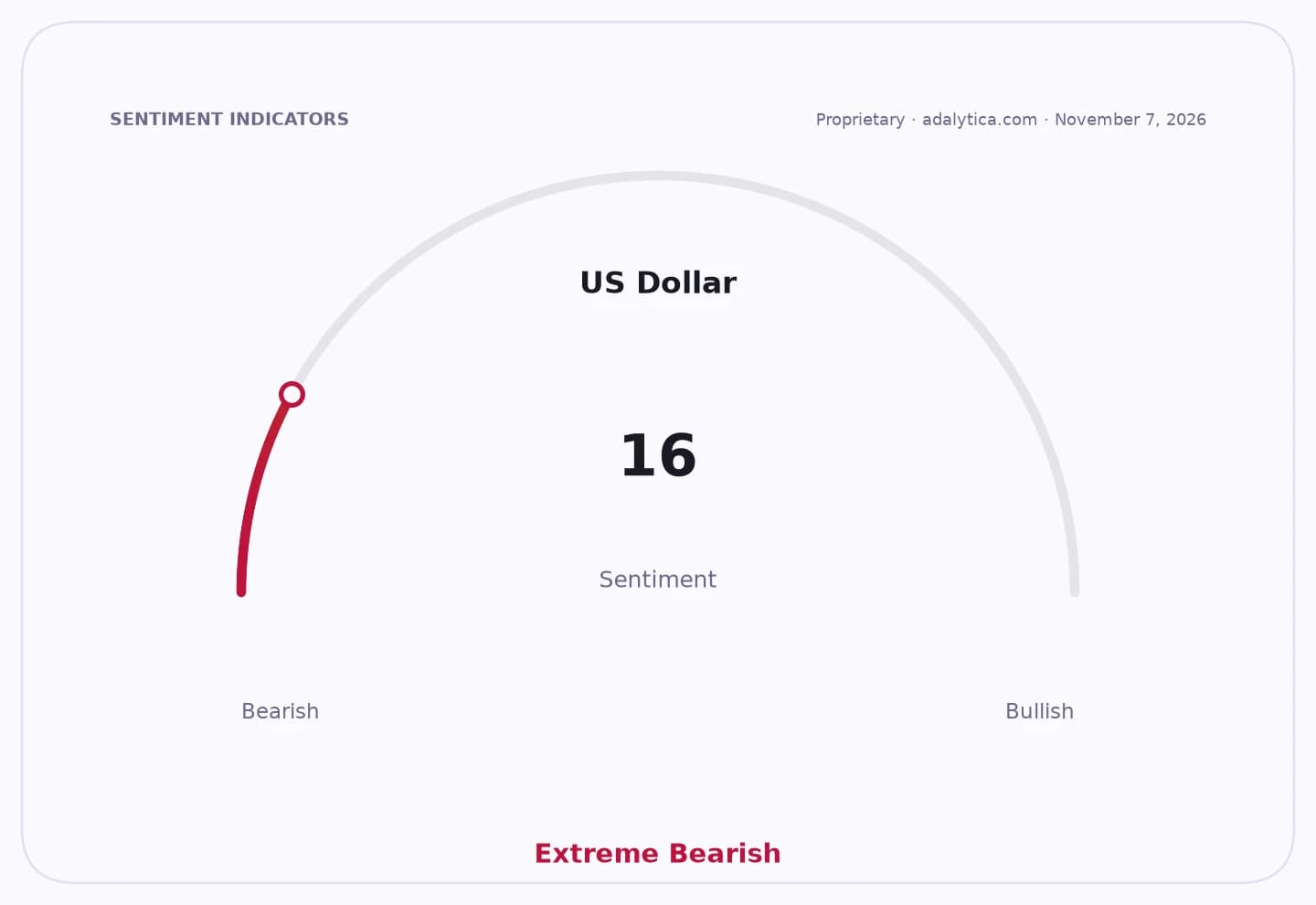
Sentiment Indicators
The bigger macro move was in bonds. The benchmark 10-year Treasury yield slipped to 4.935%, reflecting lower political risk premium and a more predictable policy backdrop. For investors, that is important because falling long rates tend to support growth stocks, even as they can also signal slower fiscal momentum and less inflation pressure. The same risk-off relief helped crude retreat, with Brent December futures down 3% to $100.47 a barrel, underscoring a broader pullback in the “Trump trade.”
But the election did not help every corner of the market. Shares tied to artificial intelligence infrastructure and data centers came under pressure on fears Democrats could tighten AI oversight, even if outright regulation remains limited by the need for compromise. Applied Digital fell more than 4% and Core Scientific dropped more than 7%, while Tesla and SpaceX-related sentiment was hit after Elon Musk’s political alignment drew fresh attention. The message is clear: the market is still rewarding AI scale, but it is also starting to price in regulatory friction around the power-hungry businesses that support it.
That creates an investable split. If Washington stays gridlocked, the direct winners are long-duration growth assets, Treasury bonds and large-cap indices that hate policy uncertainty less than smaller, more regulation-sensitive names. The losers are the most politically exposed infrastructure plays, especially those whose business models depend on permissive AI and data-center policy.
There is also a second-order effect investors should not miss. A less activist Congress may slow the pace of major tax, spending and industrial-policy changes, but it does not remove the structural capex boom around compute, grid capacity and cloud buildout. That means the long-term AI investment case is intact — yet the near-term winners may shift from the most crowded data-center names toward the broader picks-and-shovels chain: semiconductors, power equipment, utilities and grid infrastructure.
With the benchmark ETFs still carrying heavy technical damage after recent pullbacks, the post-election rally looks less like a new bull leg than a repricing of political risk. For now, the highest-conviction trade is to lean into policy stability, quality megacap tech and rate-sensitive assets, while treating the most regulation-exposed AI infrastructure names with caution until Washington’s next move becomes clearer.
| Entity | Gains | Losses |
|---|---|---|
| S&P 500 / Dow Jones | ▲Lower policy risk | ▼Less catalyst from reforms |
| Treasury bonds | ▲Lower yield premium | ▼Less inflation hedge demand |
| AI infrastructure firms | ▲Long-term compute demand | ▼Regulatory scrutiny |
| Tesla / SpaceX-linked names | ▲— | ▼Political backlash risk |