The next major AI upgrade may not be smarter answers, but safer ones, as users increasingly want systems that can admit uncertainty instead of inventing confidence.
AI users want safer outputs, not just smarter answers
That is the clearest read from fresh STEM/MARK research in the Czech Republic, where 60% of AI users said they lack confidence that they can trust the output. Crucially, the demand is strongest among the people already using AI most: 61% of users with a positive view of AI said they want more certainty, versus 52% among skeptics. In other words, the market is not asking for less AI — it is asking for AI that knows when to stop pretending.
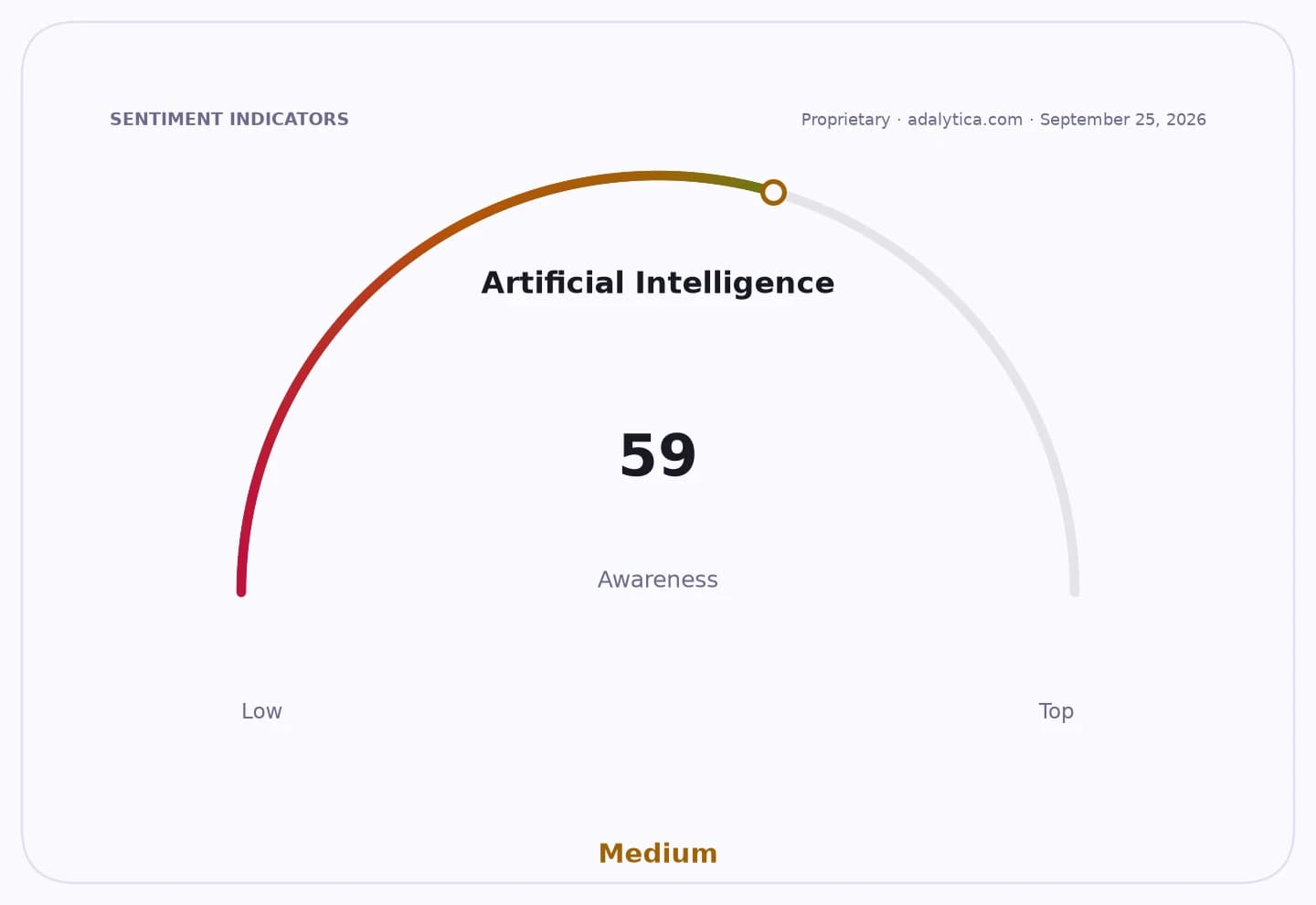
Sentiment IndicatorsⓘProprietary · adalytica.com · September 8, 2026
This is a snapshot — live sentiment, awareness and momentum for 130+ markets update continuously in the dashboard.Open AlphaPulse
That distinction matters economically because trust is the gating factor for broader AI adoption in workflows that carry real financial, legal or operational risk. If users have to verify every answer, AI remains a productivity tool for drafts and search. If models can clearly separate what they know, infer and guess, they become infrastructure for compliance, research, customer service, healthcare, finance and enterprise decision-making. The value proposition shifts from speed alone to decision support, and that is where enterprise spending gets stickier.
The survey also shows a useful investing clue: the problem is not confined to fact-heavy tasks. Users who are otherwise satisfied with AI outputs still want confidence that the answer is not made up — 63% of satisfied users said they still miss that certainty. That tells me the bottleneck is not product novelty. It is reliability at the point of use. The winners will be the companies that make hallucination visible, traceable and controllable, not just the ones that train larger models.
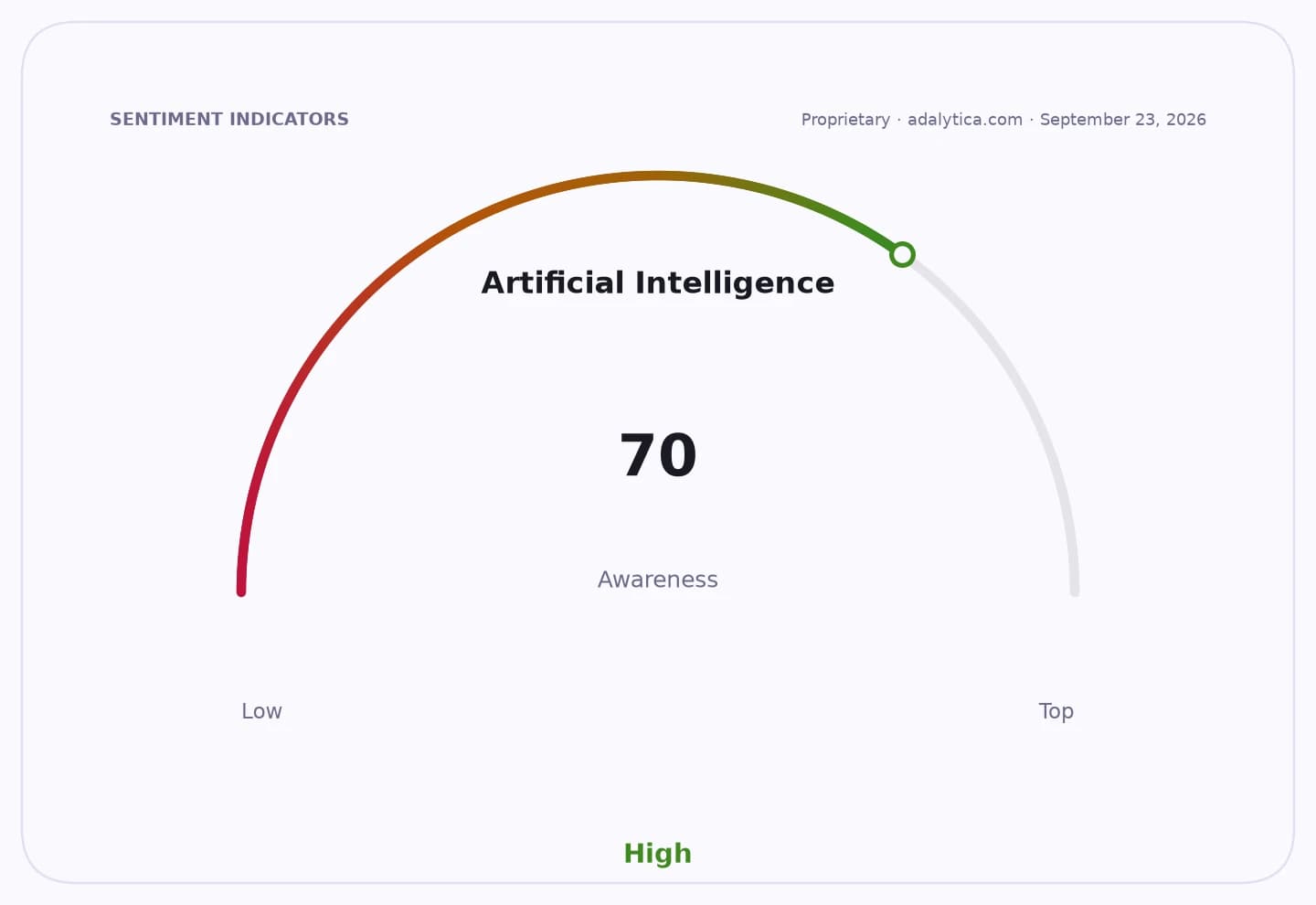
Artificial Intelligence — 30-day sentimentadalytica.com
Explore this data interactively — full history, time series and cross-market comparisons.Open AlphaPulse
That is why the most investable angle is not only frontier model developers, but the picks-and-shovels layer around them. Microsoft, with its enterprise distribution and Copilot stack, is better positioned than most to turn uncertainty disclosure into a workflow feature. Nvidia remains the hardware toll road, but the software value chain around verification, retrieval, audit trails and model governance could compound faster if businesses demand provenance and confidence scoring by default. The market underestimates how quickly “trust layers” can become mandatory spending once AI moves from experimentation into regulated production use.
The broader implication is that AI adoption is entering its industrial phase. The first wave was about capability. The next wave is about credibility. That is especially important now that large model launches, government-backed public AI services and new security-focused systems are accelerating the race for deployment, even as regulators and corporate buyers grow more sensitive to data integrity, privacy and unintended consequences. In that environment, the most valuable model may be the one that knows when it does not know.
Investors should treat uncertainty management as a secular AI theme, not a footnote. The market is still paying up for raw intelligence, but the next breakout opportunity likely sits in the companies that can make AI trustworthy enough for mission-critical use.
| Entity | Gains | Losses |
|---|---|---|
| Microsoft | ▲Enterprise AI trust features | ▼Standalone chatbot hype |
| Nvidia | ▲More AI infrastructure spend | ▼Commodity model vendors |
| AI governance tools | ▲Higher compliance demand | ▼Unchecked hallucinations |
| End users | ▲Better decision support | ▼Time spent verifying output |