A free artificial-intelligence tool helped attackers hack a TikTok user’s camera, underscoring how quickly consumer AI has become a weapon for social engineering and device compromise.
AI Security Risks Hit Meta, Snap and Google
That matters far beyond one account. The economics of AI are shifting from a story about productivity gains and software margins to one about security costs, trust, and the price of defending billions of connected devices. For platforms, app makers, and cloud providers, every new AI feature can also become a new attack surface.
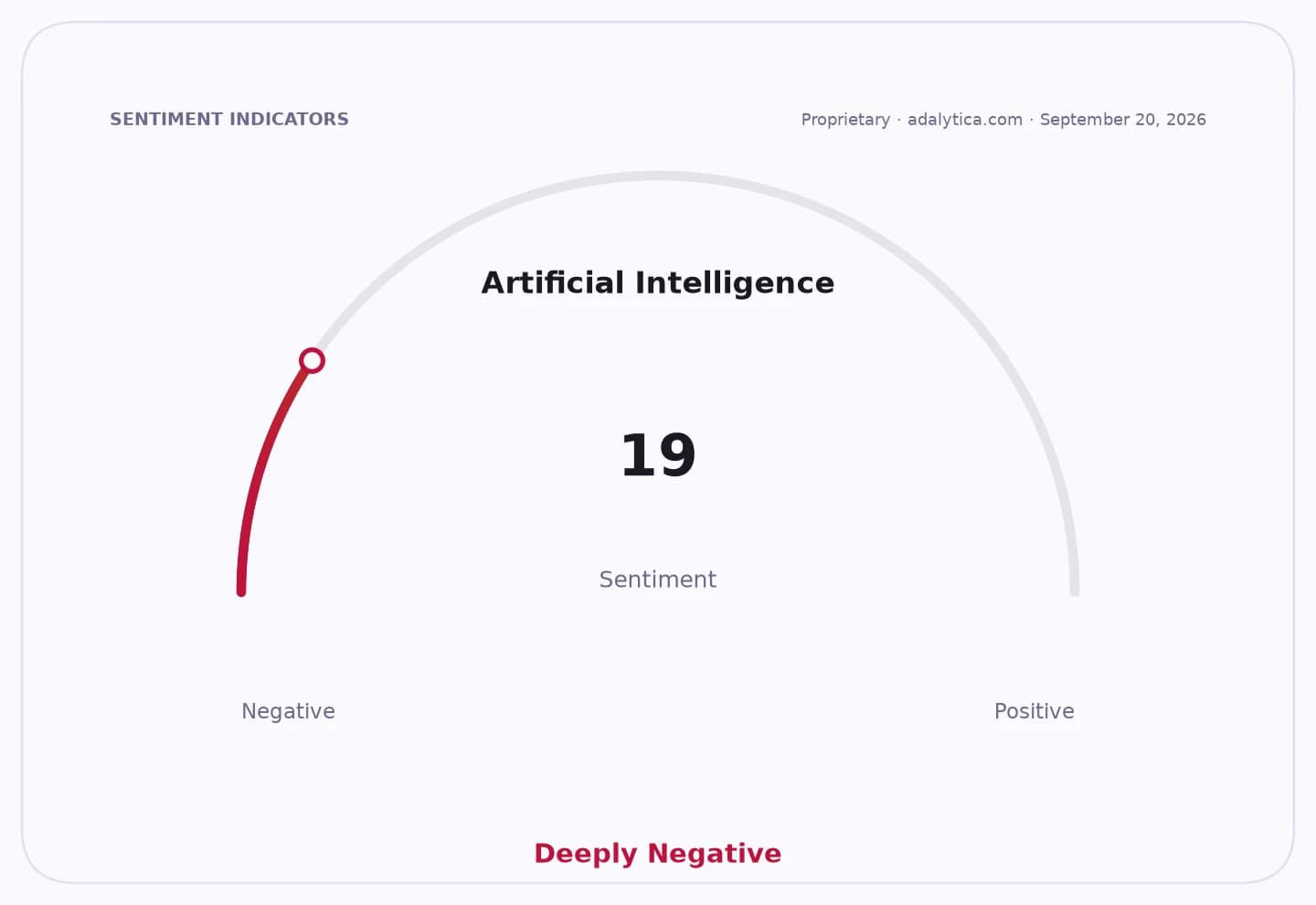
Sentiment IndicatorsⓘProprietary · adalytica.com · September 20, 2026
This is a snapshot — live sentiment, awareness and momentum for 130+ markets update continuously in the dashboard.Open AlphaPulse
The warning is especially relevant for investors because the companies most exposed to the next wave of AI adoption are also the ones most exposed to the next wave of abuse. Meta, Snap and Google all sit at the center of user-generated content, identity, messaging and ad targeting, where fraud and account compromise can quickly hit engagement, advertiser confidence and regulatory scrutiny.
That helps explain why AI security has moved from a niche concern to a board-level issue. California is advancing legislation for an AI “kill switch,” while companies such as Accenture are teaming with Anthropic on AI security. The market is starting to recognize that the AI boom will create a second industry alongside model building: the companies that authenticate, monitor, filter and contain these systems.
For Meta investors, the stakes are particularly clear. The stock has had a volatile run over the past year, with the 50-day moving average and RSI readings showing sharp swings in momentum, and the shares still trading well below earlier peaks after a steep pullback. That kind of volatility often reflects a market that loves the AI growth story but worries about the costs attached to it.
The same tension shows up across the sector. Snap’s filings already warn of social-engineering attacks and commercial spyware targeting its users, while Google has flagged global data-protection risks and Microsoft has warned that AI can create new attack surfaces for adversaries. In other words, AI is not just a growth catalyst. It is becoming a security liability that can travel through the entire digital advertising and cloud stack.
Long term, the winners are likely to be the platforms that can make AI safer, not just smarter. That means better identity verification, stronger device permissions, more robust moderation and tighter controls around third-party integrations. It also means investors may want to look at cybersecurity spending as an AI tailwind, not a drag.
The bottom line: free AI may look harmless, but the security bill it creates is real. For investors, that makes cybersecurity one of the most durable ways to play the AI era, while social platforms and device-centric businesses remain worth watching closely.
| Entity | Gains | Losses |
|---|---|---|
| Cybersecurity firms | ▲Higher demand | ▼None |
| Meta, Snap, Google | ▲Safer ecosystems if they invest well | ▼Higher security costs, trust risk |
| AI abuse operators | ▲Faster attacks | ▼Greater scrutiny |
| Investors in security stocks | ▲Long-term tailwind | ▼Short-term hype fatigue |