Airbus and BMW Group have turned a long-running science project into an industrial contest, launching a global quantum computing challenge aimed at problems that conventional computers still struggle to solve in aviation and automotive manufacturing.
Airbus and BMW Launch Quantum Mobility Quest
The significance is not the prize money — €30,000 for each of five challenges — but the signal that two of Europe’s most complex engineering groups are now treating quantum computing as a near-term tool for aerodynamics, supply chains, automated mobility and materials science. That matters because the biggest costs in transportation come from the optimization problems that sit behind design, routing, inventory, corrosion control and energy use. Even small gains in those areas can compound across fleets, factories and global logistics networks.
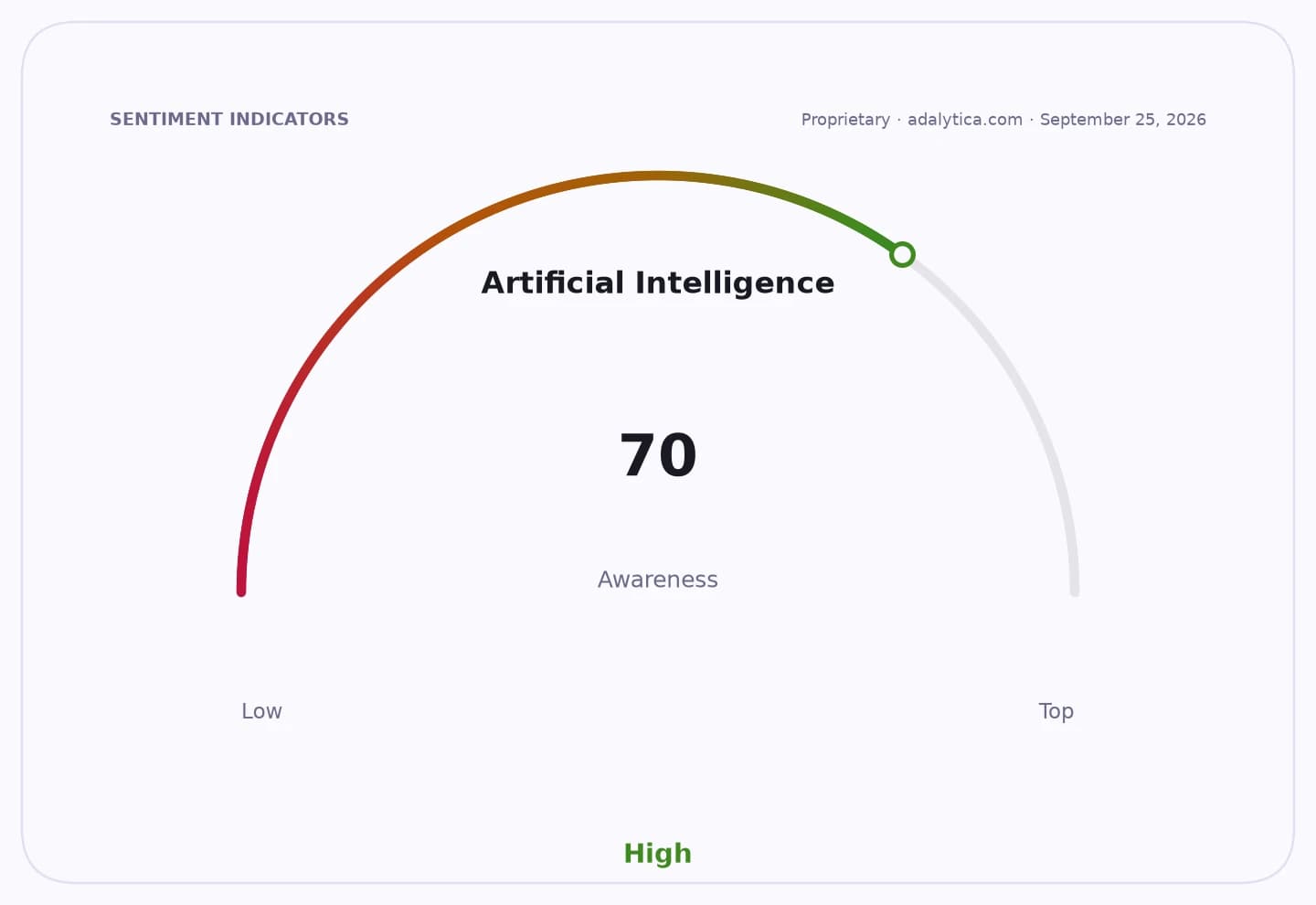
Sentiment IndicatorsⓘProprietary · adalytica.com · September 6, 2026
This is a snapshot — live sentiment, awareness and momentum for 130+ markets update continuously in the dashboard.Open AlphaPulse
The competition, called The Quantum Mobility Quest, is being run with The Quantum Insider and uses Amazon Web Services’ cloud quantum service for finalists to benchmark solutions. Participants have four months to build theoretical frameworks before a second phase selects teams to implement their ideas. The challenge is designed around practical use cases: improved aerodynamic design using quantum solvers, quantum machine learning for automated mobility, optimization of a more sustainable supply chain and quantum simulation for corrosion inhibition.
For Airbus, the appeal is obvious. Aircraft design is an optimization-heavy business where shaving weight, improving lift and reducing maintenance can quickly translate into lower fuel burn and higher margins. For BMW, the same logic applies to manufacturing complexity, supplier networks and the race to automate more of the mobility stack. Both groups are under pressure to cut costs and emissions while preserving technical advantage, and quantum computing offers a possible path to solving the sort of multi-variable problems that classical systems can only approximate.
The move also underscores how industrial firms are broadening their technology bets beyond incremental software upgrades. Rather than waiting for fully mature fault-tolerant machines, they are opening the door to hybrid workflows that pair classical systems with early-stage quantum hardware available through cloud providers. That keeps the cost of experimentation low while building internal expertise, a model investors have increasingly seen in artificial intelligence adoption before commercial payback becomes visible.
Markets have treated quantum computing as a high-beta theme, with listed pure plays still far from proven monetization. The latest price action in QUBT underscores the volatility: the stock closed at $8.01 on Sept. 4, down sharply from peaks above $24 in late 2025, while technical indicators such as the 50-day and 200-day moving averages suggest the shares have spent long periods under pressure. That kind of swing reflects the gap between long-term promise and near-term revenue certainty, and highlights why partnerships with blue-chip industrial users matter for the sector’s credibility.
Airbus’ U.S.-listed shares have also come under pressure in recent months, with EADSY closing at $57.87 on Sept. 4, below its 50-day average of $58.50 and well below levels above $62 earlier in the year. Conventional indicators such as RSI readings had turned oversold in early September before recovering somewhat, suggesting investors remain cautious on the stock despite the company’s push into advanced technologies. For shareholders, the quantum initiative is less about immediate earnings impact than about optionality: a low-cost way to explore technologies that could later feed into design, maintenance and supply-chain efficiency.
The broader backdrop is that quantum research is moving from physics labs toward industrial testbeds. Recent breakthroughs in neutral-atom systems, quantum cryptography and quantum interfaces have kept enthusiasm high, even if the commercial timeline remains uncertain. If Airbus and BMW can identify usable applications, it would strengthen the case that quantum computing is not just a future computing platform but a specialized optimization engine for capital-intensive industries.
The bull case for the initiative is that transport is exactly where quantum computing should first prove useful: lots of variables, high costs of error and meaningful payoff from even modest efficiency gains. The bear case is that most pilot projects will remain experimental, with limited near-term effect on earnings or valuation. Either way, the partnership adds to the pressure on aerospace and auto peers to show they are not merely watching the quantum race from the sidelines.
Investors will be watching whether the challenge produces repeatable industrial use cases, follow-on pilots or deeper partnerships with cloud and hardware providers. For now, the most important development is that two European manufacturing leaders are moving quantum computing from theory to procurement-grade experimentation.
| Entity | Gains | Losses |
|---|---|---|
| Airbus | ▲Lower-design-cost optionality | ▼Slow payoff risk |
| BMW Group | ▲Supply-chain optimization potential | ▼Execution uncertainty |
| Quantum firms | ▲Credibility from industrial demand | ▼Hype if pilots stall |
| Traditional computing workflows | ▲Complementary role | ▼Share of advanced optimization tasks |