Albania’s agreement with US developer Argent LNG to study a coastal gas terminal could redraw Southeast Europe’s energy map by creating a new LNG entry point for the Balkans and, potentially, Ukraine.
Albania and Argent LNG Study Coastal Gas Terminal
That matters because the project is not just another infrastructure concept — it is a bid to build a strategic gas corridor in a region that still relies heavily on imported energy and remains vulnerable to supply shocks. If the terminal is built as envisioned, it would give Albania a role as a transit hub rather than simply a consumer market, creating a toll-road model for gas flows between the Adriatic and landlocked regional buyers.
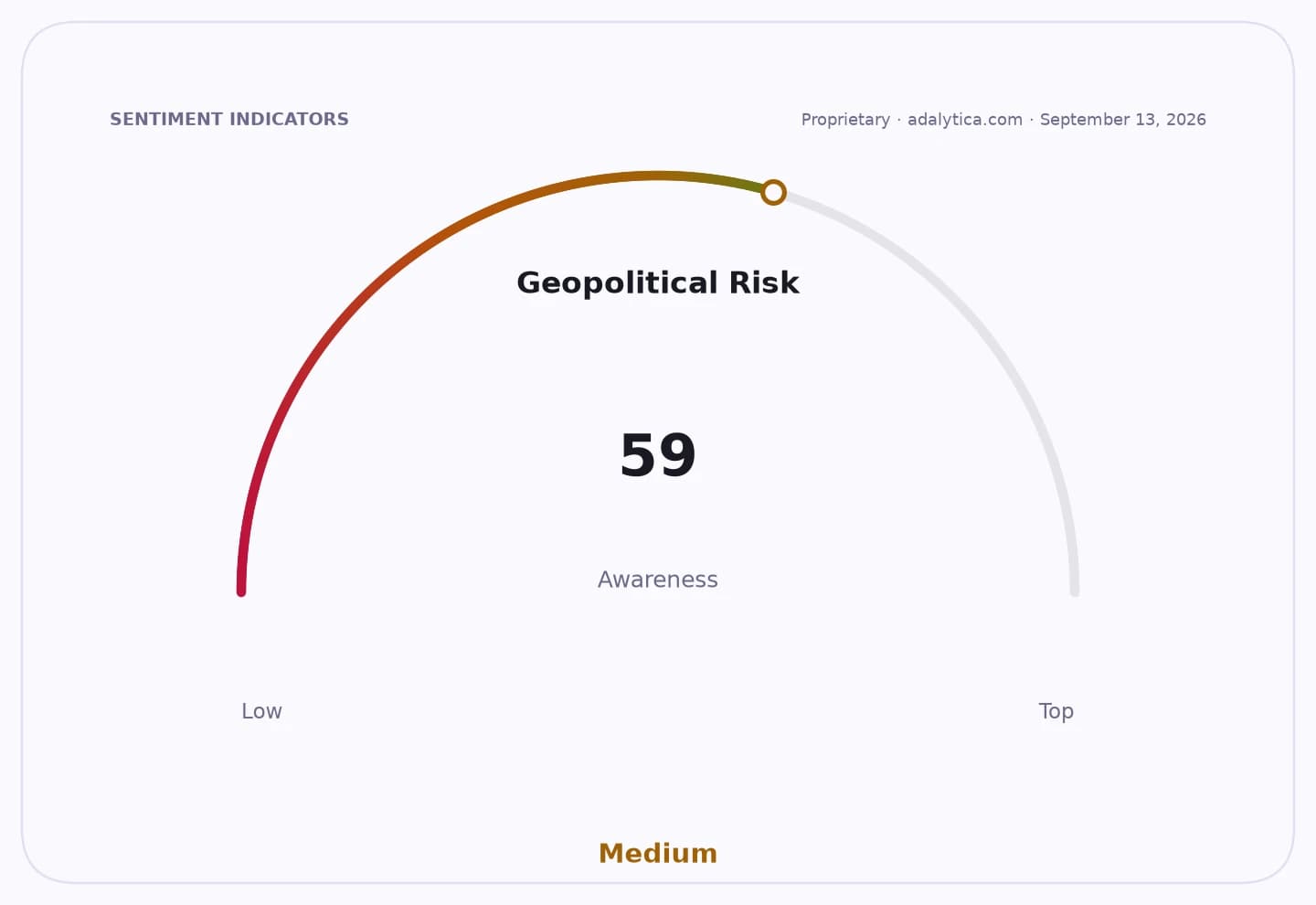
Sentiment IndicatorsⓘProprietary · adalytica.com · September 13, 2026
This is a snapshot — live sentiment, awareness and momentum for 130+ markets update continuously in the dashboard.Open AlphaPulse
The planned terminal would be designed to handle up to about 5 million tons of LNG a year, with storage capacity and regasification infrastructure to send gas into pipeline networks. That scale is meaningful for the Western Balkans, where even modest new import routes can improve bargaining power, diversify supply and ease peak-demand constraints. For Europe, every additional non-Russian route matters as the continent keeps rebuilding its gas system around security of supply rather than just price.
For investors, the story is less about Albania alone and more about the second-order winners from a broader LNG buildout: developers, pipeline operators, storage assets, and exporters positioned to feed new import terminals. Argent LNG is trying to extend the US LNG boom into a new downstream geography, and that fits a larger global pattern in which American gas becomes the swing supply for countries seeking energy security. The market often focuses on liquefaction projects in the US, but the real value can accrue to the infrastructure that connects LNG to end users.
There is also a geopolitical edge. The fact that some of the gas could ultimately reach Ukraine underscores how energy infrastructure is increasingly being shaped by security policy, not just commercial demand. In that sense, Albania’s pitch is bigger than a terminal: it is an attempt to turn geography into leverage.
The opportunity here is in the companies that own the pipes, storage and shipping links that make new LNG corridors real. If this project advances beyond the memorandum stage, it could help validate a multi-year investment cycle in gas infrastructure across Europe’s periphery — and the market may still be underestimating how durable that cycle becomes.
| Entity | Gains | Losses |
|---|---|---|
| Argent LNG | ▲New export outlet | ▼Upfront project risk |
| Albania | ▲Transit hub status | ▼Execution burden |
| Western Balkans buyers | ▲More supply options | ▼Higher infrastructure dependence |
| Rival gas routes | ▲Less relevance | ▼Market share pressure |