Albanian olive farmers are warning they may abandon orchards and even uproot existing groves after a sharp drop in olive oil prices, prompting the food industry to call for an emergency government response that includes a temporary import ban.
Albania Olive Farmers Seek Import Ban After Price Drop
The dispute matters because a prolonged price slump could wipe out years of investment in Albania’s olive sector, hit rural incomes and reduce domestic processing activity just as growers need to carry out the next two months of orchard work that determines next year’s crop. AFI, the Albanian Food Industry association, says the shock could cascade through more than 270 olive oil plants built in the past decade, with knock-on effects for jobs, land use and the state budget.
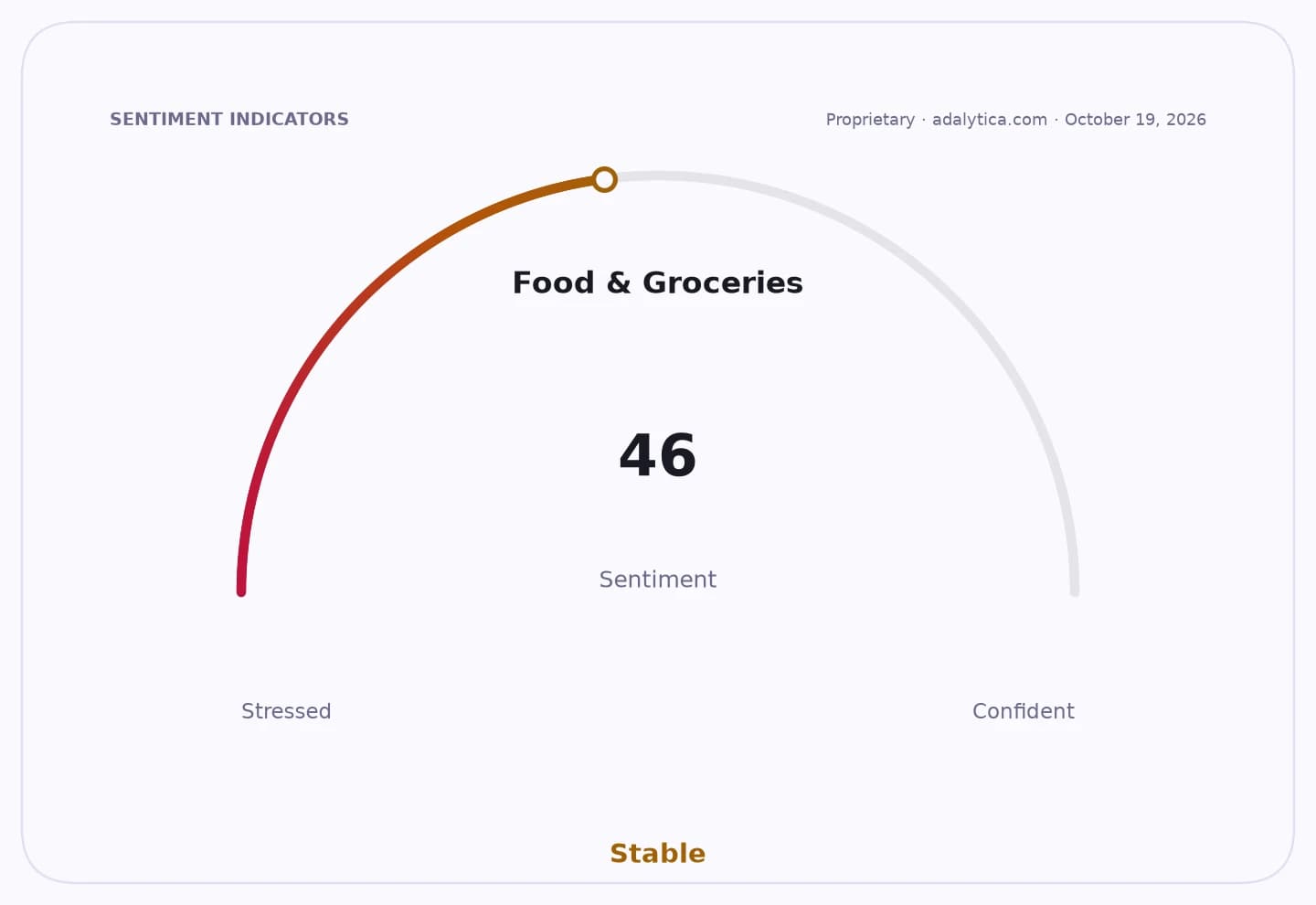
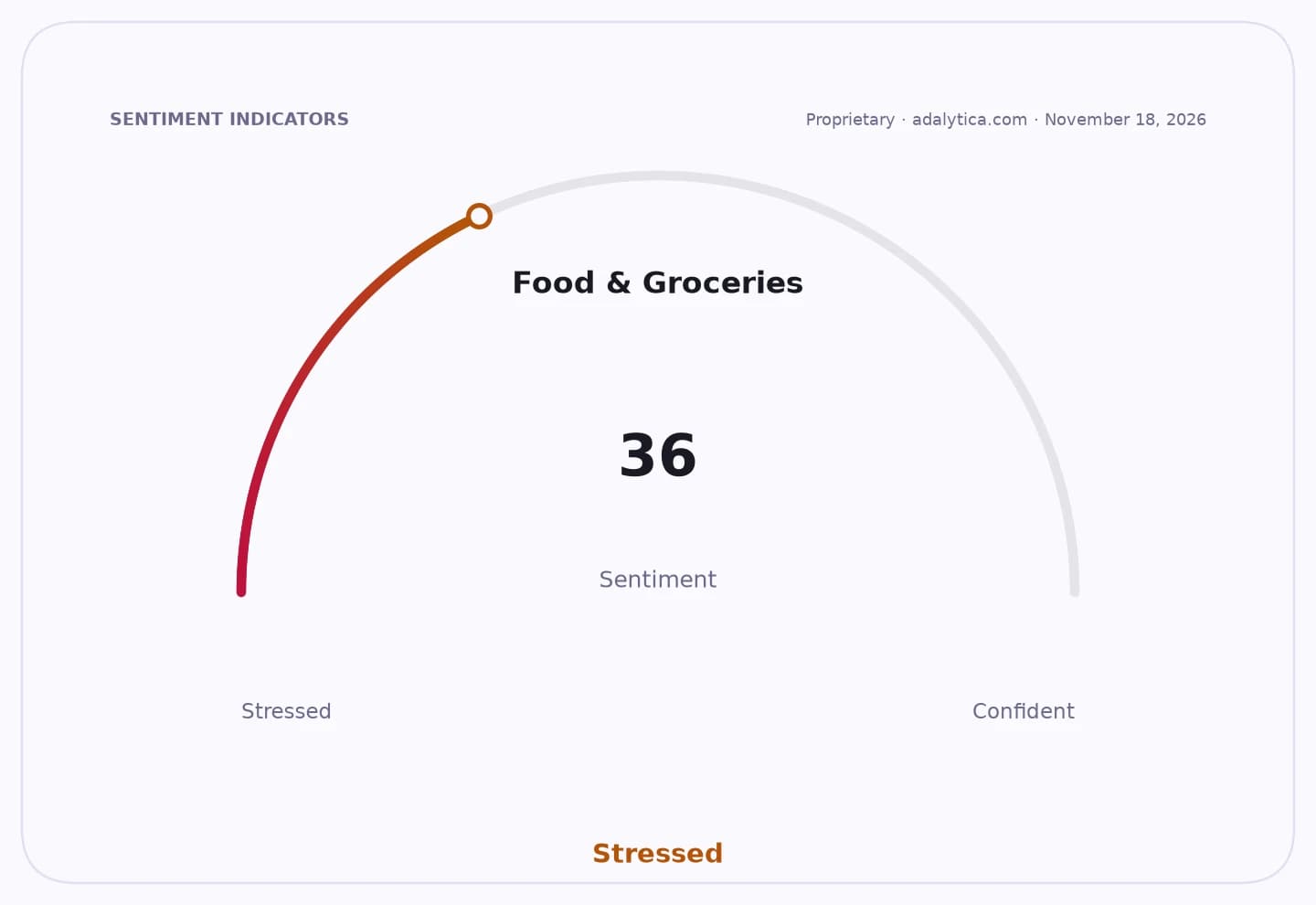
Sentiment Indicators
AFI has asked the Agriculture Ministry and other institutions to move quickly and to assess the market distortion before growers skip care work that would worsen output next year. Among its proposed seven emergency measures are a temporary halt on olive oil imports, free certification for domestic production and a push to boost consumption of Albanian oil.
The group argues that without intervention, consumers could later face “monopolistic” import prices if local production is damaged and farmers exit the sector. The warning comes as food and grocery spending sentiment tracked by Adalytica.com has turned sharply higher in recent days, underscoring how sensitive consumers remain to price pressure in staple foods.
For investors, the immediate read-through is to processors, importers and food retailers exposed to Albanian olive oil supply and pricing, while local producers face a deeper risk of margin compression and asset impairment if the market remains depressed. The next catalyst is whether the government responds with trade restrictions, subsidies or other support, and whether growers actually cut back orchard maintenance before the critical seasonal work window closes.
| Entity | Gains | Losses |
|---|---|---|
| Albanian olive growers | ▲Relief from lower import competition | ▼Current margins and future yields |
| Local processors/factories | ▲Protection of domestic supply chain | ▼If groves are abandoned |
| Importers/traders | ▲Open market access | ▼Temporary ban risk |
| Consumers | ▲Potentially steadier local supply later | ▼Higher prices if domestic output falls |