Inflation in Albania has climbed to its highest level in two and a half years, prompting the government to move from passive monitoring to a public price-tracking platform it says could sharpen competition and ease pressure on households.
Albania launches price watch platform for inflation
The intervention matters because the latest price surge is not confined to one volatile item or a temporary shock. According to INSTAT, annual inflation rose to 3.4% in July, with food leading the increase even in the middle of the domestic harvest season. Vegetable and legume prices jumped 10.1%, seafood rose 9.4% and meat gained 4.6%, underscoring how import costs, supply-chain friction and weaker local farm compensation are filtering through to consumers.
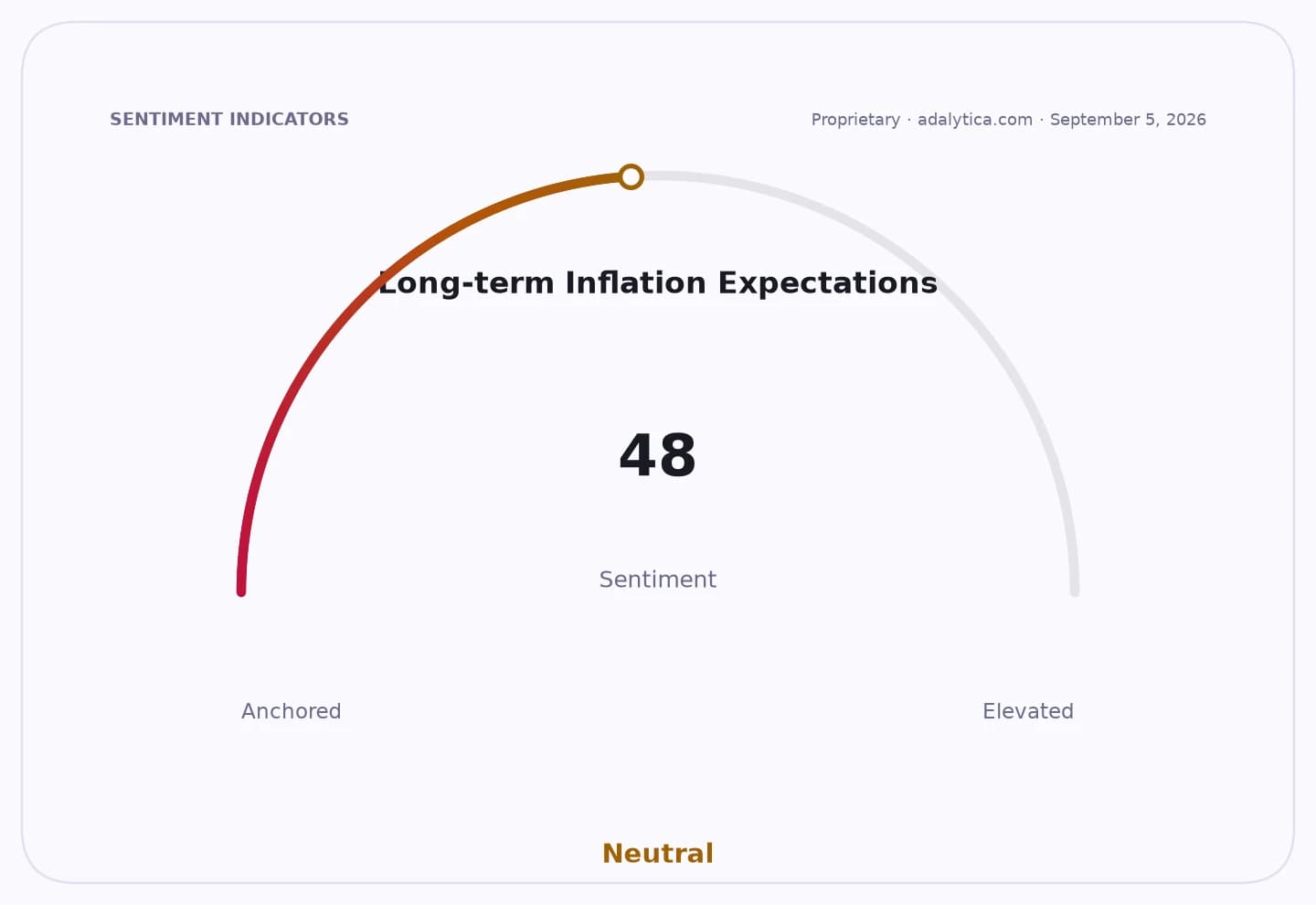
Sentiment IndicatorsⓘProprietary · adalytica.com · September 5, 2026
This is a snapshot — live sentiment, awareness and momentum for 130+ markets update continuously in the dashboard.Open AlphaPulse
That creates a political and economic problem for Tirana. Albanian households are paying more for the same basket of goods while wages and social transfers lag the speed of price increases. Fuel has also returned to high levels, reaching as much as 220 lek per liter, adding to transport and distribution costs across the economy. The government has already let expire several temporary support measures, including the transparency board, tax relief and transport subsidies, leaving it with fewer tools to cushion households beyond pension indexation and social bonuses under review.
The new “Price watch Albania” platform is designed to show basket prices in one place rather than set them directly. Deputy Economy Minister Enkelejd Musabelliu said the goal is to improve transparency, help consumers compare retailers and create pressure on sellers to compete on final prices. The pilot is due in September and will start with staple items such as dairy, vegetables and packaged foods, initially focusing on large supermarket chains before potentially expanding to smaller retailers.
For investors, the key question is whether the measure changes behavior or simply records inflation more efficiently. If the platform increases price transparency, it could compress margins for retailers and distributors with wider markups, especially in categories where consumers have little visibility between farm gate, wholesale and shelf prices. But if the problem lies deeper in agriculture, imports and taxation, as industry representatives argue, the platform may do little beyond exposing the same structural price gaps.
That structural argument is central. Alban Zusi, head of the food industry association, said price pressures reflect January and February floods, delayed farm compensation, unchanged tax burdens after Middle East war-related shocks and the impact of the exchange rate, which he said has added about 6% to prices this year. Economist Ergis Sefa said agriculture’s share of gross output has fallen sharply over the past decade to just above 15% from about 26%, while import dependence has risen, weakening the link between tourism demand and domestic supply.
The broader backdrop is a country where inflation has become sticky rather than transient. Adalytica’s long-term inflation expectations gauge remains neutral, but confidence in the central bank’s 2% target has jumped to an “extreme greed” reading, suggesting market participants are watching for policy responses to keep expectations anchored. Albania is not facing a monetary policy crisis, but it is facing a credibility test on whether transparency alone can tame food inflation without more direct support for producers and low-income consumers.
The next catalyst is whether the September pilot shows enough price dispersion to affect retail behavior. If it does, the platform could become a template for broader market discipline. If it does not, pressure is likely to shift back to fiscal support, tax policy and agricultural supply measures.
| Entity | Gains | Losses |
|---|---|---|
| Consumers | ▲Better price comparison | ▼Higher food bills |
| Government | ▲More price transparency | ▼Political pressure over inflation |
| Supermarket chains | ▲Broader customer reach | ▼Margin compression |
| Farmers and suppliers | ▲Potential visibility on gaps | ▼Delay in compensation and weak pricing power |