Britain’s food inflation is on track to stay uncomfortably high, with prices expected to exceed 6% by mid-2027, underscoring how persistent cost shocks are keeping one of the economy’s most politically sensitive price gauges elevated.
Britain food inflation seen above 6% by 2027
That matters because food is one of the fastest ways households feel inflation, and it has a disproportionate effect on consumer confidence, real incomes and the Bank of England’s room to maneuver. Even as headline inflation elsewhere may ease, a renewed or prolonged rise in groceries can keep spending under pressure, particularly for lower-income families that devote a larger share of budgets to essentials.
Sentiment IndicatorsⓘProprietary · adalytica.com · September 10, 2026
This is a snapshot — live sentiment, awareness and momentum for 130+ markets update continuously in the dashboard.Open AlphaPulse
The latest pricing backdrop suggests the problem is not a one-off squeeze. Global food costs have been pushed higher by a mix of war-related supply disruptions, climate-driven crop stress, drought and shipping bottlenecks, while domestic producers continue to face elevated energy and wage bills. The British Food Industries Federation has warned that price rises could extend into the new year, reinforcing the view that the inflation impulse is still working through the system rather than fading quickly.
For investors, the message is two-sided. Grocery retailers and suppliers may retain pricing power in the near term, but margin resilience will depend on how much of the cost surge can be passed on without crushing volumes. Consumers trading down generally favor discounters and value-led chains, while premium and discretionary food categories face more pressure. That helps explain why Walmart and Kroger have held up better than more cyclical retail names, even as broader market technicals turn more mixed.
Walmart shares recently slipped back below their 200-day moving average after a strong run earlier in the year, while Kroger has also lost momentum, with its stock below both the 50-day and 200-day averages. Costco has been more resilient but has also given back some gains after an earlier spike. The pattern points to investors weighing defensive earnings support against the risk that food inflation eventually becomes demand destruction rather than margin tailwind.
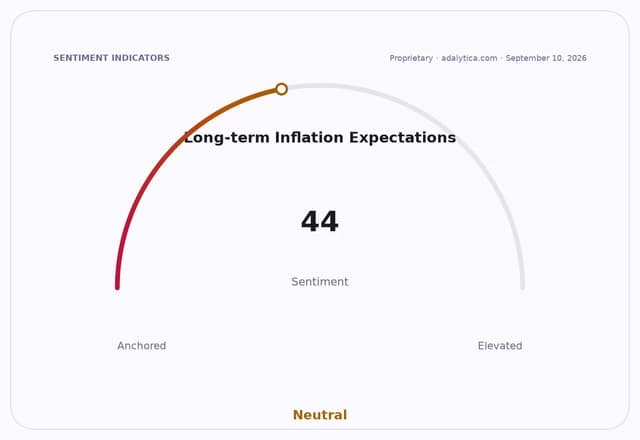
The broader macro risk is that sticky food inflation reinforces already fragile inflation expectations. Adalytica’s long-term inflation expectations sentiment has dropped into neutral territory, while confidence in the Fed’s 2% target has weakened sharply. In Britain, that kind of persistence would complicate any easing cycle, keeping pressure on the central bank to avoid loosening policy too quickly even if growth remains subdued.
For now, the narrative is less about a new surge than about an old one refusing to go away. If food inflation does move above 6% by mid-2027, it would leave households paying more for basics, keep policy makers cautious and reward businesses that can defend volumes as much as prices.
| Entity | Gains | Losses |
|---|---|---|
| Grocery retailers | ▲Pricing power | ▼Volume growth |
| Food suppliers | ▲Higher shelf prices | ▼Margin certainty |
| Households | ▲None | ▼Real disposable income |
| Bank of England | ▲None | ▼Inflation-control flexibility |