Alibaba Cloud and Egypt’s E-Finance have agreed to work with Nuvexa on a locally hosted cloud platform that could give Egyptian companies access to Alibaba’s cloud computing and artificial intelligence tools while keeping data inside the country.
Alibaba Cloud, E-Finance, Nuvexa Egypt cloud deal
The deal matters because it addresses one of the biggest constraints on cloud adoption in emerging markets: data residency. By combining global cloud infrastructure with hosting and processing inside Egypt, the partners are trying to make advanced digital services easier to use for businesses that need local compliance, lower latency and more control over where data sits. That is especially relevant for Egypt’s small and medium-sized companies, as well as industries such as agriculture and digital commerce that can benefit from scalable computing without building their own technology stacks.
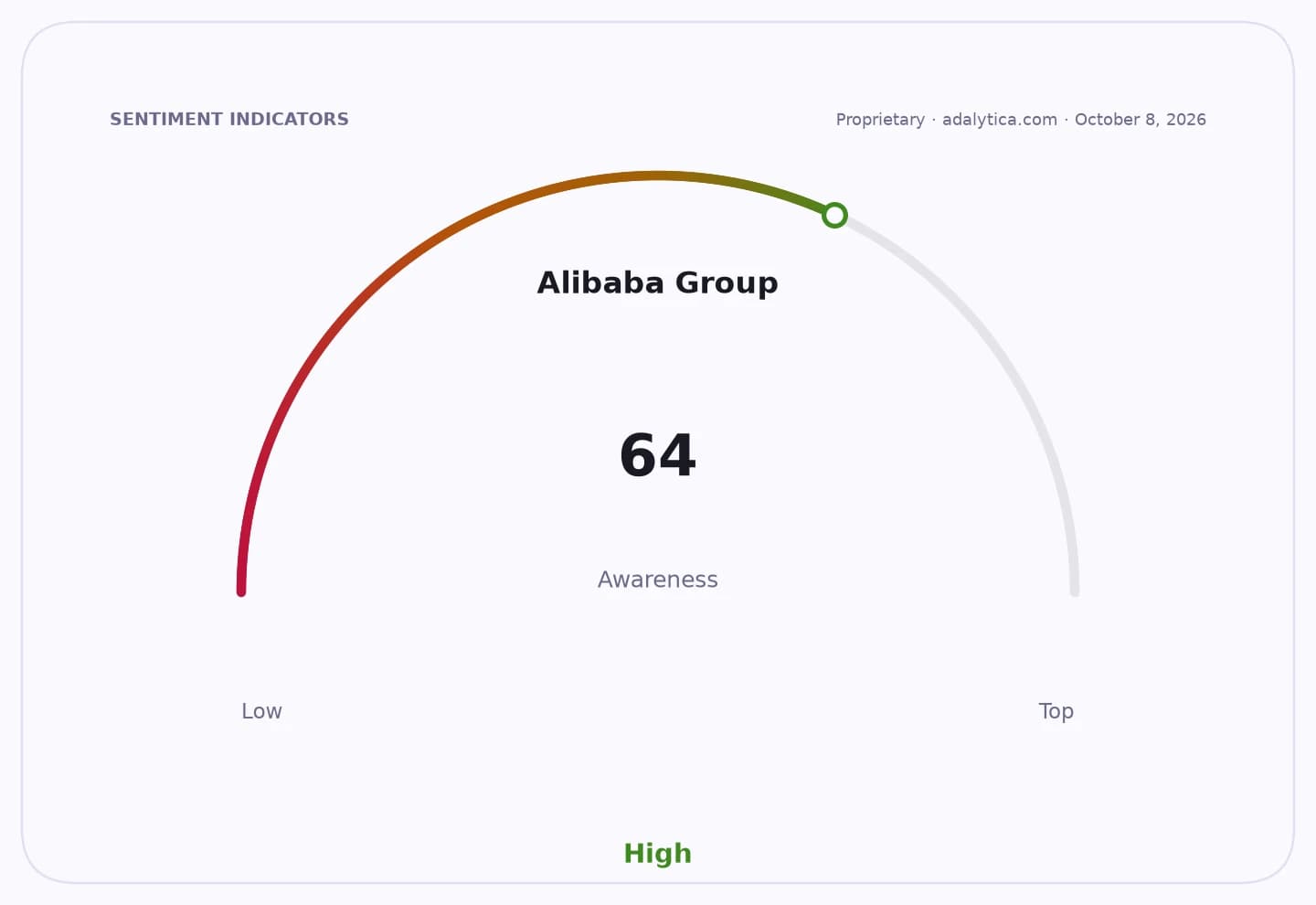
Sentiment IndicatorsⓘProprietary · adalytica.com · October 8, 2026
This is a snapshot — live sentiment, awareness and momentum for 130+ markets update continuously in the dashboard.Open AlphaPulse
E-Finance said the model is designed to reduce reliance on a single technology vendor and make it easier for companies to move workloads across environments. For investors, that points to a broader shift in cloud distribution in the Middle East and North Africa: instead of forcing customers into fully offshore public-cloud architectures, providers are increasingly leaning on local partners, regional hosting and managed services to win regulated workloads.
Alibaba Cloud, the cloud arm of Alibaba Group, is seeking to widen its international footprint at a time when the stock has been volatile and sentiment around the company has weakened. Adalytica sentiment on Alibaba earnings was in “Fear” territory at 21 on the latest snapshot, while the shares have been trading below the 50-day moving average in recent sessions. The Egypt agreement does not change the group’s core China exposure, but it does offer another route to growth in international cloud services, where competition from Microsoft, Amazon and Google remains intense.
The partnership was signed on the sidelines of Alibaba’s Apsara conference, underscoring how cloud and artificial intelligence are increasingly being packaged together as one sales pitch. The first phase targets smaller businesses, agriculture and digital trade, with the partners also discussing education and smart-city applications. That mix matters economically because it links cloud demand to sectors that are still early in their digital upgrade cycle and are likely to need data, AI tools and managed infrastructure more than raw compute alone.
For Egypt, the project fits a policy and commercial need to keep more digital infrastructure onshore while attracting foreign technology investment. If the structure is finalized as described, it could create a template for other markets in the region that want access to top-tier cloud services without sacrificing domestic oversight. For Alibaba, success will depend on whether the arrangement can scale beyond pilot use cases and compete on price, service quality and regulatory simplicity against better-known Western cloud rivals.
The main question now is execution: whether the partners can turn a memorandum of understanding into a commercially viable platform with clear hosting, operating and regulatory terms. If they do, the alliance could become a reference point for how global cloud vendors expand in markets where data localization, local support and workload portability matter as much as raw computing power.
| Entity | Gains | Losses |
|---|---|---|
| E-Finance | ▲Local cloud role | ▼Pure reselling model |
| Alibaba Cloud | ▲Egypt market access | ▼Single-country hosting limits |
| Egyptian SMEs | ▲Lower cloud barriers | ▼Legacy IT dependence |
| Western cloud rivals | ▲— | ▼New localized competition |