Alibaba and Honor are joining forces to put AI agents inside smartphones, a move that could accelerate the shift from chat-style assistants to software that actually performs tasks across apps.
Alibaba and Honor Partner on AI Agents in Phones
The partnership links Alibaba’s Qwen Intelligence technology with Honor’s MagicOS operating system, with the first devices expected to include the upcoming Honor Magic9 series and the Honor Robot Phone. The companies say they plan specialized AI models and applications that can connect multiple apps and automate more complex workflows, though they have not given a timetable for launch or details on regional availability.
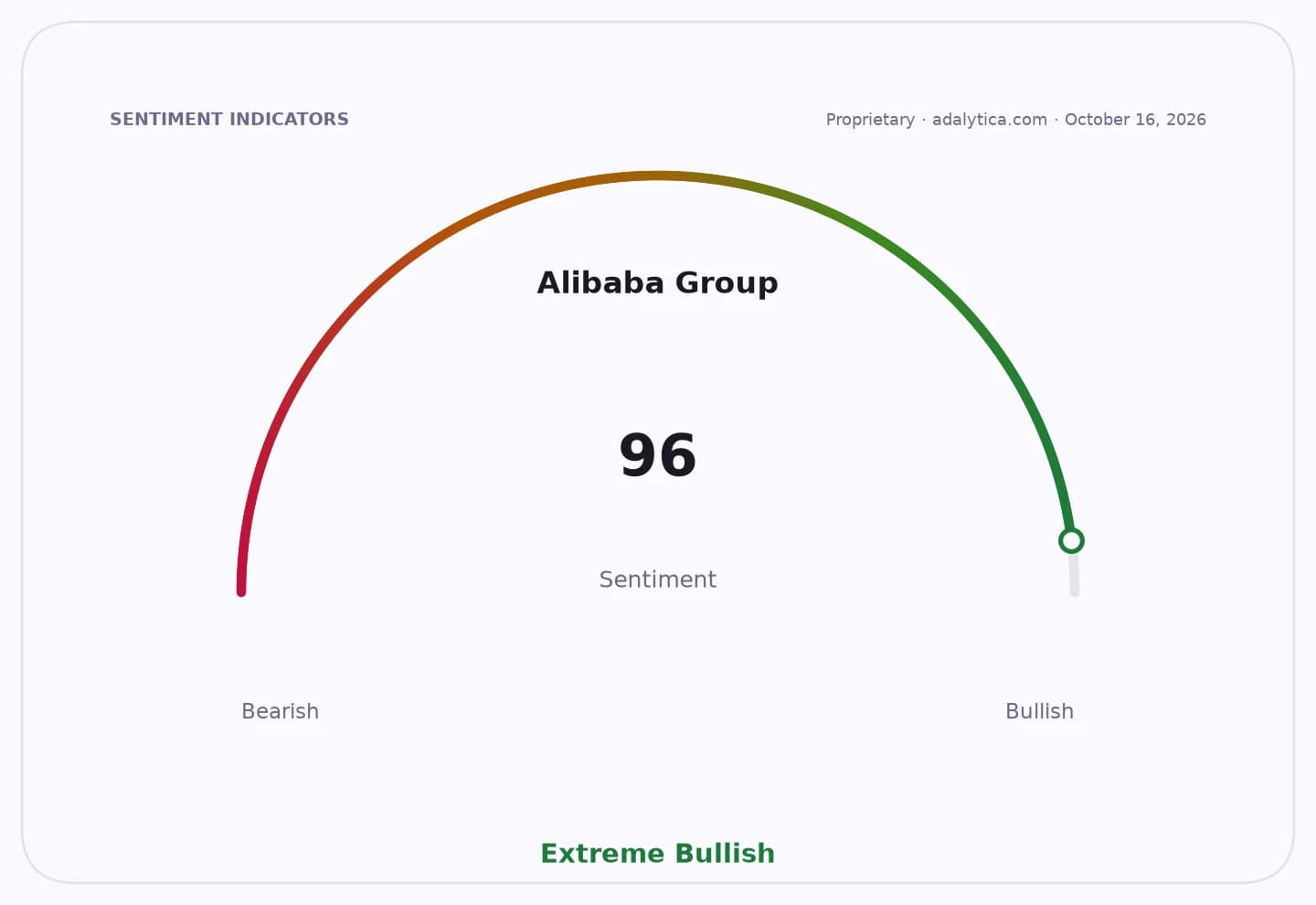
Sentiment IndicatorsⓘProprietary · adalytica.com · October 16, 2026
This is a snapshot — live sentiment, awareness and momentum for 130+ markets update continuously in the dashboard.Open AlphaPulse
The deal matters because smartphone makers are looking for ways to make AI more useful — and harder to ignore — as the first wave of on-device AI features becomes easier to copy. An agent that can pull information from different apps, verify results and carry out multi-step actions could deepen user engagement, strengthen app ecosystems and make the phone itself more central to daily digital activity.
For Alibaba, the tie-up extends Qwen beyond cloud and software services into consumer devices, adding another route to monetization at a time when investors are watching whether the company can turn AI investment into revenue. Alibaba shares have been volatile, with the stock closing at $111.13 on Oct. 15, below its 50-day moving average of $115.02 and well under its 200-day average of $128.42, while Adalytica’s Alibaba earnings sentiment sat at 96, or “Extreme Greed.”
For Honor, the partnership is a bid to differentiate its devices in a crowded Chinese handset market where hardware upgrades alone are no longer enough. Embedding AI agents more deeply into the operating system could help the company position the Magic9 line and the Robot Phone as productivity devices rather than just another upgrade cycle.
The broader race is moving from simple assistants that answer questions or summarize text to systems that can execute steps across apps, a capability that raises both technical and privacy hurdles. How much of that functionality reaches users, which apps are supported and whether the features ship outside China will determine whether the announcement becomes a meaningful product shift or just another AI marketing promise.
| Entity | Gains | Losses |
|---|---|---|
| Alibaba | ▲New AI distribution | ▼Pure cloud-only narrative |
| Honor | ▲Device differentiation | ▼Generic smartphone rivals |
| Smartphone users | ▲Faster task automation | ▼More privacy complexity |
| App incumbents | ▲Higher engagement potential | ▼More platform control by handset makers |