China’s new rules on AI companions put the country’s fast-growing chatbot economy on notice, threatening a business model built on emotional attachment while opening the door to stricter oversight across consumer AI.
China AI companion rules hit chatbot economy
Beijing is moving to stop artificial intelligence systems from encouraging “sustained emotional interactions” with users, a shift that matters because it targets one of the most commercially sticky uses of generative AI: digital companions that keep people engaged for longer and spend more. The rules go beyond niche romance bots and could reach broad language models if they are used as emotional stand-ins, raising compliance costs and limiting how consumer AI platforms monetize intimacy.
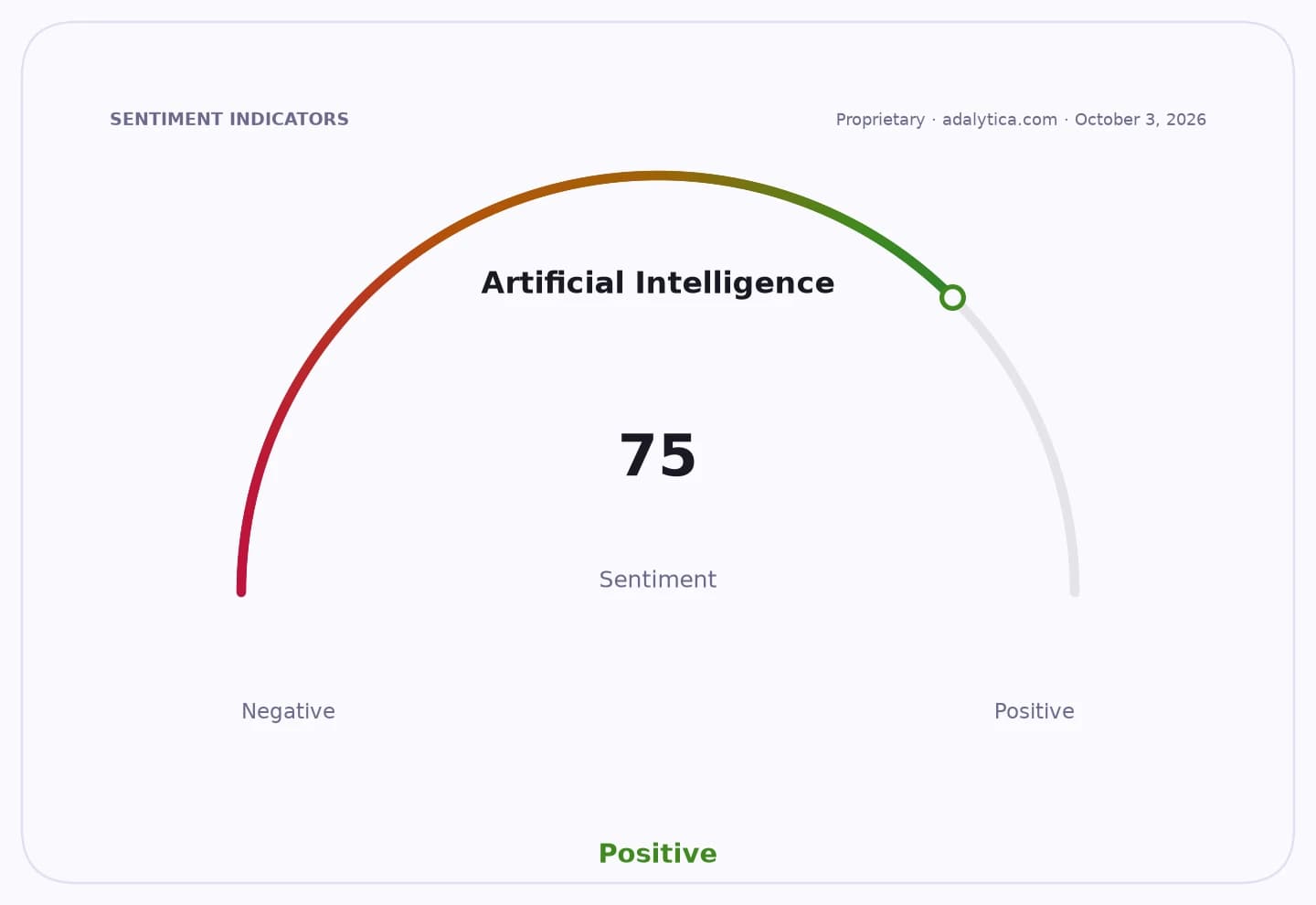
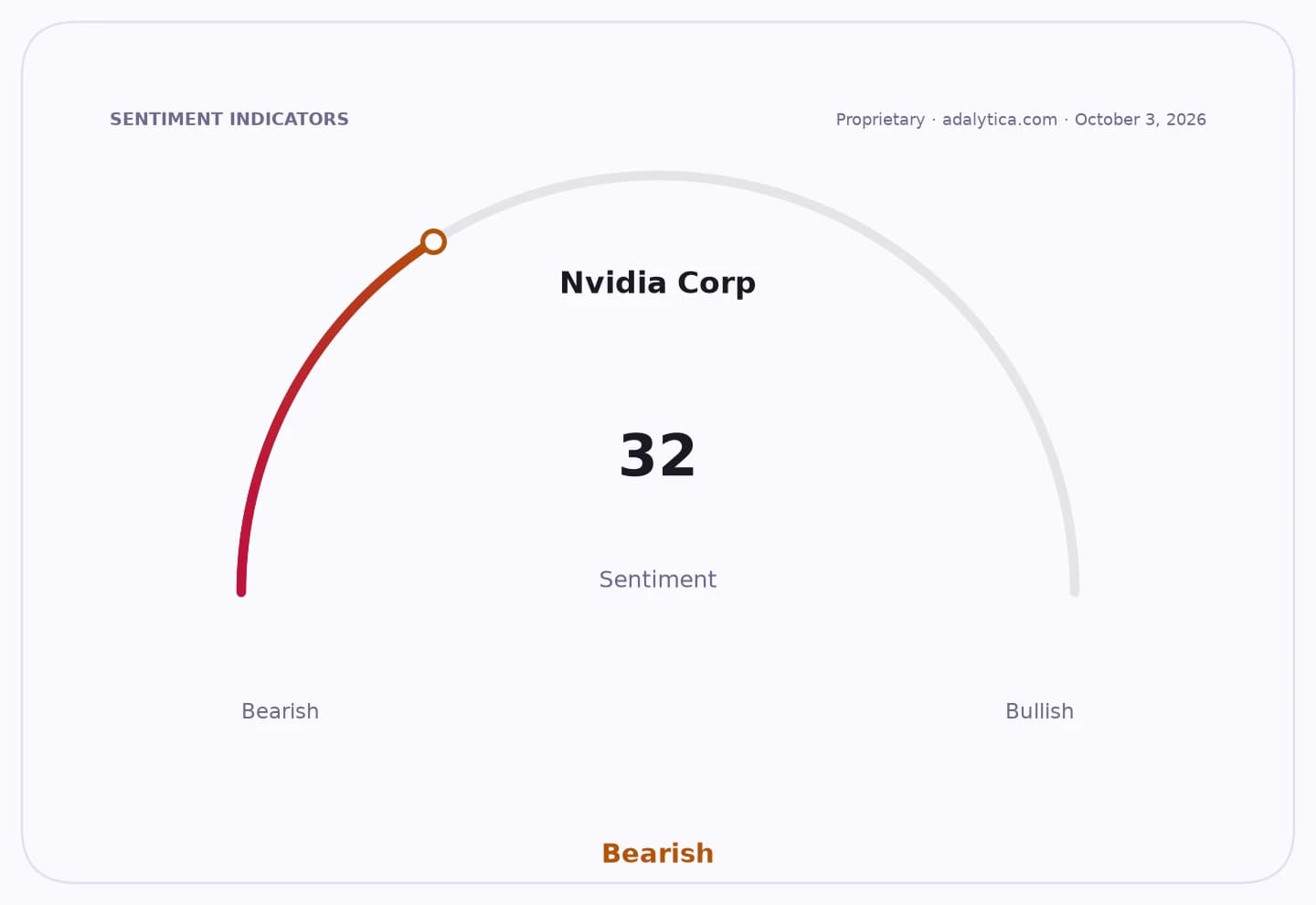
Sentiment IndicatorsⓘProprietary · adalytica.com · October 3, 2026
This is a snapshot — live sentiment, awareness and momentum for 130+ markets update continuously in the dashboard.Open AlphaPulse
The restrictions are blunt. AI services cannot create emotional dependence or addiction, cannot encourage self-harm or suicide, and must explicitly remind users they are not human. For minors, the limits are even tighter: children under 14 need parental consent to use human-like AI, while under-18s are barred from virtual spouses, relatives and other “intimate virtual relationships.” Companies that cross the line face fines of up to 200,000 yuan, or public criticism from regulators.
For investors, the message is that China is still willing to expand AI adoption, but not at the expense of social control. That may crimp the growth of companion-app developers and push all consumer-facing AI firms toward safer, more utilitarian products such as productivity tools, search, tutoring and customer service. It also gives policymakers another lever over a sector already shaped by censorship, data rules and export controls.
The immediate winners are the incumbents with broad AI platforms and enterprise use cases, because they are less dependent on emotional engagement and more likely to absorb the added compliance burden. The losers are the standalone companion apps and any company trying to turn synthetic intimacy into a subscription business. Tencent, Baidu and Alibaba all stand to be affected in different ways: their large-scale AI ecosystems could be constrained, but their diversified platforms should fare better than smaller pure plays.
The broader investment takeaway is that China’s AI story is increasingly a regulation story as much as a technology story. That does not kill the opportunity; it narrows it. In a market where retail excitement can outrun fundamentals, Beijing is forcing a rerating toward infrastructure, model control and compliant applications — the kind of areas where capital tends to accumulate when consumer novelty gets throttled. If you want exposure, own the picks-and-shovels and the platforms with the balance sheets to adapt, not the emotional-companion hype trade.
| Entity | Gains | Losses |
|---|---|---|
| Tencent | ▲Safer platform AI use cases | ▼Companion-style engagement models |
| Baidu | ▲Enterprise and utility AI demand | ▼Human-like chatbot freedom |
| Alibaba | ▲Compliant AI distribution | ▼Consumer intimacy monetization |
| Companion-app developers | ▲— | ▼Core business model |