China is treating artificial intelligence as an industrial and strategic mandate, pushing rapid adoption across the economy while tightening controls on what models can say and do.
China AI policy push and regulatory controls
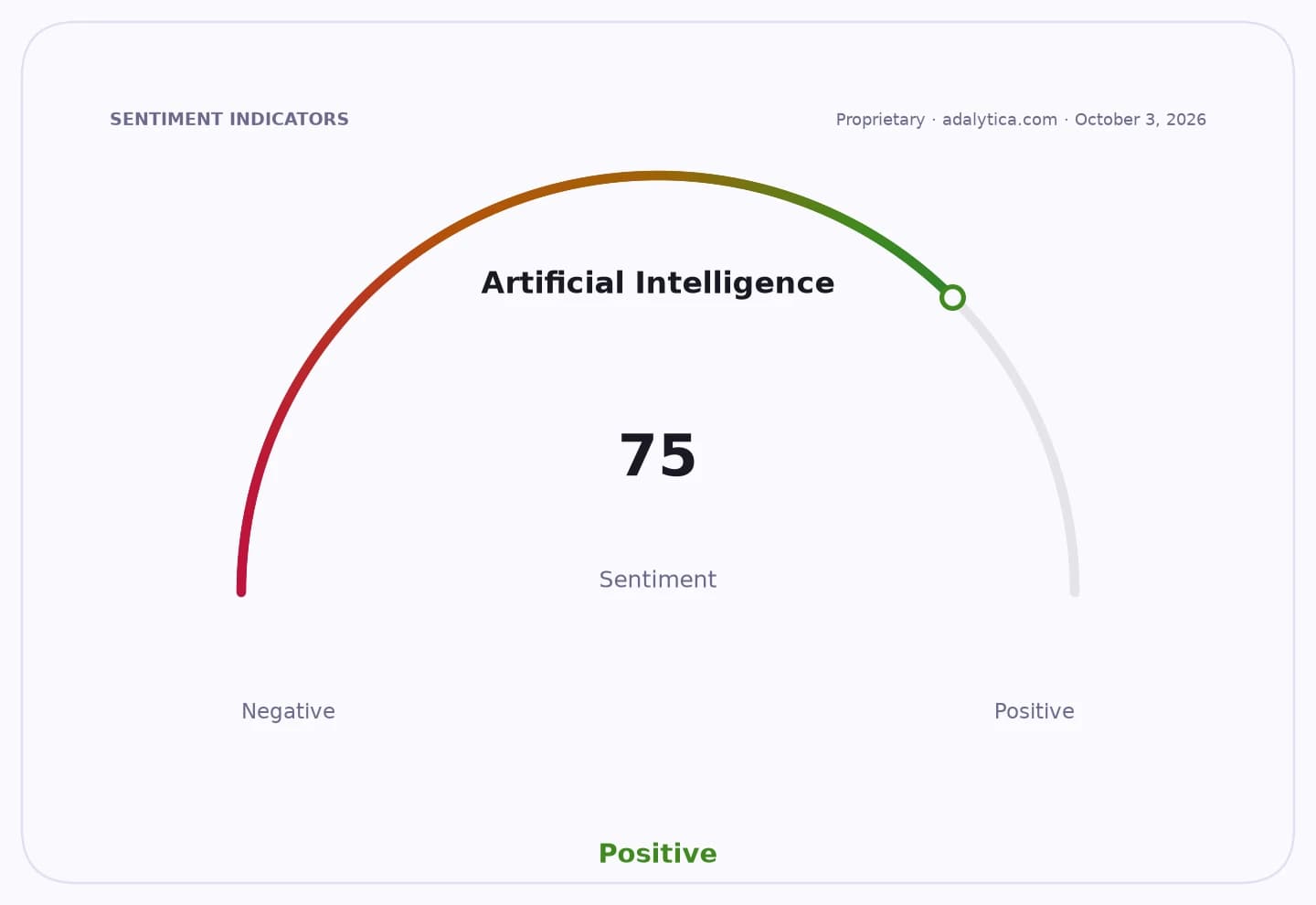
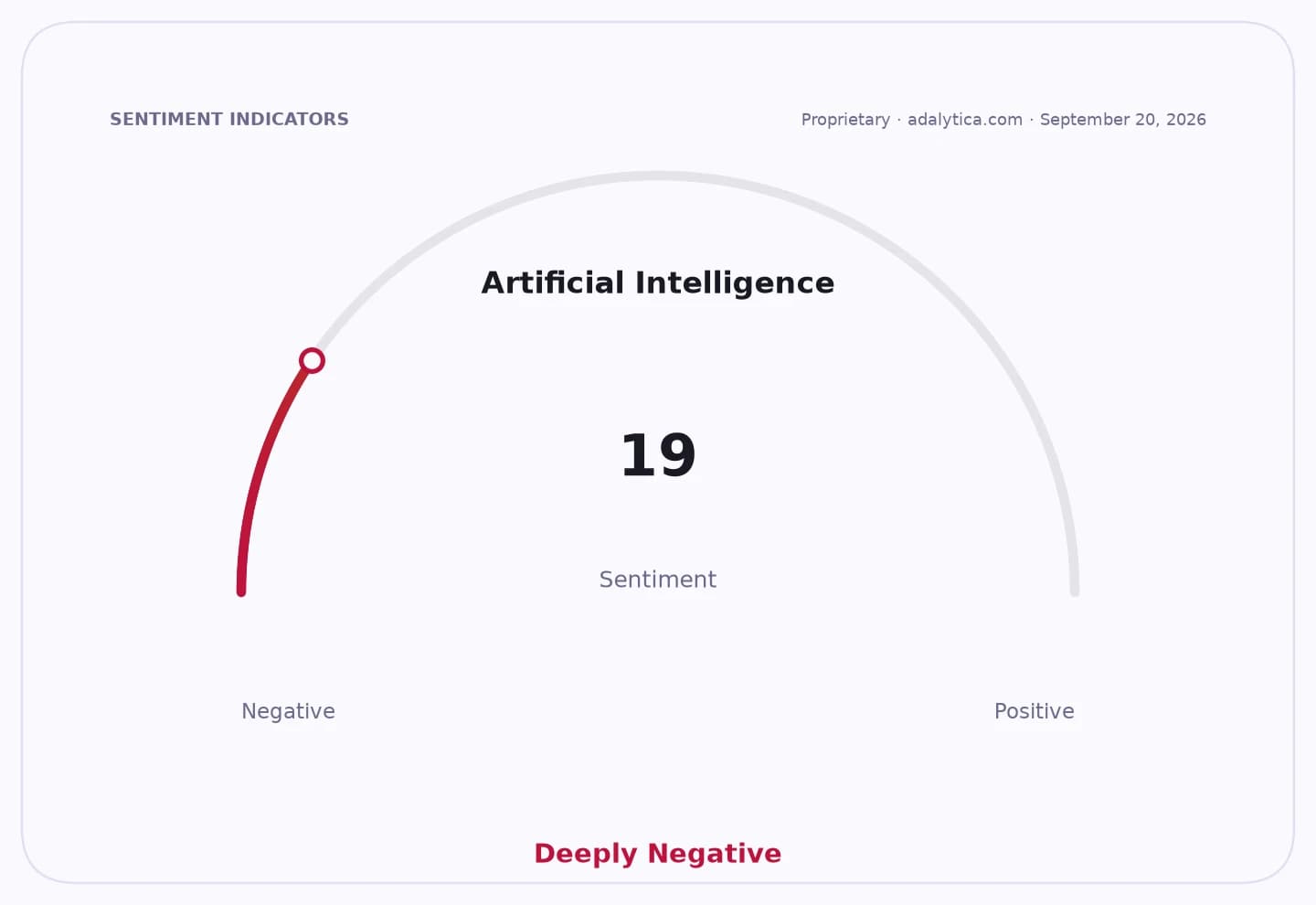
That split matters because Beijing is trying to use AI to offset slowing labor growth, lift manufacturing productivity and keep pace with the U.S. in a technology race that is increasingly shaping global markets, regulation and supply chains. For investors, it means China’s AI winners are being rewarded for scale and deployment, but the state’s heavy hand also raises policy risk around content, employment and competition.
The clearest signal is Beijing’s push to embed AI in “terminal devices” such as computers and smartphones, with an official goal of 90% penetration by 2030 under its AI-plus initiative. That is not just rhetoric: it points to a state-backed effort to diffuse AI through factories, services, education, healthcare and defense, rather than leaving the market to decide where the technology goes first.
At the same time, China is drawing a hard line on political and social control. AI services must be vetted before public release, including registration systems that test whether models answer sensitive questions the “right” way or refuse them altogether. More recently, regulators have also moved to restrict AI systems capable of sustained emotional interaction with humans, underscoring Beijing’s view that the bigger risk is instability, not existential harm.
Artificial Intelligence vs BABAadalytica.com
Explore this data interactively — full history, time series and cross-market comparisons.Open AlphaPulse
That makes China’s AI play fundamentally different from the U.S. debate, where lawmakers, companies and the public are still divided over safety, job loss and the energy demands of data centers. In China, the state is far more comfortable with aggressive rollout, in part because leaders see automation as a partial answer to a shrinking workforce and the country’s need to keep manufacturing for the world.
The jobs question is still there. Young unemployment remains a political concern, and Chinese courts have already signaled that employers cannot simply cite AI to justify firing workers. But the broader policy direction is clear: accelerate adoption, manage labor disruption and prevent AI-generated content from threatening the Communist Party’s grip on power.
For investors, the result is a market that is likely to keep splitting between AI infrastructure beneficiaries and firms exposed to policy tightening. U.S. chipmakers, cloud providers and software firms still sit in a global contest where Chinese demand matters, while Chinese platforms such as Baidu, Tencent and Alibaba remain tied to how quickly Beijing allows commercialization and how aggressively it polices model behavior.
That rivalry is also keeping cross-border competition alive. Chinese open-source models are gaining traction in the U.S., while American models remain popular in China despite restrictions, showing that the AI race is less a clean decoupling than a messy competition built on selective borrowing, control and mistrust.
The macro implication is straightforward: China wants AI to be a productivity engine and a geopolitical lever, not a freewheeling consumer revolution. The investment risk is equally clear — policy support can drive adoption fast, but regulatory intervention can just as quickly redirect the winners.
| Entity | Gains | Losses |
|---|---|---|
| China’s AI platforms | ▲Faster adoption, state backing | ▼Higher regulatory scrutiny |
| Chinese manufacturers | ▲Automation gains, labor offset | ▼Job displacement risk |
| U.S. AI leaders | ▲Global demand, model prestige | ▼China competition, export friction |
| Investors | ▲Growth in AI deployment theme | ▼Policy and geopolitical volatility |