Artificial intelligence took center stage at China’s Singles Day this year, but the bigger market story is that the country’s biggest shopping event is increasingly being used to test whether AI can lift retail engagement and commerce productivity at scale.
Alibaba, JD and PDD Face Singles Day AI Test
That matters because Singles Day is still the clearest read-through on Chinese consumer demand, and AI tools embedded in search, content creation and sales flows could help platforms defend growth in an otherwise sluggish retail environment. The question for investors is whether these features drive incremental transactions and merchant spend, or simply repackage the same traffic with higher costs and thinner margins.
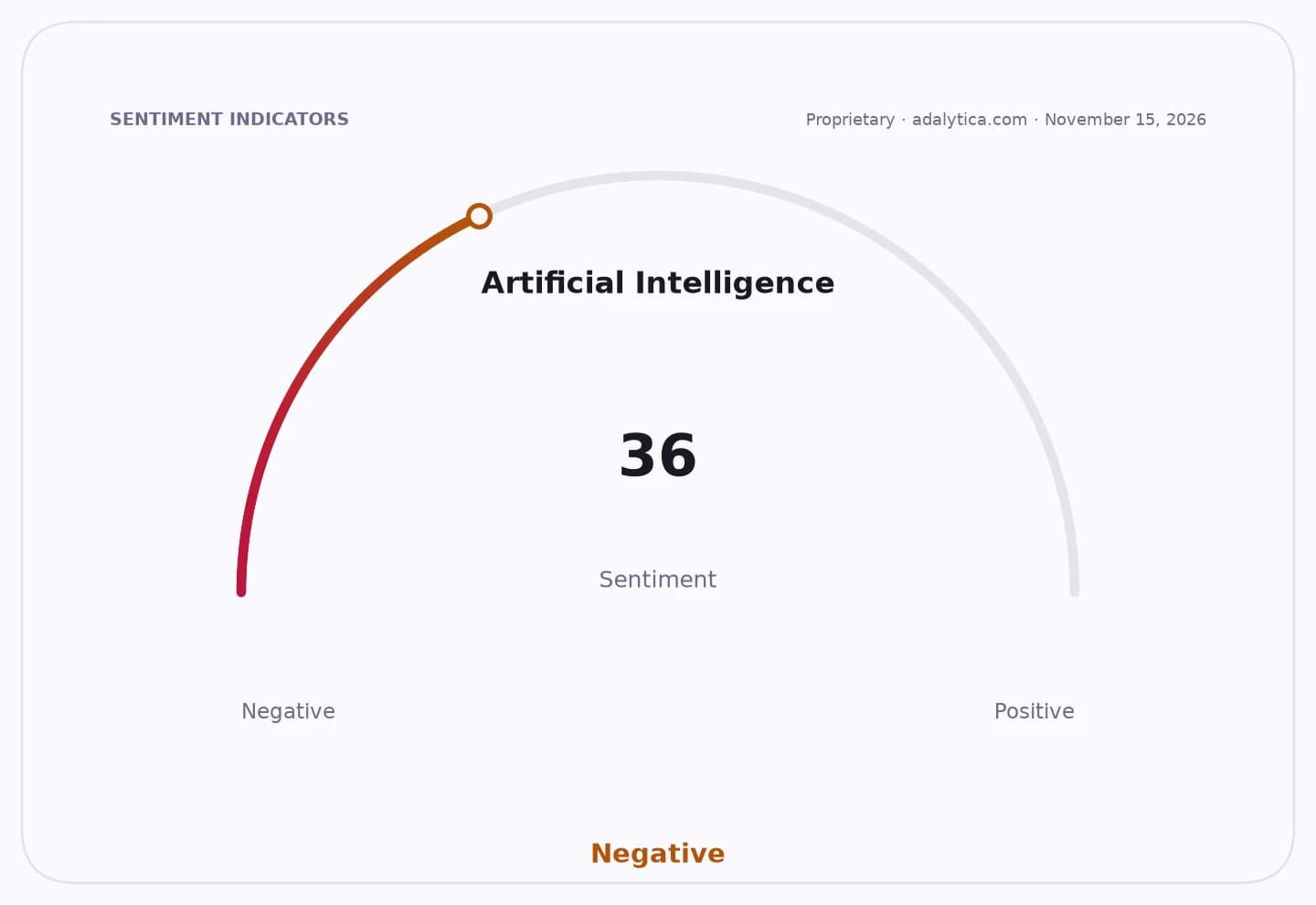
Sentiment Indicators
Alibaba, JD.com and PDD Holdings all remain under pressure to prove that AI can do more than generate headlines. Alibaba’s U.S.-listed shares slipped to $94.38 on Nov. 13, down from $101.52 two days earlier, leaving the stock well below its 50-day average of $106.87 and its 200-day average of $122.23. JD ended at $27.91, still just under its 200-day average of $28.29, while PDD closed at $78.97, also below its 50-day average of $79.40 and its 200-day average of $89.81.
The technical picture underscores how much of the AI excitement has already been priced in and then unwound. Alibaba’s relative strength index fell to 41, suggesting momentum has cooled after a brief rebound earlier in the year, while its MACD turned negative again. JD’s RSI was 71.7, which indicates the stock has regained near-term strength, but not enough to reverse the broader recovery from a weaker summer. PDD’s RSI at 52.1 looks more neutral, consistent with a stock trying to stabilize after a steep mid-year drawdown.
The Singles Day backdrop makes the issue more important for the wider market. China’s e-commerce leaders are under pressure from slower consumption, more intense competition and a market that increasingly demands evidence of monetization from AI spending. If AI tools improve conversion rates, merchandising efficiency or ad targeting, they could support revenue without relying on lower prices and heavier promotions. If not, the risk is that the technology becomes another cost center in a sector already fighting for margin.
The event also points to a broader shift in how Chinese platforms are positioning AI. Instead of framing it as a distant enterprise upgrade, companies are pushing it directly into consumer shopping, creative content and seller tools. That includes AI-generated illustrations, personalized digital assistants and sales-automation features, all of which suggest the next phase of competition may be about owning the interface between shoppers, merchants and content.
For investors, the near-term focus is whether AI adoption shows up in user engagement, take rates and marketing efficiency during the holiday sales period. Alibaba remains the most obvious levered play on platform monetization, JD on fulfillment and commerce execution, and PDD on low-cost traffic and merchant economics. But with the stocks still trading below key long-term averages, the burden of proof is on management teams to show that AI can translate into earnings power rather than just narrative support.
| Entity | Gains | Losses |
|---|---|---|
| Alibaba | ▲AI commerce monetization | ▼Margin skepticism |
| JD.com | ▲Smarter sales and logistics | ▼Broader valuation reset |
| PDD Holdings | ▲Lower-cost seller tools | ▼Confidence in growth durability |
| Chinese consumers | ▲More personalized shopping | ▼Persistent promotion fatigue |