Alibaba has open sourced Qwen-Image-2.1, an image generation and editing model that combines text-to-image creation and image retouching in one system and adds native 2K output and RGBA support, a move that broadens the company’s reach in generative AI and raises the competitive bar for rivals.
Alibaba Open Sources Qwen-Image-2.1
The release matters because Alibaba is pushing advanced visual AI into the open-source arena, where adoption can spread faster and at lower cost than closed models. That can help the company build developer loyalty around its Qwen stack, while also putting more pressure on competitors selling proprietary tools for image generation and editing.
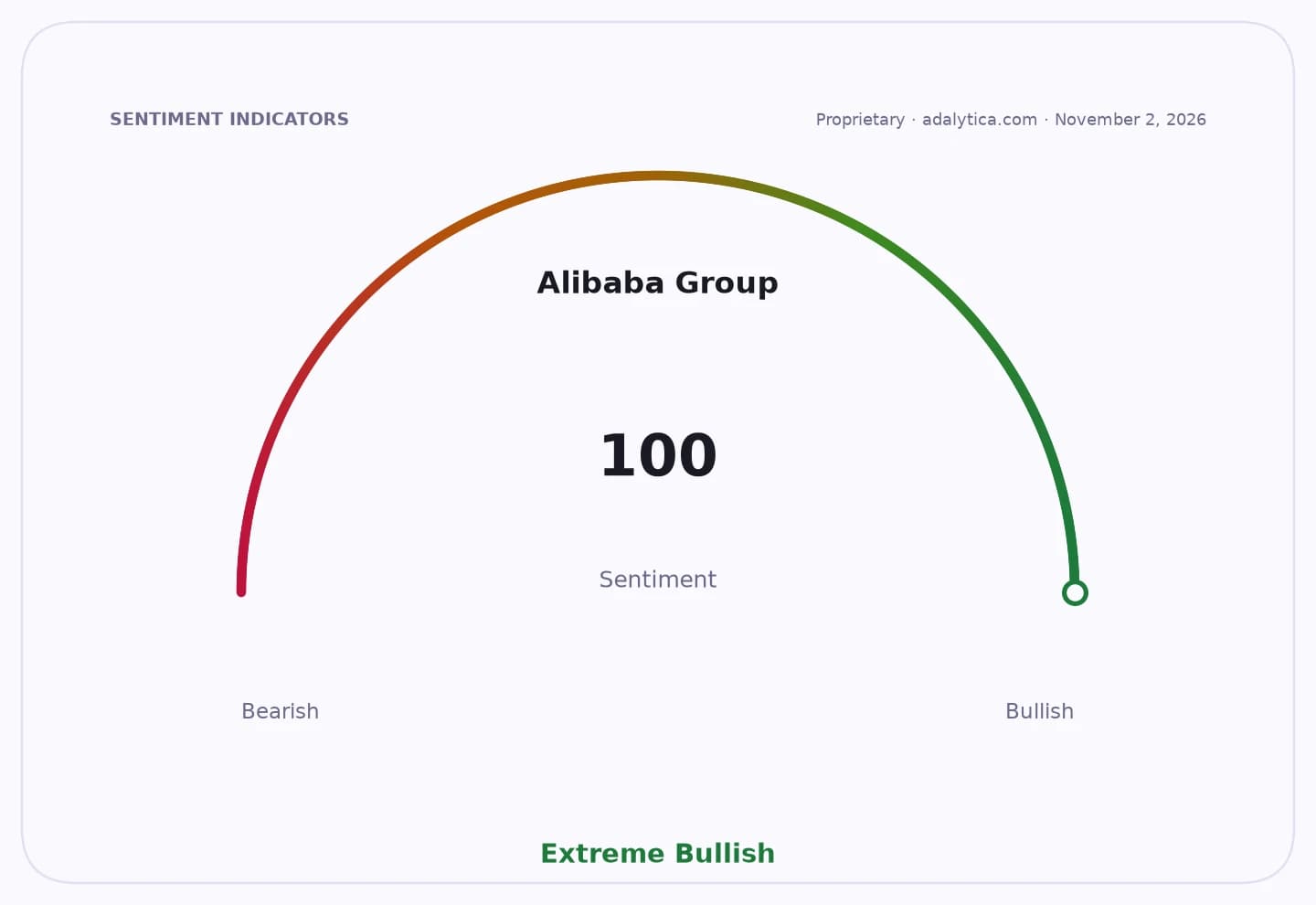
Sentiment Indicators
Alibaba said Qwen-Image-2.1 scored 60.28 on Qwen-Image-Bench, ahead of closed systems Nano Banana 2.0 and GPT Image 1.5, according to the company’s own benchmark. The model uses a 32-layer Single-Stream DiT with 7 billion parameters for the visual component and pairs it with Qwen3-VL 8B, bringing the full system to 16.22 billion parameters.
The upgrade is aimed at practical production workflows. Alibaba said the model uses chunk-based image generation, token-level text instruction handling and KV-cache reuse to cut memory use and reduce latency, particularly for multi-frame tasks. It also adds RGBA output so the system can decide whether to generate a standard image or an alpha-channel file without a separate background-removal step.
For investors, the release reinforces Alibaba’s effort to turn its AI work into a broader ecosystem play rather than a standalone product demo. That matters for cloud demand, developer adoption and the company’s credibility in a market where Chinese tech groups are racing to catch up with U.S. leaders in foundation models and multimodal tools.
Alibaba shares have been volatile, and the stock’s recent technical readings show it remains below its 200-day moving average even after a sharp rebound earlier in the year. That leaves room for AI product announcements to move sentiment, but also means investors will likely want evidence that model launches translate into usage, monetization and cloud traffic.
The next test is whether developers and enterprises adopt Qwen-Image-2.1 at scale and whether Alibaba can keep narrowing the gap with closed-model rivals while expanding real-world use cases in design, e-commerce and content production.
| Entity | Gains | Losses |
|---|---|---|
| Alibaba | ▲More developer adoption | ▼Less dependence on closed AI tools |
| Qwen ecosystem | ▲Stronger open-source momentum | ▼Slower rival differentiation |
| Nano Banana 2.0 | ▲None | ▼Benchmark lead challenged |
| GPT Image 1.5 | ▲None | ▼Competitive pressure in image AI |