Alibaba is escalating China’s AI arms race with a new version of its Qwen model that the company says outperforms OpenAI’s ChatGPT, DeepSeek’s latest model and Meta’s Llama, underscoring how quickly Chinese tech groups are pushing to close the gap with U.S. rivals while slashing prices to gain users.
Alibaba Qwen 2.5-Max Raises China AI Price War
The move matters because it shows China’s AI boom is no longer being driven only by one startup shock such as DeepSeek. Instead, it is turning into a broader industrywide price war that could compress margins across cloud and software services even as it accelerates adoption of cheaper AI tools.
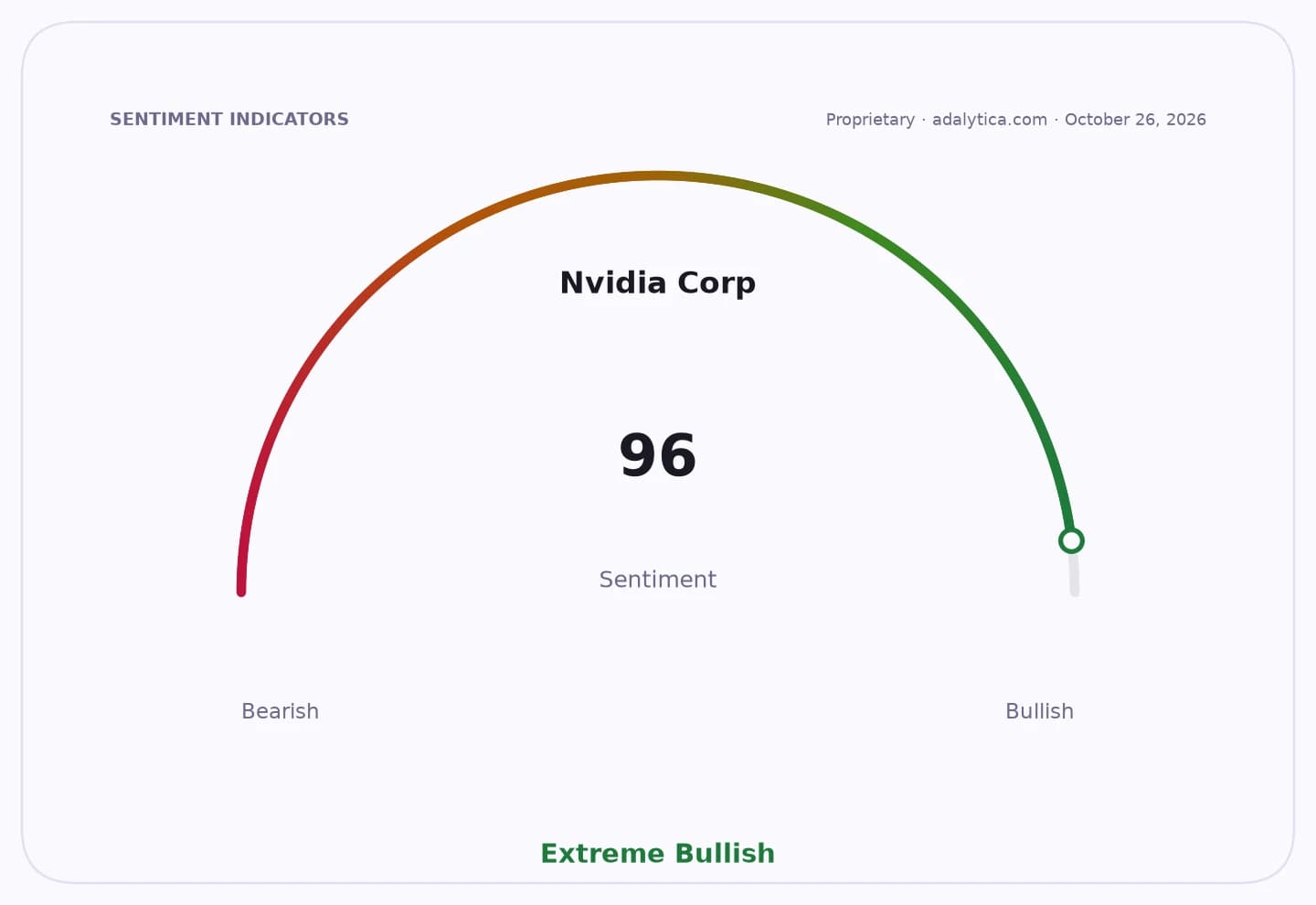
Sentiment Indicators
Alibaba’s cloud unit said Qwen 2.5-Max beats DeepSeek’s V3 in most benchmarks, and the timing is notable: the launch comes just days after ByteDance, owner of TikTok, unveiled its own model and weeks after DeepSeek’s cheaper-to-train system rattled the global sector. In response to that pressure, Alibaba, Baidu and Tencent have cut AI usage prices by as much as 97%, according to the report.
For investors, that is a double-edged development. Faster model progress may support demand for chips, cloud infrastructure and AI services across China, but it also suggests heavy competition will make it harder for providers to monetize the technology quickly. The pricing reset could benefit enterprise customers and developers, while weighing on revenue and profitability for the companies racing to defend market share.
The competitive backdrop is also feeding through to listed names outside China. Nvidia, whose processors remain central to AI training and deployment, has seen its shares come under heavy pressure in recent sessions, while Alibaba’s U.S.-listed stock has remained volatile as traders weigh AI upside against execution risk and a still-weak broader China demand backdrop.
The broader narrative is clear: China’s AI industry is expanding rapidly and becoming more competitive internally, not just versus U.S. leaders. If the price war persists, the winners may be the companies that can scale usage and infrastructure fastest, while the losers are likely to be firms forced to monetize AI at thinner margins.
| Entity | Gains | Losses |
|---|---|---|
| Chinese AI users | ▲cheaper access | ▼none |
| Alibaba, Baidu, Tencent | ▲more traffic and adoption | ▼thinner margins |
| Nvidia | ▲more AI hardware demand | ▼pricing pressure from China competition |
| OpenAI, Meta | ▲tougher China rivals | ▼benchmark leadership challenged |