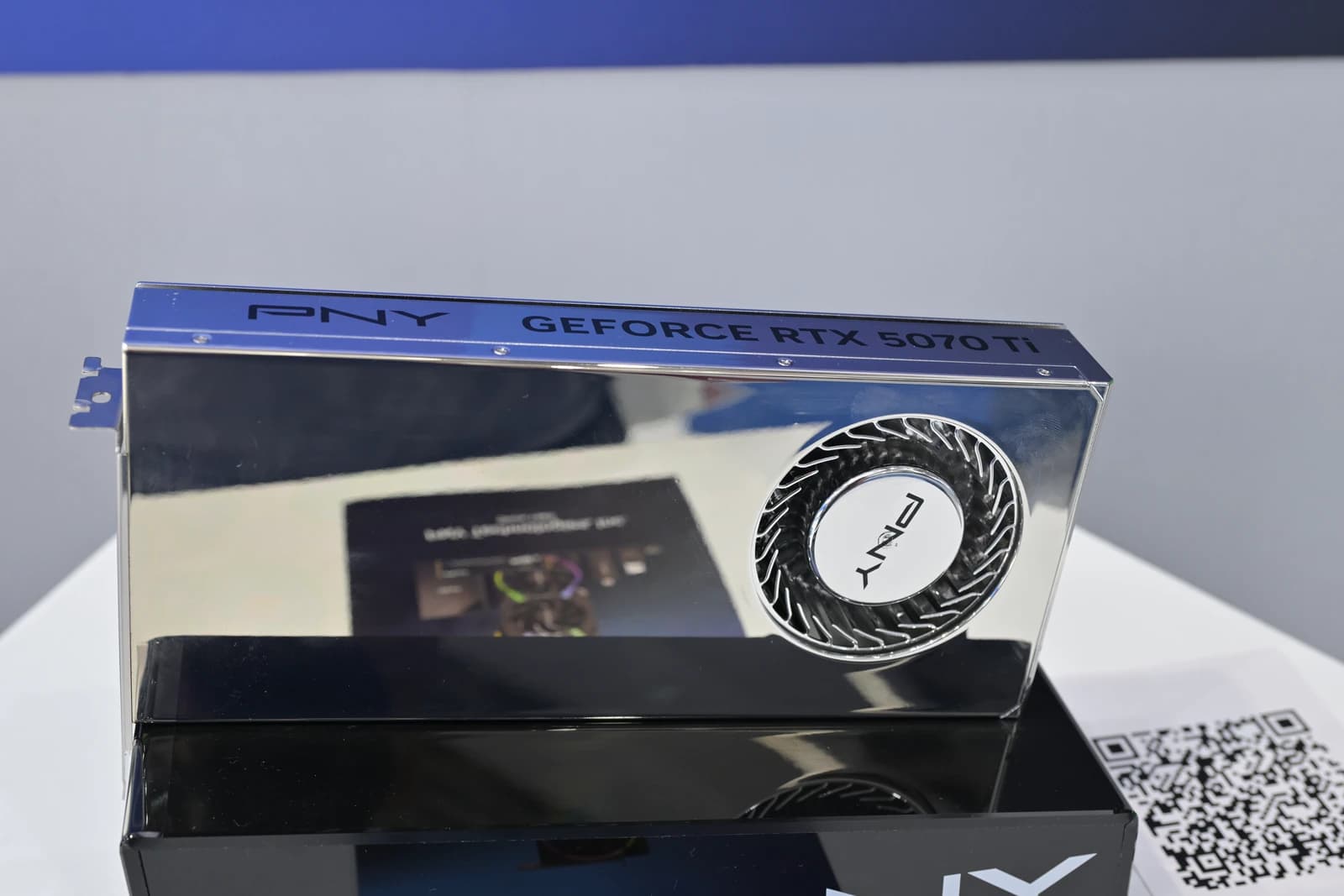
Around 600,000 Nvidia H200 chips are sitting in Hong Kong waiting for Chinese import approval, a reminder that the world’s biggest AI hardware market is still being shaped as much by geopolitics as by demand.
Nvidia H200 chips await China import approval
That backlog matters because it shows both sides of the China-U.S. tech standoff at once: Chinese companies still want cutting-edge compute, while Beijing is trying to slow its reliance on American semiconductors. For investors, that combination keeps Nvidia’s China revenue opportunity alive, but highly uncertain, and it helps explain why any signal from regulators can move the stock and the wider chip complex so sharply.
Sentiment Indicators

Reuters, citing sources, said the chips have been warehoused while authorities decide how much advanced hardware to let in. China has allowed only limited deliveries in recent months, with some large tech companies reportedly receiving about 10,000 chips each. That is nowhere near enough to satisfy demand in a country racing to build large language models, cloud infrastructure and AI applications at scale.
The shortage has also pushed up prices outside official channels. A server containing eight H200 chips was reportedly offered in late October for more than 6 million yuan, or about $900,000, roughly three times the price a year earlier. That kind of premium is more than a black-market curiosity; it is evidence that supply remains tight enough for scarce compute to command enormous value.
Nvidia Corp — 30-day sentimentadalytica.com
Explore this data interactively — full history, time series and cross-market comparisons.
Nvidia Corp
For Nvidia, the stock impact is straightforward even if the headlines are not. China remains a massive market, but it is a market constrained by policy, not just competition. That means the company can keep winning on product quality and still struggle to translate that dominance into smooth shipments, predictable revenue, and clean forecasts. The recent slide in Nvidia shares shows how quickly investors punish uncertainty when a growth story runs into regulatory friction.
The ripple effects extend beyond one company. Taiwan Semiconductor Manufacturing Co., which manufactures much of the world’s most advanced logic, remains tied to the same AI demand engine, while the broader semiconductor ETF SOXX reflects how sensitive the sector is to swings in expectations around Nvidia and the AI buildout. If China keeps rationing access to top-tier chips, it could support scarcity pricing and protect margins in the near term, but it also raises the risk of a bifurcated AI market: one side powered by U.S. technology, the other forced to substitute, hoard or develop alternatives.
That is the long-term story investors should focus on. AI demand is not disappearing, and China’s need for advanced computing power is not going away either. But when strategic rivalry sits between the seller and the customer, the path from product demand to shareholder returns becomes much less direct. For patient investors, Nvidia still looks like a central AI franchise, but the China question remains a watchlist issue, not a reason to assume uninterrupted growth.
| Entity | Gains | Losses |
|---|---|---|
| Nvidia | ▲Scarcity supports pricing power | ▼China shipments stay uncertain |
| Chinese AI buyers | ▲Access to top-tier compute | ▼Delayed approvals and rationing |
| Black market sellers | ▲Higher resale prices | ▼More regulatory scrutiny |
| Semiconductor investors | ▲Long-term AI demand remains strong | ▼Near-term policy volatility |