Huawei says it will launch a supercomputer cluster in 2026 that it claims can outmuscle Nvidia’s next-generation AI systems, raising the stakes in a fight over who supplies the computing backbone for China’s artificial-intelligence buildout.
Huawei Atlas 950 SuperCluster Targets Nvidia
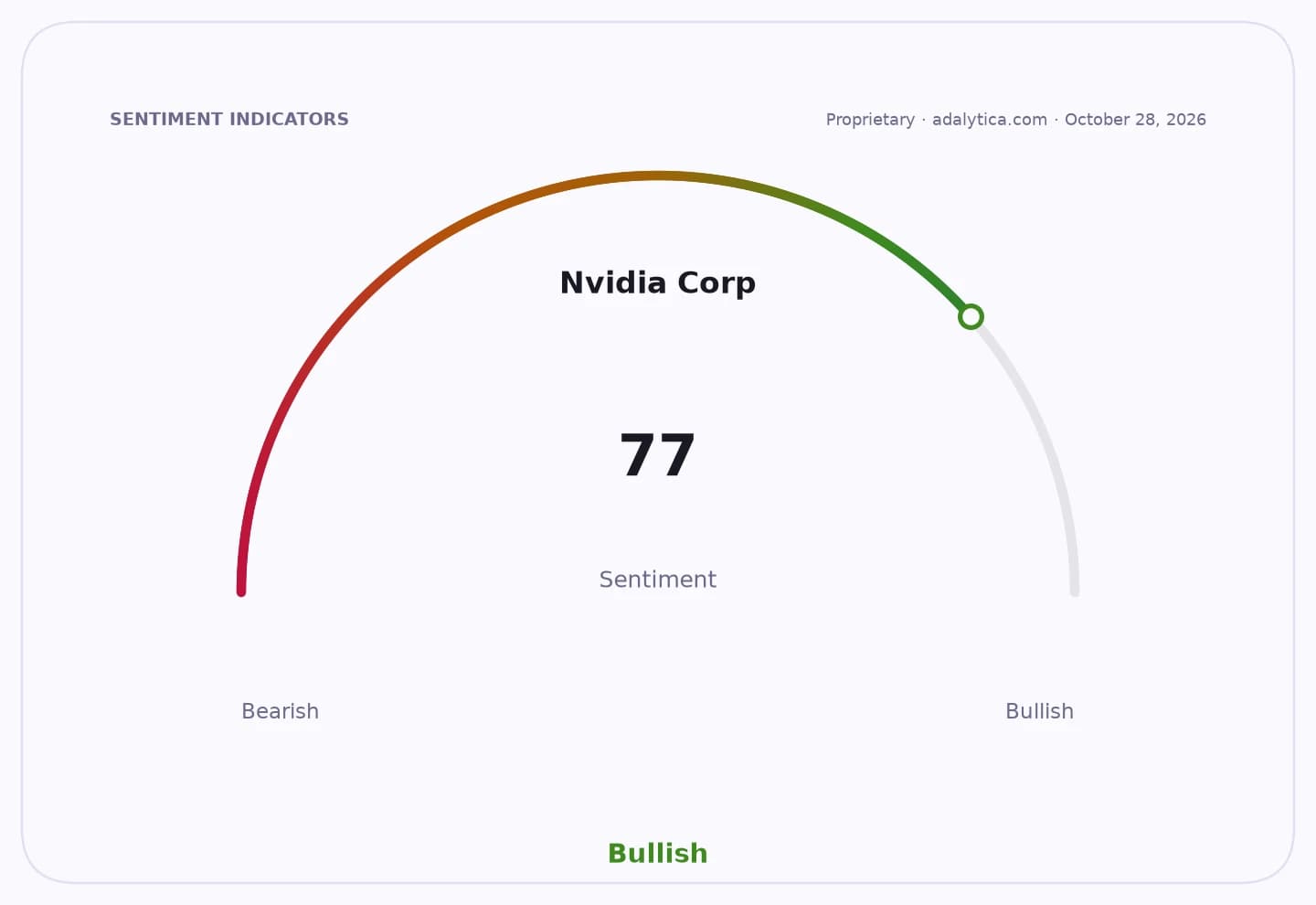
Nvidia Corp
The Atlas 950 SuperCluster is Huawei’s clearest attempt yet to offer a domestic alternative to Nvidia’s high-end accelerators at a time when Beijing is tightening pressure on U.S. chipmakers. China’s cyberspace regulator has already told companies including ByteDance and Alibaba to halt purchases and testing of Nvidia’s RTX Pro 6000D, deepening the squeeze on Nvidia’s access to the world’s second-largest chip market.
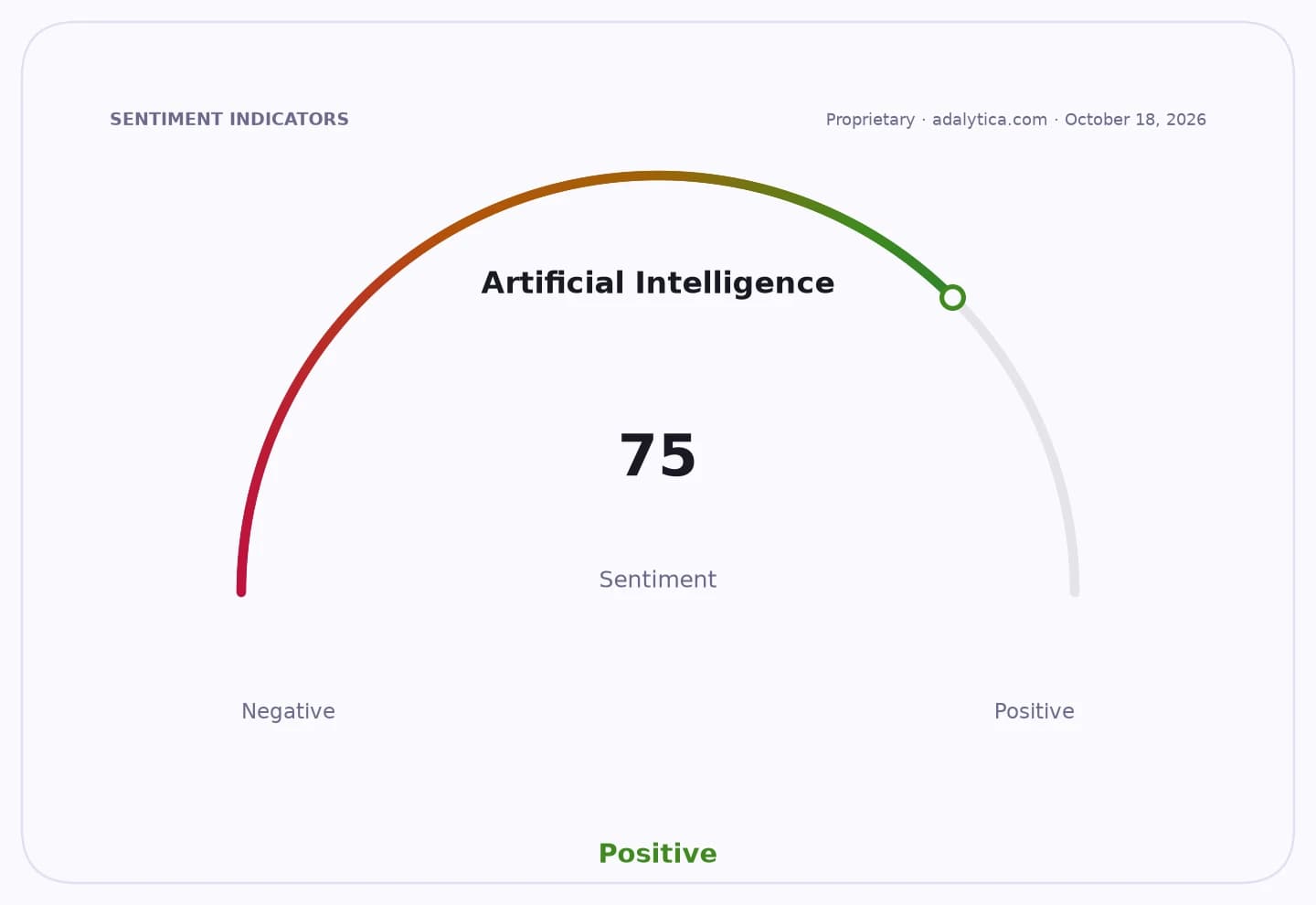
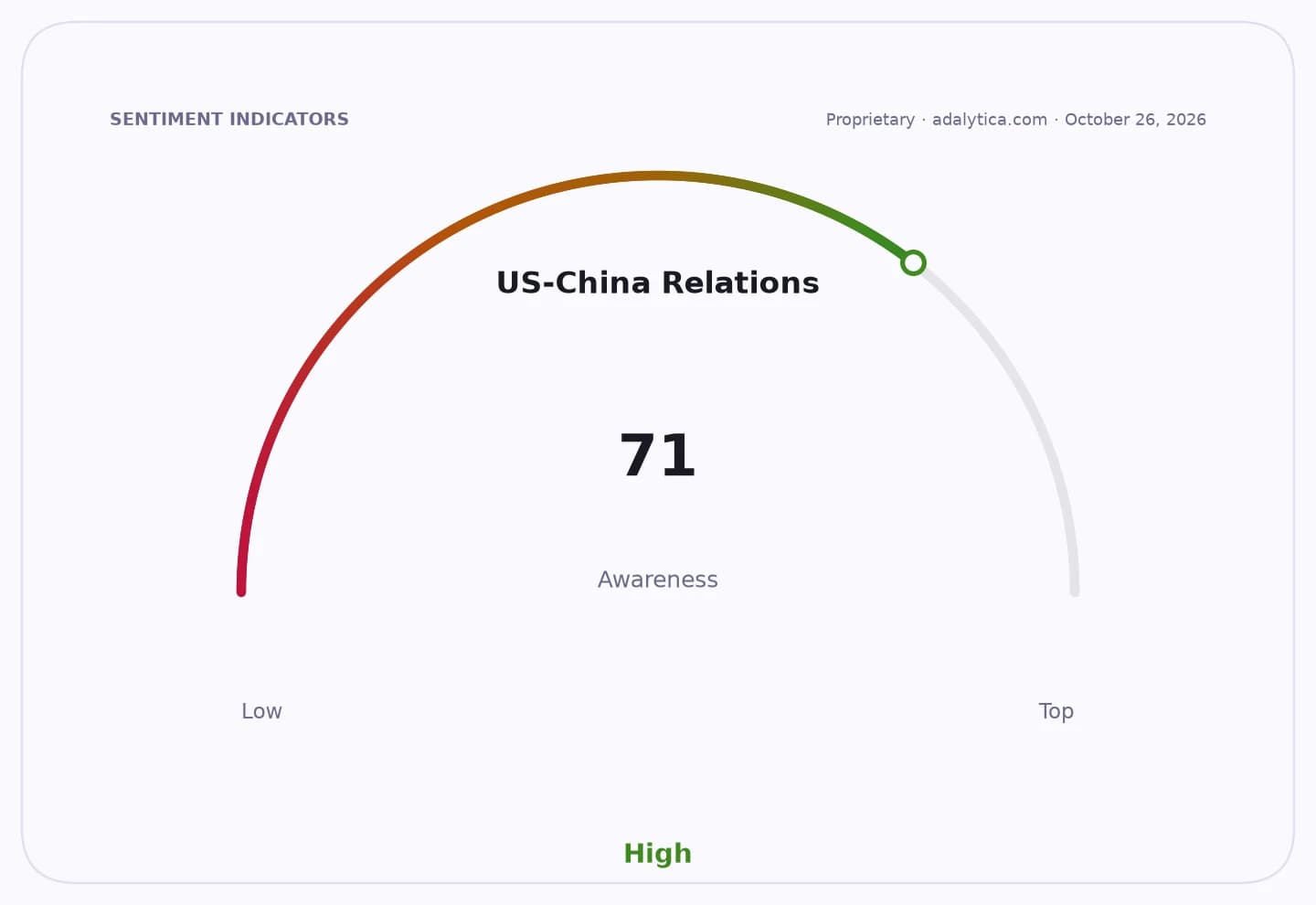
Sentiment Indicators
For investors, the issue is not just branding or technical bragging rights. If Chinese cloud groups and AI developers can scale on Huawei’s Ascend chips, even with less advanced silicon, it could reduce reliance on Nvidia over time and reshape demand for the company’s most lucrative data-center products. Huawei is betting that large clusters of its own chips, linked through supernodes and superpods, can compensate for weaker individual components.
Huawei said the upcoming Atlas 950 will support 8,192 Ascend chips, while the Atlas 950 SuperCluster will exceed 500,000. A more advanced Atlas 960, planned for 2027, is expected to top 1 million chips. Eric Xu, Huawei’s vice chairman and acting chairman, said the new supernode will deliver as much as 6.7 times the computing power of Nvidia’s NVL144 system, also expected next year.
That claim comes with a big caveat: industry specialists say it is still unclear whether the real-world performance of Huawei’s systems will surpass Nvidia-based setups. Still, the announcement underscores how export controls and Chinese procurement restrictions are accelerating a shift toward homegrown AI hardware, even if the economics of building and operating those systems remain more challenging.
Nvidia shares have been volatile as the AI trade swings between exuberance and concerns over competition and supply-chain risk. The stock closed at $216.26, below its 50-day moving average of $222.22, with RSI readings at 29.1, a level that points to near-term technical weakness. Taiwan Semiconductor Manufacturing Co., a key Nvidia supplier, closed at $428.23, also under its 50-day moving average of $433.69, reflecting broader pressure across the chip complex.
Huawei said it plans three new generations of Ascend chips through 2028 and aims to double processing power with each release, setting up a longer contest not just with Nvidia but with the broader U.S.-led semiconductor ecosystem. The next test will be whether Chinese customers can turn those promises into deployed capacity at scale.
| Entity | Gains | Losses |
|---|---|---|
| Huawei | ▲Domestic AI demand, strategic autonomy | ▼Higher execution risk |
| Nvidia | ▲None from China restrictions | ▼Market access, sales visibility |
| Chinese cloud firms | ▲Local supply alternative | ▼Near-term access to top-tier Nvidia chips |
| TSMC and other suppliers | ▲Indirect AI hardware demand | ▼Geopolitical exposure, demand shifts |