China condemned the latest U.S. sanctions on Chinese artificial intelligence companies, underscoring how the world’s two largest economies are hardening their positions around a technology that is becoming central to productivity, military capability and long-term growth.
China Condemns Latest U.S. Sanctions on AI Firms
That matters because AI is no longer just another export category. It is now a strategic input for cloud computing, semiconductors, software and defense systems, which means restrictions on Chinese AI firms can ripple through supply chains, capital spending plans and access to the world’s largest markets. For investors, the message is clear: the U.S.-China tech rivalry is moving from rhetoric to operating reality, and that raises the hurdle for companies exposed to cross-border sales, chips and platform ecosystems.
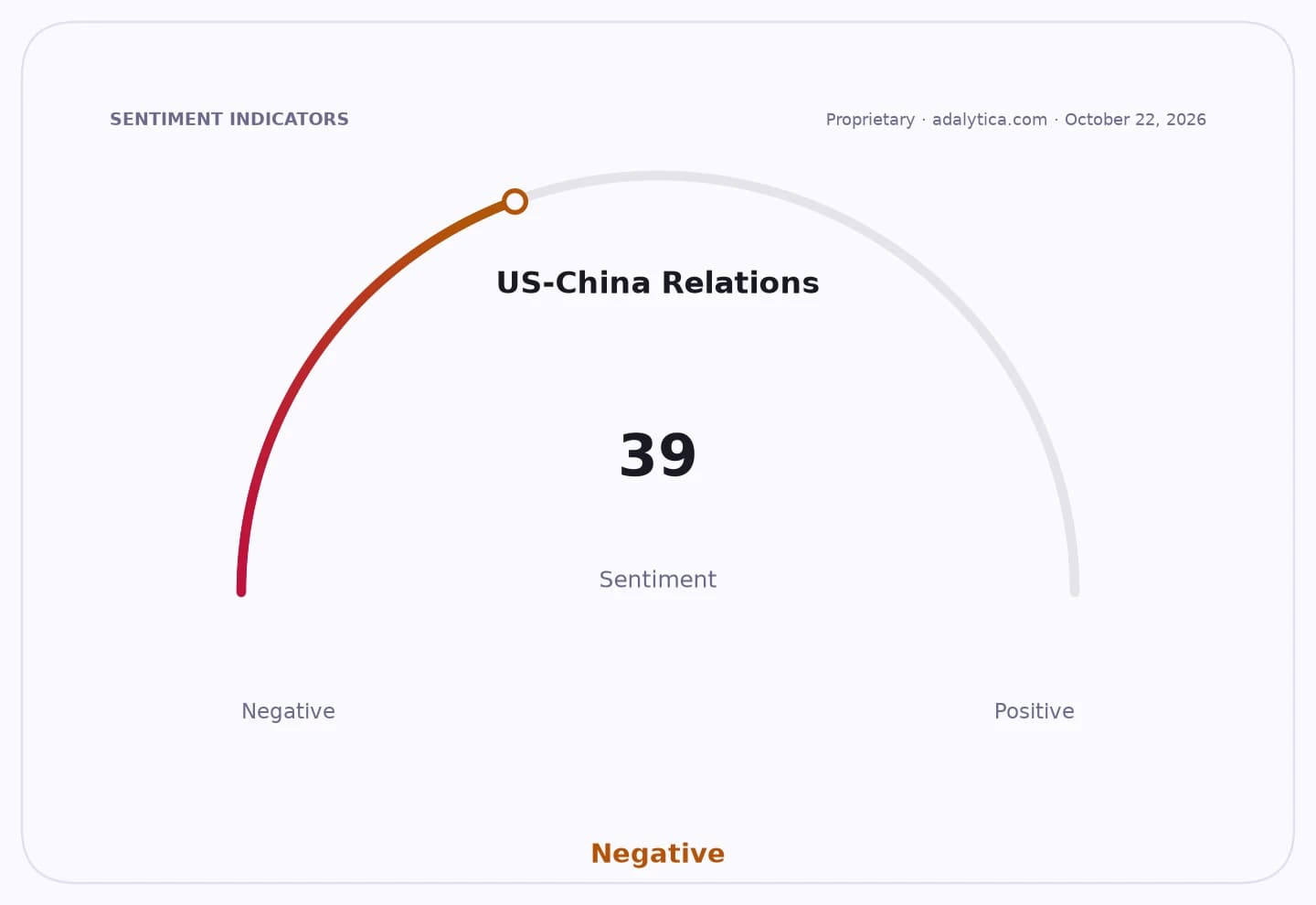
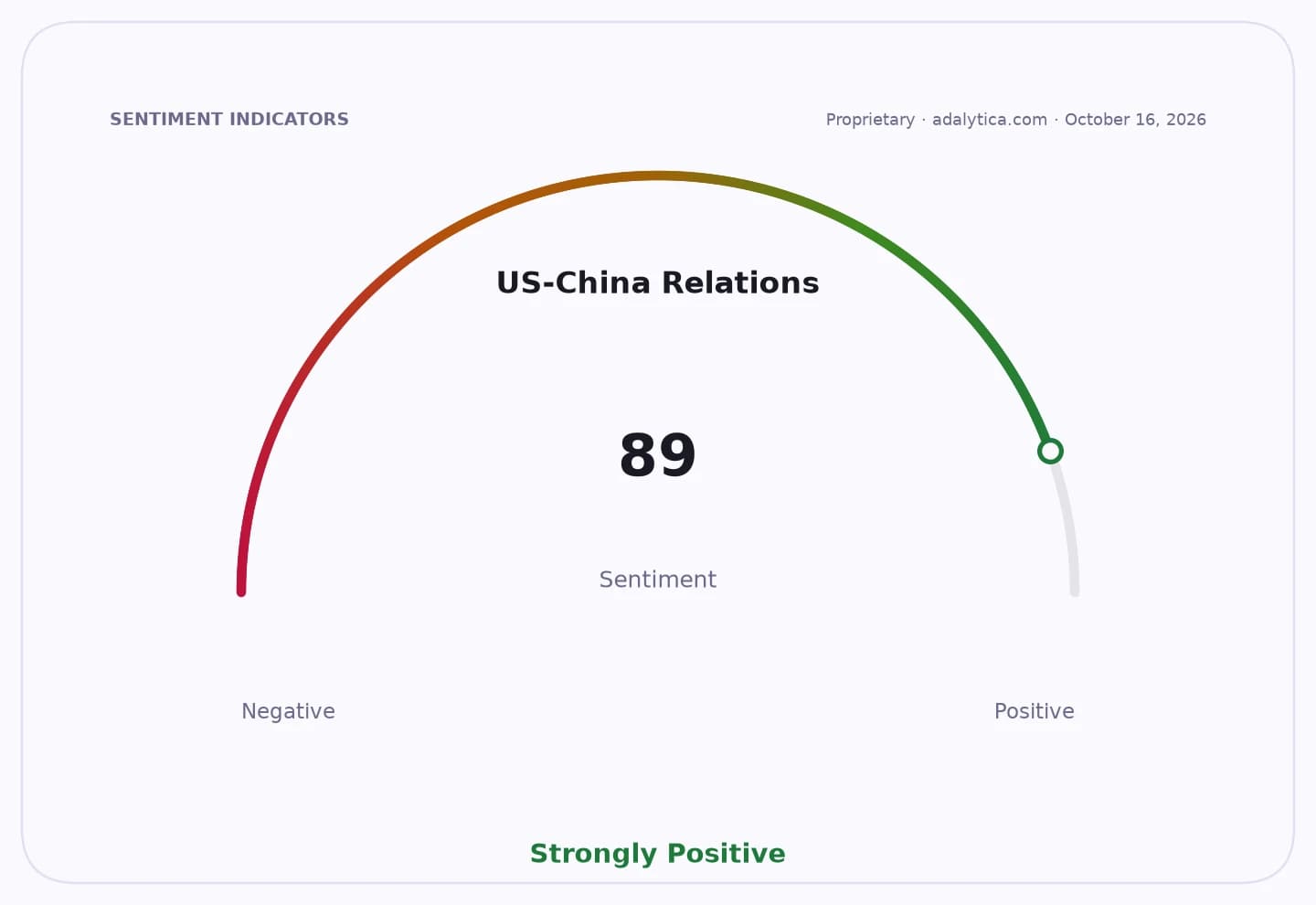
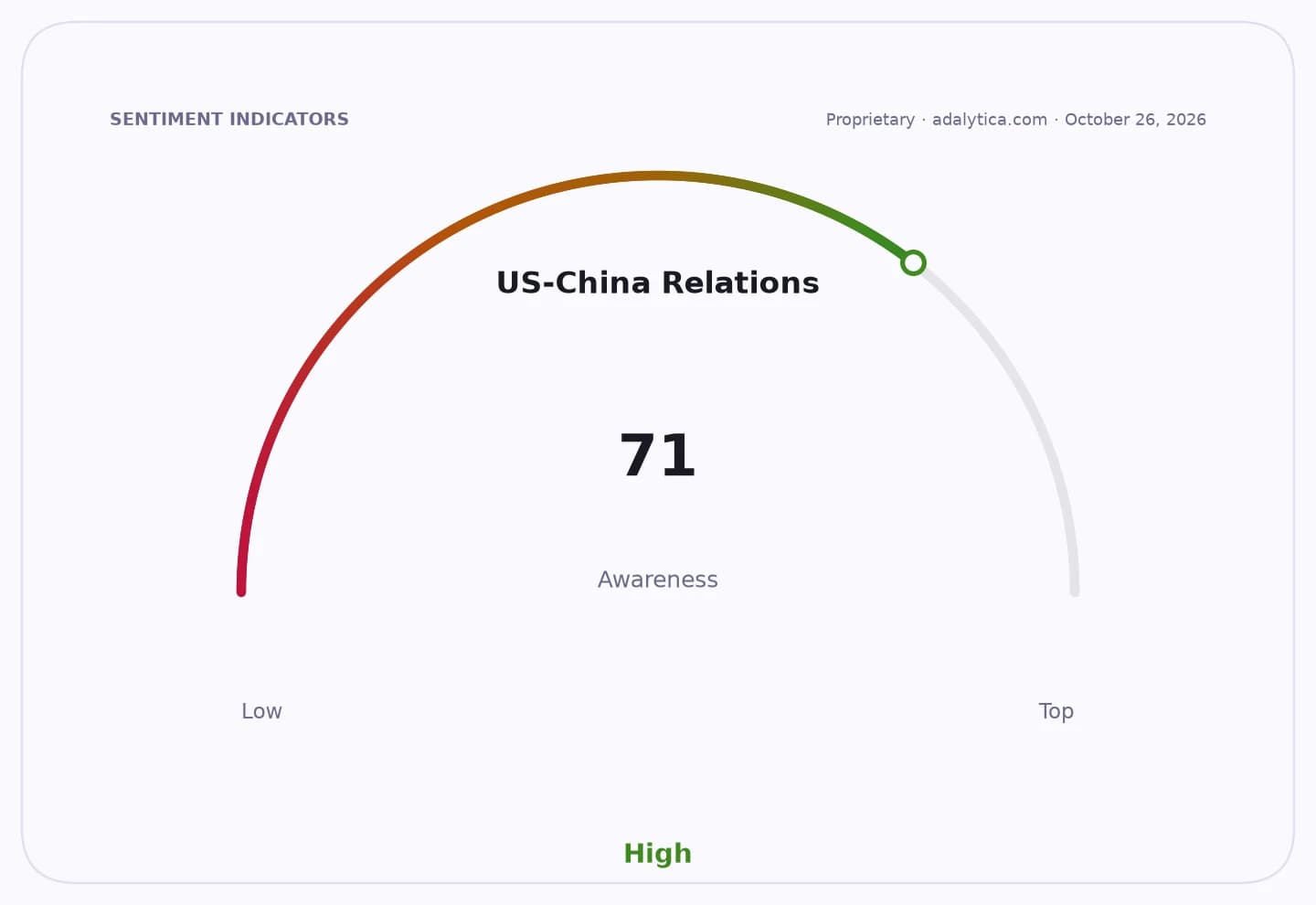
Sentiment IndicatorsⓘProprietary · adalytica.com · October 26, 2026
This is a snapshot — live sentiment, awareness and momentum for 130+ markets update continuously in the dashboard.Open AlphaPulse
Beijing said the U.S. had abused the idea of national security and used administrative power to suppress Chinese companies, while insisting its own AI development must remain “safe, controllable and trustworthy.” The clash reflects a familiar pattern, but the stakes are rising. Washington is not only restricting chips and equipment; it is also narrowing the commercial room for Chinese AI products and services in government and, by extension, in parts of the private sector that follow federal procurement standards.
The market implication is less about one day’s reaction than about a longer-term re-rating of China’s internet and AI leaders. Alibaba, Baidu and Nvidia all sit in the middle of that tension. Alibaba’s shares have fallen to about $99.64 from more than $175 in January, while Baidu has slid to roughly $77.20 from above $150 earlier this year. Nvidia, which remains the global AI bellwether, closed at $210.96 after trading as high as $235.20 in May, and its disclosures already warn that export controls can reduce demand, disrupt supply chains and leave inventory stranded.
US-China Relations — 30-day sentimentadalytica.com
Explore this data interactively — full history, time series and cross-market comparisons.Open AlphaPulse
That is why this story matters beyond China. When sanctions and export controls intensify, they do not just hit the targeted companies; they reshape who can sell into the AI buildout, who gets access to advanced chips, and where the profits from the next decade of computing are likely to accrue. U.S. companies may benefit from a more protected domestic market in some areas, but they also risk losing scale, revenue and optionality in China, one of the world’s most important technology battlegrounds.
The broader narrative is simple: AI is becoming a geopolitical asset, not just a software trend. That usually favors firms with the deepest ecosystems, the most resilient supply chains and the clearest access to capital and customers. For long-term investors, this is a reminder to focus on competitive advantage and balance-sheet strength rather than headlines alone. The opportunity is still enormous, but the route to it is getting narrower, and that makes diversification and patience more important than ever.
| Entity | Gains | Losses |
|---|---|---|
| U.S. policymakers | ▲leverage over tech flows | ▼trade friction with China |
| Chinese AI firms | ▲domestic sympathy | ▼access to U.S. markets |
| Nvidia | ▲policy-driven scarcity pricing | ▼China demand and growth optionality |
| Alibaba/Baidu shareholders | ▲long-term rebound potential | ▼near-term valuation pressure |