The U.S. lead in artificial intelligence has shrunk fast enough to raise fresh questions about whether Washington can keep its edge over China as DeepSeek and other domestic contenders close the performance gap.
Chinese AI models narrow gap with U.S. rivals

Bloomberg Intelligence says top Chinese AI models now trail U.S. rivals by just 3% on benchmark scores after DeepSeek’s V4.1 Flash was released in September, down from about 9% in May and 15% earlier in 2026. For investors, that is not just a bragging-rights metric. It is evidence that the world’s biggest AI market is becoming more competitive, which could reshape who captures user growth, pricing power and eventually profits in a sector still racing to justify massive valuations.
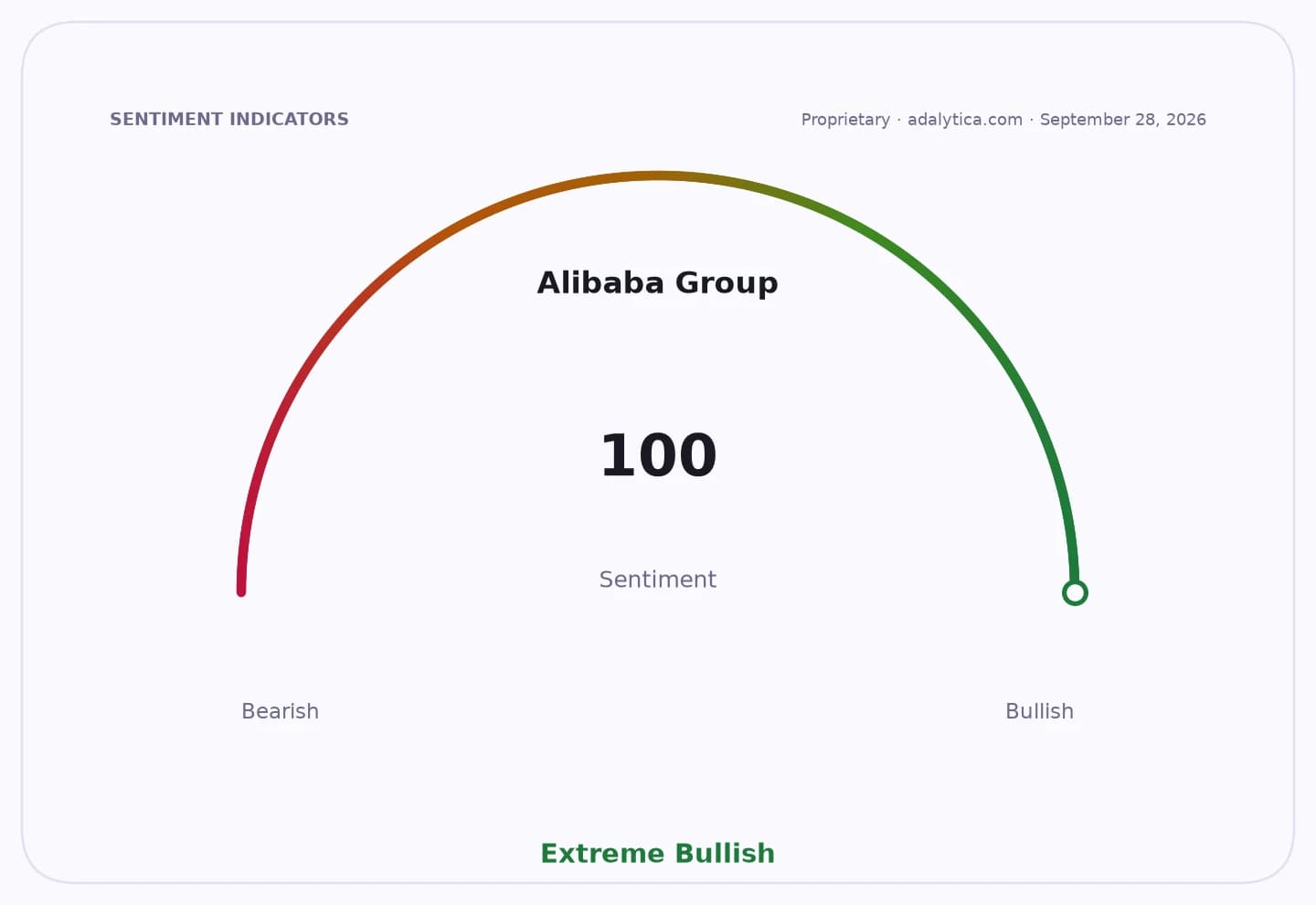
Sentiment IndicatorsⓘProprietary · adalytica.com · October 5, 2026
This is a snapshot — live sentiment, awareness and momentum for 130+ markets update continuously in the dashboard.Open AlphaPulse
The narrowing gap matters because AI is not a single-product story. It is a platform battle tied to cloud demand, chip sales, enterprise software and national security. If Chinese models keep improving while costing less, they can win users even if they remain slightly behind on some benchmarks. That is exactly the kind of dynamic that can pressure U.S. leaders such as OpenAI, Anthropic, Microsoft and Nvidia, while giving Chinese companies more room to build local ecosystems around cheaper, domestically optimized hardware.
DeepSeek’s rise is especially important because it shows Chinese labs are learning how to squeeze more performance out of less advanced chips and domestic supply chains. That weakens one of the central assumptions behind U.S. export controls on Nvidia hardware: that limiting access to top-tier chips would slow China enough to preserve a durable U.S. lead. The new data suggests the policy may still raise costs and complexity for Chinese firms, but it has not stopped the gap from narrowing.
There is also a market angle investors should not ignore. Anthropic and OpenAI are chasing trillion-dollar-type outcomes, and U.S. cloud and chip winners are priced on the belief that American AI will remain the premium product set. If Chinese models are delivering “comparable performance” at lower cost, then the fight shifts from raw intelligence to distribution, monetization and margins. That is where the next winners will be decided.
Still, benchmark progress does not guarantee profits. Bloomberg Intelligence says just three of the top 15 LiveBench models are Chinese, and it warns the sector could remain unprofitable until 2030 amid a price war and more than 1,100 large language models in China. ByteDance’s Doubao is ahead in monetization, while DeepSeek and Tencent’s chatbots remain free. In other words, China may be catching up technically even as it struggles to turn that progress into a sustainable business.
For long-term investors, the takeaway is straightforward: AI remains a powerful secular trend, but leadership is becoming more global and more competitive. That is why concentrated bets on any one model-maker look riskier than the broader AI supply chain — from chips and cloud infrastructure to software platforms that can embed AI into everyday workflows. The U.S. still leads, but the margin is shrinking, and that should keep investors focused on durable moats, pricing power and cash generation rather than leaderboard headlines alone. Worth watching for anyone building a portfolio meant to compound over the next decade.
| Entity | Gains | Losses |
|---|---|---|
| Chinese AI labs | ▲Narrower performance gap | ▼Being seen as far behind |
| U.S. AI leaders | ▲Bigger market today | ▼Some pricing power |
| Nvidia and chip exporters | ▲Ongoing AI demand | ▼Export-control pressure |
| Investors in AI platforms | ▲More competition, more choice | ▼Valuation certainty |