Alibaba is trying to turn its Apsara conference into proof that its artificial-intelligence push is moving from rhetoric to revenue, and Citigroup’s more constructive read suggests investors are starting to price that shift in.
Alibaba Apsara conference boosts AI revenue hopes
The significance is less about another product launch than about whether Alibaba can translate AI infrastructure, models and cloud services into a durable growth engine after a prolonged period of investor skepticism about Chinese internet names. Alibaba said it has developed what it describes as China’s most powerful AI chip and is preparing new AI models aimed at speeding enterprise adoption across software, electronics, logistics and gaming. For a company whose core commerce business faces slower growth, AI offers a route to higher-margin cloud demand and a clearer long-term earnings narrative.
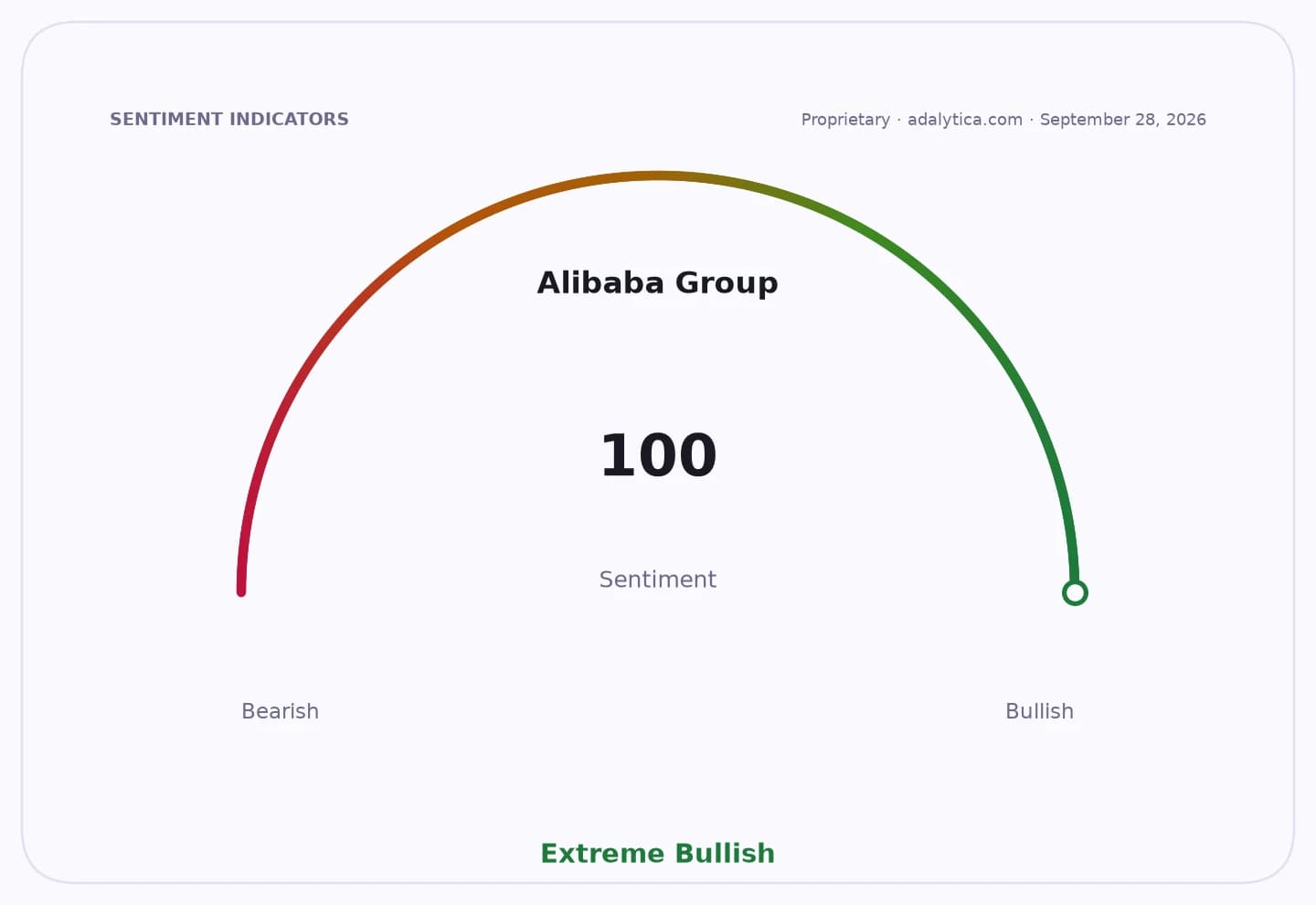
Sentiment IndicatorsⓘProprietary · adalytica.com · September 28, 2026
This is a snapshot — live sentiment, awareness and momentum for 130+ markets update continuously in the dashboard.Open AlphaPulse
That matters economically because enterprise AI spending is becoming one of the few large-scale capex themes still drawing money in both China and global markets. If Alibaba can win workloads for training, inference and cloud deployment, it could improve utilization at Alibaba Cloud and deepen customer relationships beyond retail. The company is also signaling that it wants a bigger role in China’s AI stack at a time when domestic policy and industrial strategy are pushing for technological self-sufficiency, even as access to top-end chips remains constrained.
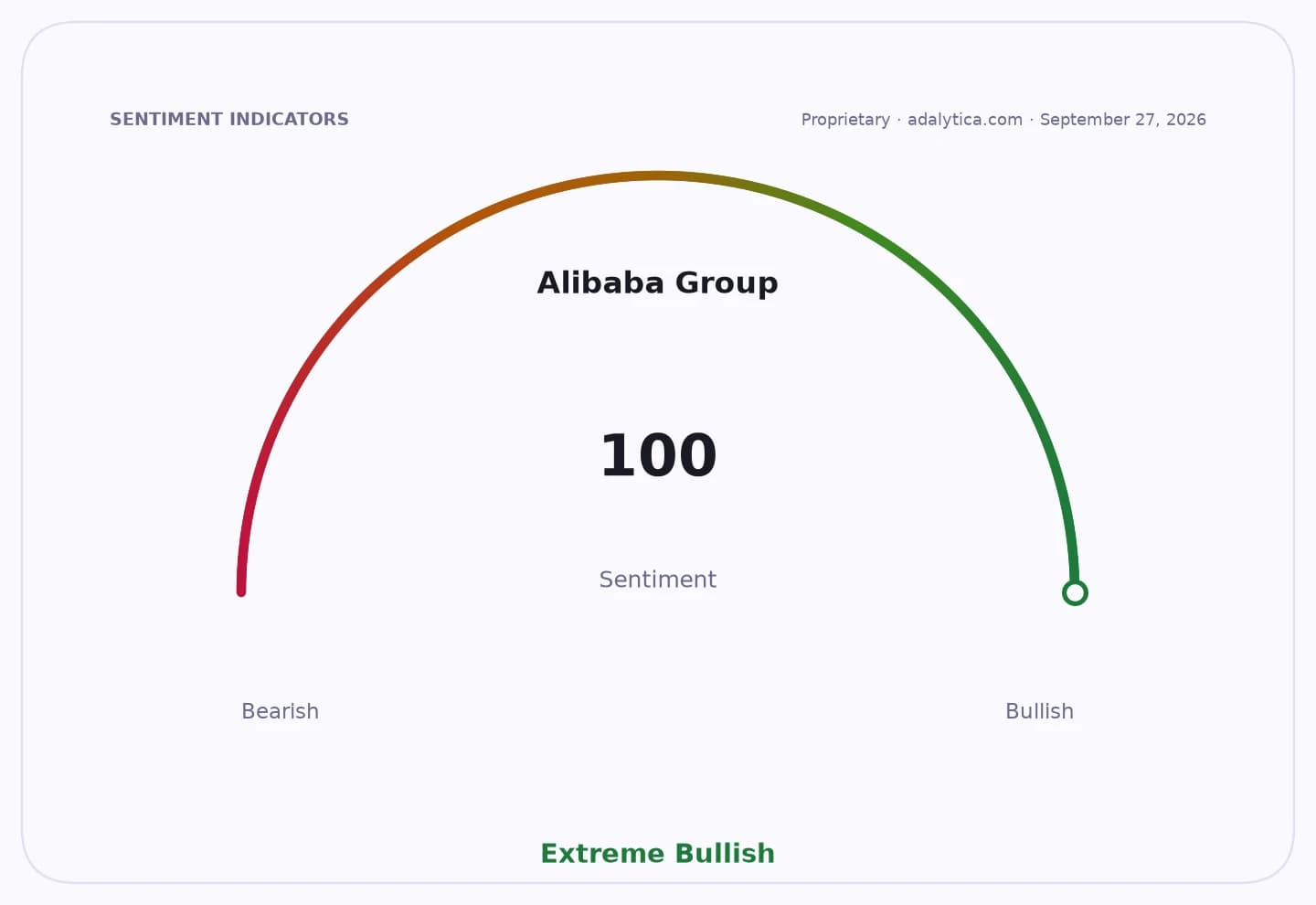
The market has already started to reflect that shift. Alibaba’s U.S.-listed shares have risen sharply from recent lows, and Adalytica’s Alibaba earnings sentiment gauge is at 100, or “Extreme Greed,” after jumping 92 points over 30 days, indicating the stock is attracting much more attention. At the same time, the shares remain well below earlier highs and have been volatile enough to show how quickly the narrative can change if execution disappoints.
Alibaba Group — 30-day sentimentadalytica.com
Explore this data interactively — full history, time series and cross-market comparisons.Open AlphaPulse
By contrast, the broader China growth backdrop remains fragile. Adalytica’s China economic growth target sentiment is in “Extreme Fear,” underscoring why investors remain selective on China exposure even when they are willing to pay up for specific AI winners. That split is also visible in the tech complex: Microsoft and Alphabet have both been leaning into AI infrastructure and models, while Alibaba is trying to prove it can compete in a market shaped by domestic policy, global chip restrictions and heavy capital spending.
For investors, the key question is whether Apsara marks a real inflection in monetization or simply another reminder that Alibaba has the ambition to compete in AI. Bulls will argue that the company’s cloud footprint, consumer data and domestic ecosystem give it a natural distribution advantage. Bears will point out that China’s AI market is crowded, margins can be pressured by infrastructure spending, and the path from technical progress to sustainable earnings is still unproven.
What comes next is execution: cloud demand, enterprise adoption and the commercial uptake of Alibaba’s new models and chip strategy. If those start to show up in results, AI could become the dominant driver of Alibaba’s valuation reset. If not, the stock is likely to keep trading on sentiment rather than fundamentals.
| Entity | Gains | Losses |
|---|---|---|
| Alibaba | ▲AI re-rating | ▼Execution risk |
| Alibaba Cloud customers | ▲Lower AI costs | ▼Vendor concentration |
| Bulls in BABA | ▲Growth optionality | ▼Near-term volatility |
| China AI rivals | ▲Sector validation | ▼Share gains to Alibaba |