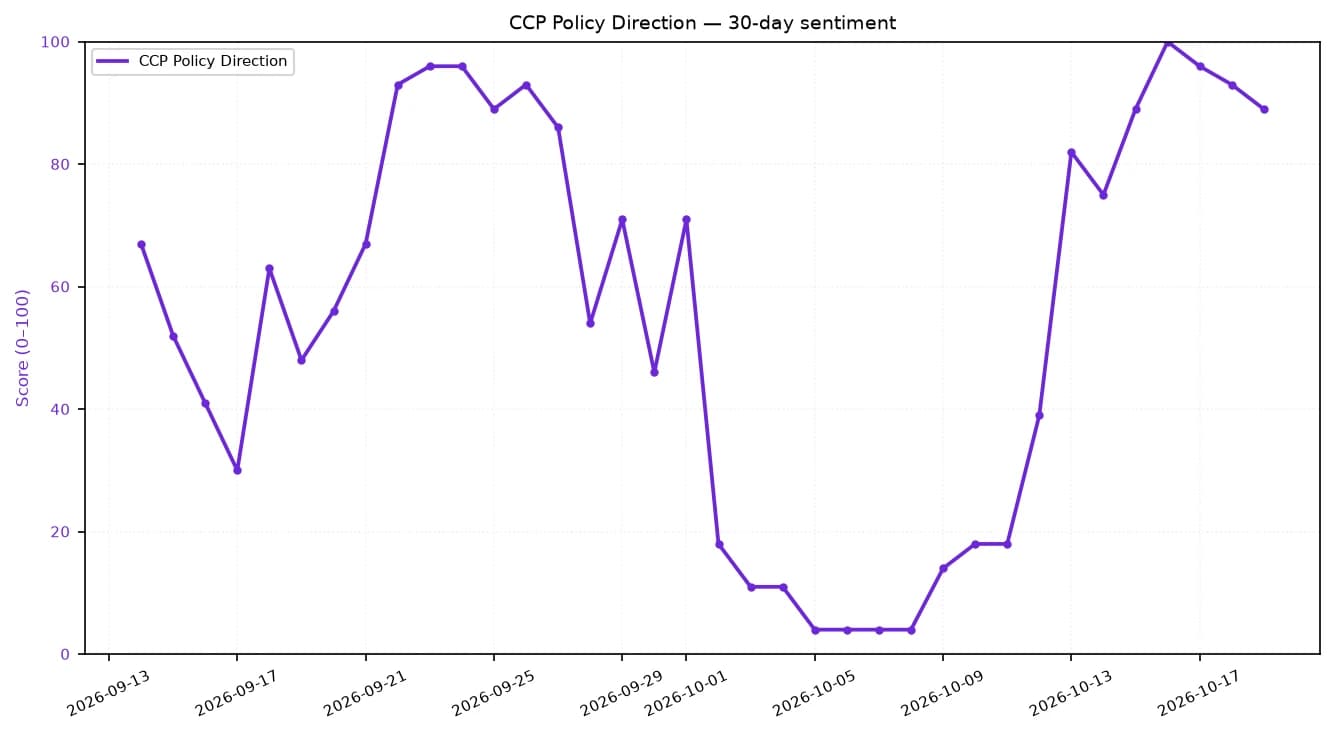
China is preparing tighter restrictions on which technology and know-how can leave the country, a move that could complicate the global semiconductor and AI supply chain just as investors are trying to price a fragile easing in U.S.-China tensions.
China tightens technology export controls
The economic significance is immediate: Beijing is moving from using export controls as a defensive tool on raw materials and strategic components to potentially policing the flow of intellectual property, engineering expertise and advanced processes. That matters because the modern tech stack runs on cross-border knowledge transfer as much as on physical shipments. If China makes it harder for domestic companies to export sensitive know-how, the result could be slower collaboration, higher compliance costs and another layer of uncertainty for multinationals that depend on China-based R&D, manufacturing and supplier ecosystems.
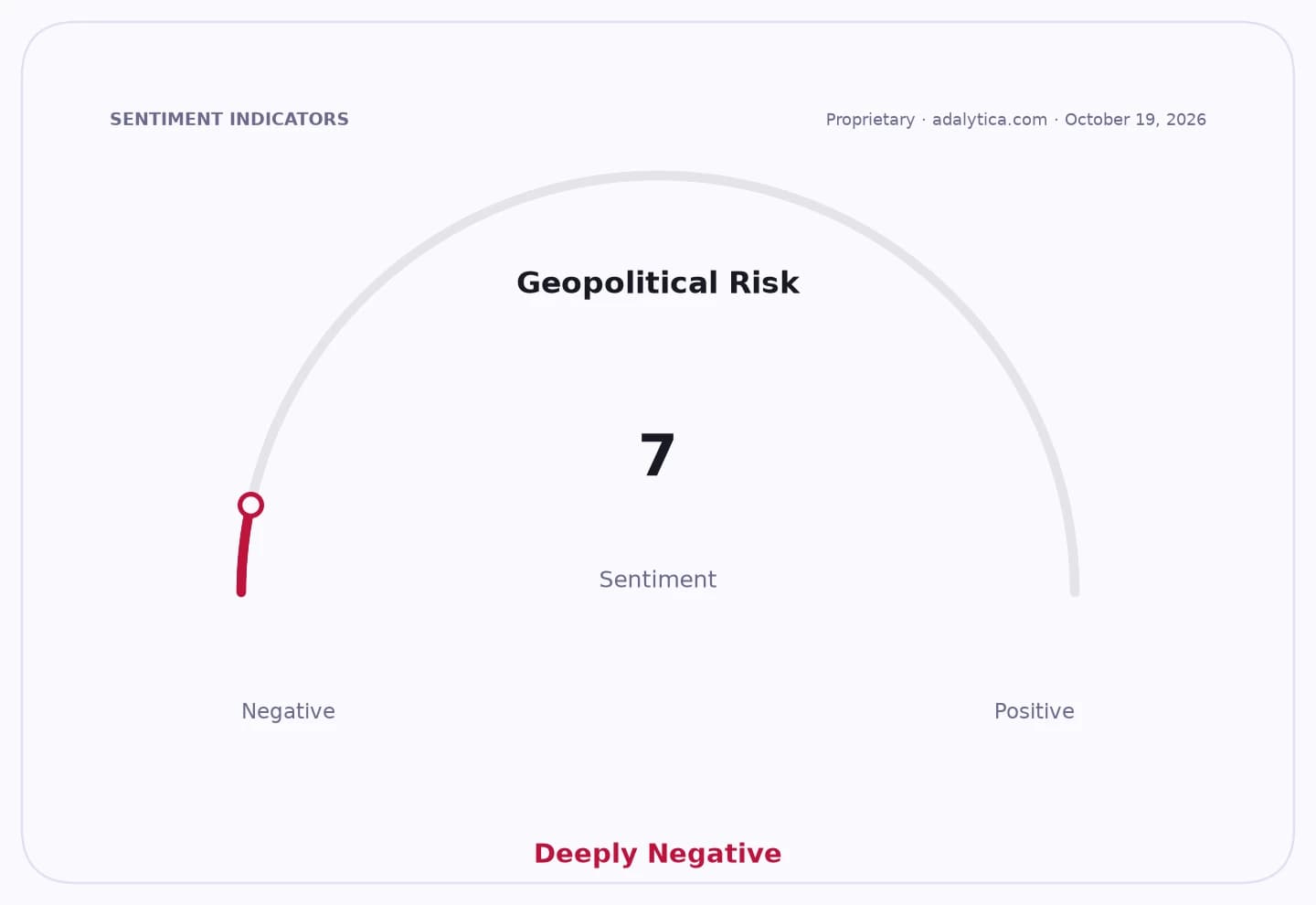
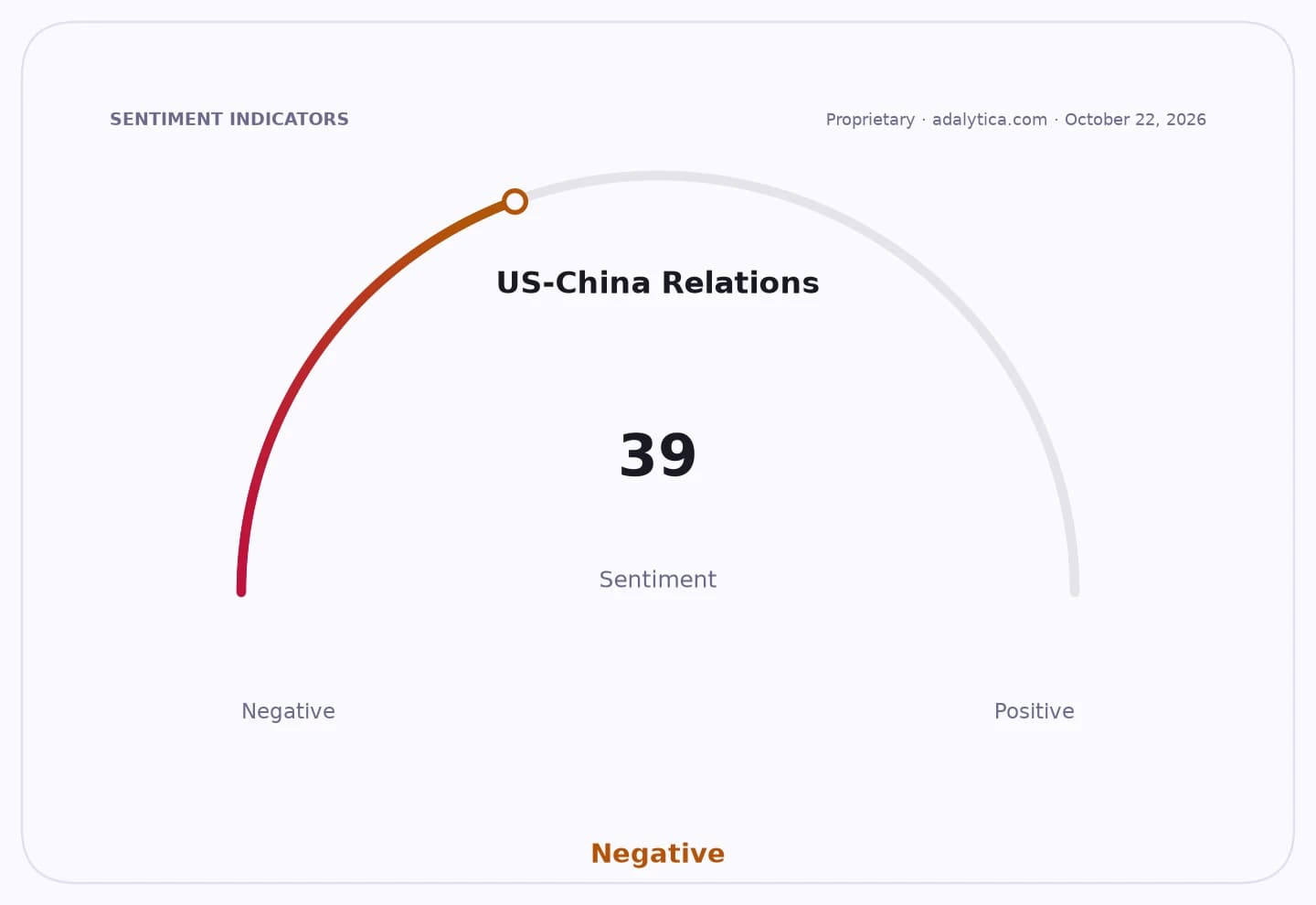
Sentiment IndicatorsⓘProprietary · adalytica.com · October 22, 2026
This is a snapshot — live sentiment, awareness and momentum for 130+ markets update continuously in the dashboard.Open AlphaPulse
For investors, the first-order impact is on the names most exposed to the world’s most important technology corridor. Nvidia, which has repeatedly warned that export controls can disrupt supply chains, demand and distribution channels, remains a direct barometer of the policy risk. Taiwan Semiconductor Manufacturing Co. is less exposed to Chinese outbound controls in a narrow sense, but its customers and vendors sit inside a system where any fresh restriction raises the odds of rerouted orders, slower product cycles and more redundant capacity planning. Apple, too, faces a wider policy overhang because the rules could deepen the drift toward technological decoupling that already pressures hardware sourcing, assembly and product design.
The market is underestimating how quickly knowledge controls can become a growth tax. Physical export bans are painful, but restrictions on “know-how” hit faster because they target the transfer of methods, training, software processes and design expertise that allow technology to scale. That can chill joint ventures, R&D partnerships and supplier relationships long before any shipment is stopped. It also gives Beijing a broader retaliatory arsenal as Washington tightens its own restrictions, including the U.S. ban on DeepSeek for federal civilian agencies, which China has already condemned.
US-China Relations — 30-day sentimentadalytica.com
Explore this data interactively — full history, time series and cross-market comparisons.Open AlphaPulse
The backdrop is one of deteriorating policy visibility. Adalytica’s U.S.-China Relations Sentiment snapshot sits at 39, neutral, but awareness is in “extreme fear,” showing how quickly market attention can swing toward escalation risk. Global stability sentiment, meanwhile, has been volatile, underscoring that investors are not dealing with a one-off headline but with an ongoing geopolitical regime shift.
This is why the story matters beyond the latest headline cycle. The next phase of the U.S.-China tech rivalry is likely to move from hardware bottlenecks to the governance of expertise itself. That is harder to price, harder to unwind and more damaging to corporate planning. In practical terms, it strengthens the case for investors to favor the infrastructure layer of AI over the most geopolitically exposed end-markets: the foundries, equipment makers, power and data-center enablers that can still sell into a fragmented world, even as the world’s largest tech powers make it more expensive to share ideas.
| Entity | Gains | Losses |
|---|---|---|
| China regulators | ▲More leverage over tech flows | ▼Higher friction with global firms |
| U.S. chipmakers | ▲Domestic reshoring support | ▼China demand uncertainty |
| Foundry leaders | ▲Supply-chain localization | ▼Cross-border complexity |
| Multinationals with China R&D | ▲None | ▼Slower collaboration, higher compliance |