China has started soliciting public comment on adding 40 technologies in artificial intelligence, biomedicine and photovoltaics to its export-restriction catalog, a move that could tighten Beijing’s grip on strategic know-how and reshape supply chains in sectors central to the global tech race.
China Seeks Comment on Tech Export Restrictions
The proposal matters because it turns industrial policy into a direct trade lever at a time when China is leaning more heavily on exports to support growth. With domestic demand still soft and the trade surplus already near $940 billion, Beijing is signaling it wants to protect high-value technology while keeping a tighter hand on what companies can transfer abroad.
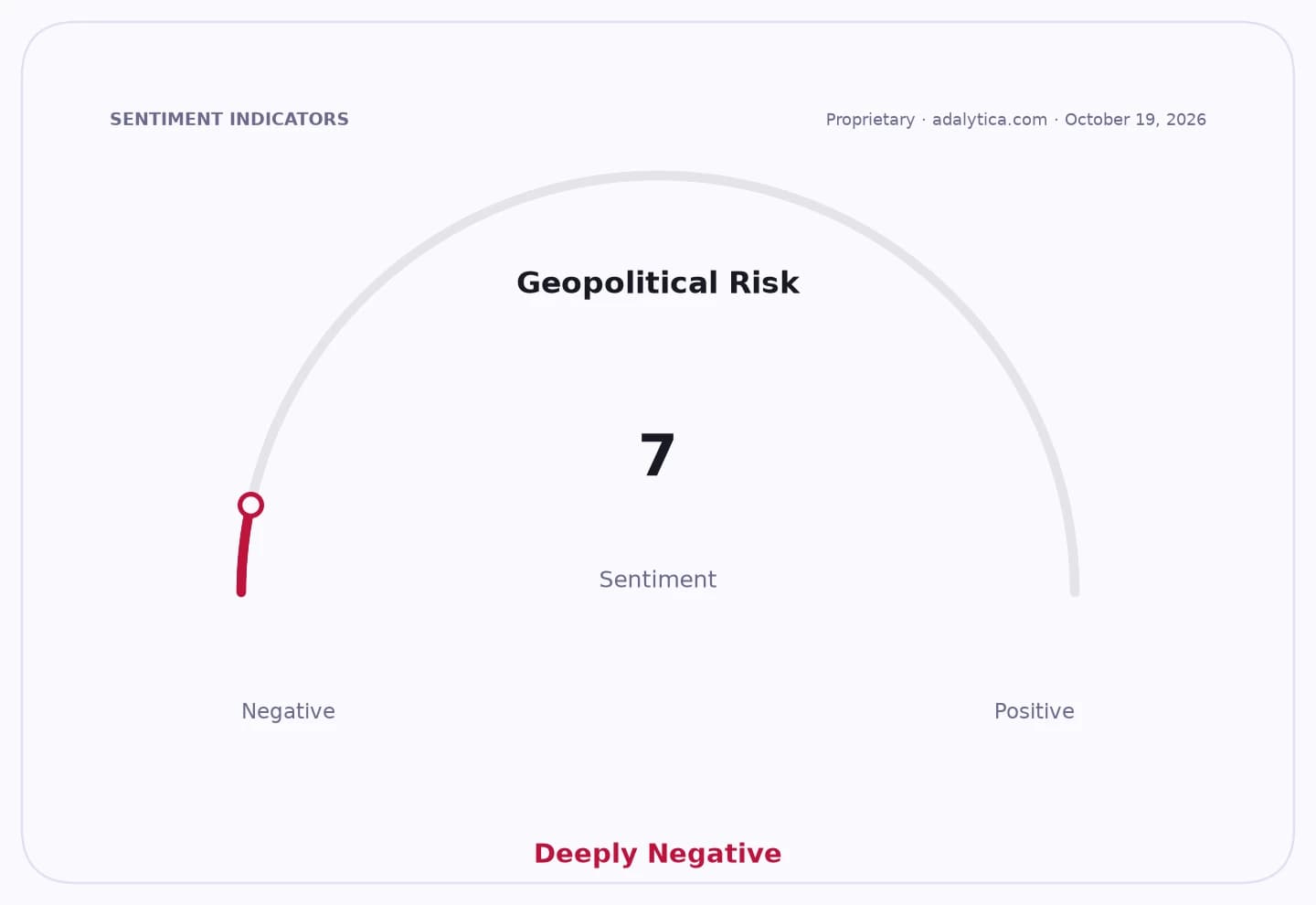
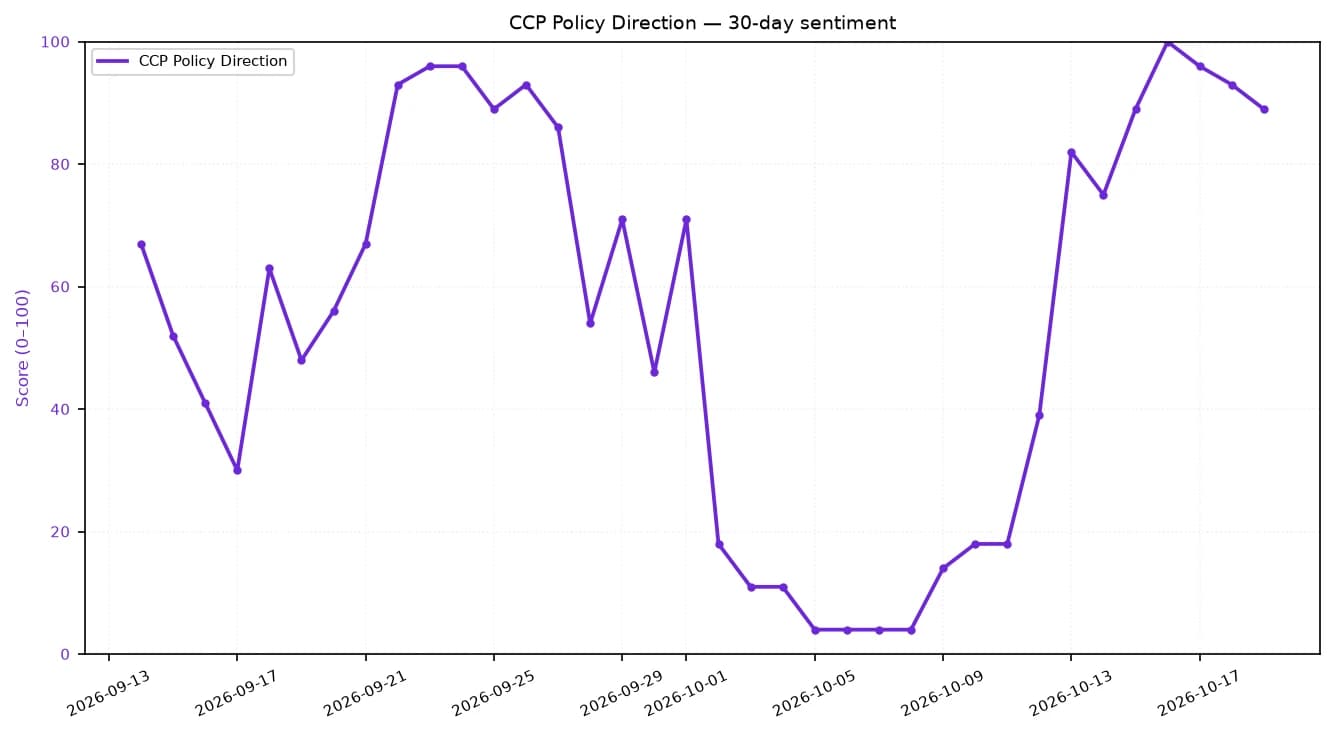
Sentiment IndicatorsⓘProprietary · adalytica.com · October 19, 2026
This is a snapshot — live sentiment, awareness and momentum for 130+ markets update continuously in the dashboard.Open AlphaPulse
The Ministry of Commerce said the revision would cover technologies in three areas and would also impose pre-export registration management on the targeted items. Public feedback will be taken from Oct. 16 to Nov. 15, according to the ministry.
For investors, the immediate read-through is to Chinese technology exporters, global semiconductor and AI supply chains, and clean-energy manufacturers that depend on cross-border licensing, equipment and know-how transfers. Any new restrictions could complicate offshore sales, slow technology diffusion and force foreign buyers to look harder at non-Chinese suppliers or accelerate localization.
The policy also arrives against a backdrop of widening geopolitical friction with the U.S., where export controls have already become a core tool in the fight over advanced chips, AI and manufacturing capacity. Chinese authorities are now moving in the same direction, reinforcing the view that technology trade is becoming more regulated, less predictable and more politicized.
Chinese stock proxies for the theme were mixed in recent sessions. The iShares MSCI China ETF, FXI, closed at $33.84 on Oct. 16, below its 50-day and 200-day moving averages, while the KraneShares CSI China Internet ETF, CQQQ, fell to $41.09, also under both longer-term averages. The MSCI China ETF, MCHI, ended at $51.20, likewise below its 50-day and 200-day lines, underscoring the market’s cautious tone around China exposure.
The next focus is whether the ministry narrows or broadens the final list after the comment period, and whether the restrictions are framed as a national-security safeguard or as a more forceful response to external pressure. Either way, traders will be watching for spillover into AI chipmakers, solar technology firms and any multinational relying on Chinese intellectual property in manufacturing.
| Entity | Gains | Losses |
|---|---|---|
| China policymakers | ▲tighter control over strategic tech | ▼faster foreign tech transfer |
| Chinese strategic industries | ▲protection of know-how | ▼some export flexibility |
| Foreign buyers of Chinese tech | ▲alternative sourcing pressure | ▼access to restricted technologies |
| FXI, MCHI, CQQQ holders | ▲potential policy clarity if rules stay limited | ▼China-tech valuation pressure |