Nvidia’s central role in the artificial-intelligence trade is broadening beyond purpose-built accelerators, as Chinese technology companies have bought more than 1 million of its gaming and workstation chips this year to make up for a domestic shortage of computing power.
Nvidia Gaming Chips Bought in China for AI Compute

That matters because it shows the AI supply chain remains tight even as demand shifts into less obvious product lines, giving Nvidia a deeper foothold in China while also underscoring how constrained the country is in accessing advanced compute. For investors, it is a reminder that the company’s revenue base is not just tied to headline AI servers, but to a wider ecosystem of chips that can be repurposed when end users are desperate enough for capacity.
Sentiment IndicatorsⓘProprietary · adalytica.com · October 24, 2026
This is a snapshot — live sentiment, awareness and momentum for 130+ markets update continuously in the dashboard.Open AlphaPulse

The purchases, disclosed by industry insiders to the Financial Times, highlight how Chinese companies are working around the lack of sufficient local supply. Nvidia’s gaming and workstation products were not designed to run frontier AI systems, but buyers are adapting them for inference and development tasks as the country struggles to satisfy rising demand for processing power. That reinforces Nvidia’s pricing and market power in China even amid geopolitical restrictions on the most advanced chips.
The story also matters for the broader AI capex cycle. It suggests demand is still outrunning supply, which supports the case that infrastructure spending has further to run. Nvidia has already told investors it had increased supply and capacity commitments to $279 billion as of late July, up from $119 billion the quarter before, a sign of how quickly the buildout is scaling.
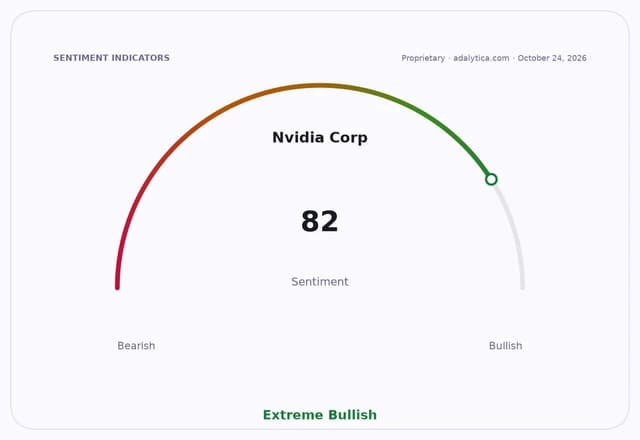
For the stock, the immediate implication is mixed but constructive. On the bullish side, the China buying spree points to sticky demand and a broader monetization path for Nvidia’s product portfolio. On the bearish side, it also highlights continued dependence on a market that is politically sensitive and vulnerable to export controls, licensing friction or retaliatory moves. That risk matters because China is large enough to influence the shape of Nvidia’s long-term revenue mix even if its most advanced products remain constrained.
More broadly, the report fits a market narrative in which AI is moving from model-building hype to a persistent scramble for compute. Microsoft and other hyperscalers are still wrestling with infrastructure shortages, while investor appetite for AI remains elevated even as technical indicators show Nvidia’s shares have cooled from recent highs. The company’s 50-day moving average sits above the current price, and RSI readings have fallen into oversold territory, suggesting the market is pausing even as the underlying demand story remains intact.
The next catalyst is whether Chinese demand for substitute chips persists or becomes a one-off workaround. If it does, Nvidia’s China exposure could prove more durable than many investors assume. If Beijing or Washington tightens the screws further, the same dependence could turn from an advantage into a valuation overhang.
| Entity | Gains | Losses |
|---|---|---|
| Nvidia | ▲Broader chip demand | ▼Export-control exposure |
| Chinese tech buyers | ▲More available compute | ▼Higher dependence on imports |
| U.S. regulators | ▲Less relevant | ▼Harder China containment |
| Domestic chipmakers | ▲Opportunity to catch up | ▼Lose share to Nvidia workarounds |