Huawei is pitching a major overhaul of broadband and enterprise networks as artificial intelligence drives a sharp shift in where traffic flows, how services are sold and how operators manage costs.
Huawei pitches AI-centered network overhaul
Artificial Intelligence
At a World Broadband Association congress in Vienna, Huawei optical business president Bob Chen said the industry must rebuild network architecture, reshape business models and redefine operations to capture demand from AI workloads. The message is aimed at telecom operators and cloud infrastructure providers that face rising pressure to support more latency-sensitive AI traffic while finding new revenue streams beyond simple bandwidth sales.
Sentiment Indicators
The argument matters because AI is changing network economics, not just traffic volumes. Huawei said large AI models now have nearly 10 trillion parameters and token consumption jumped almost 50-fold in the past year, while the number of AI data centers has risen sharply. In that environment, Huawei wants operators to move from region-based network planning to AI data center-centric layouts, with direct mesh links designed for deterministic latency of 1, 5 and 20 milliseconds.
That shift could help service providers charge more for premium connectivity. Huawei said enterprise clients should be sold “bandwidth + latency + reliability” rather than bandwidth alone, while residential broadband can be packaged with whole-home Wi-Fi and smart-home services. For investors, that points to a potential re-rating of network gear, fiber and optical transport vendors if AI infrastructure spending broadens beyond chips and servers into the backhaul and routing layers.
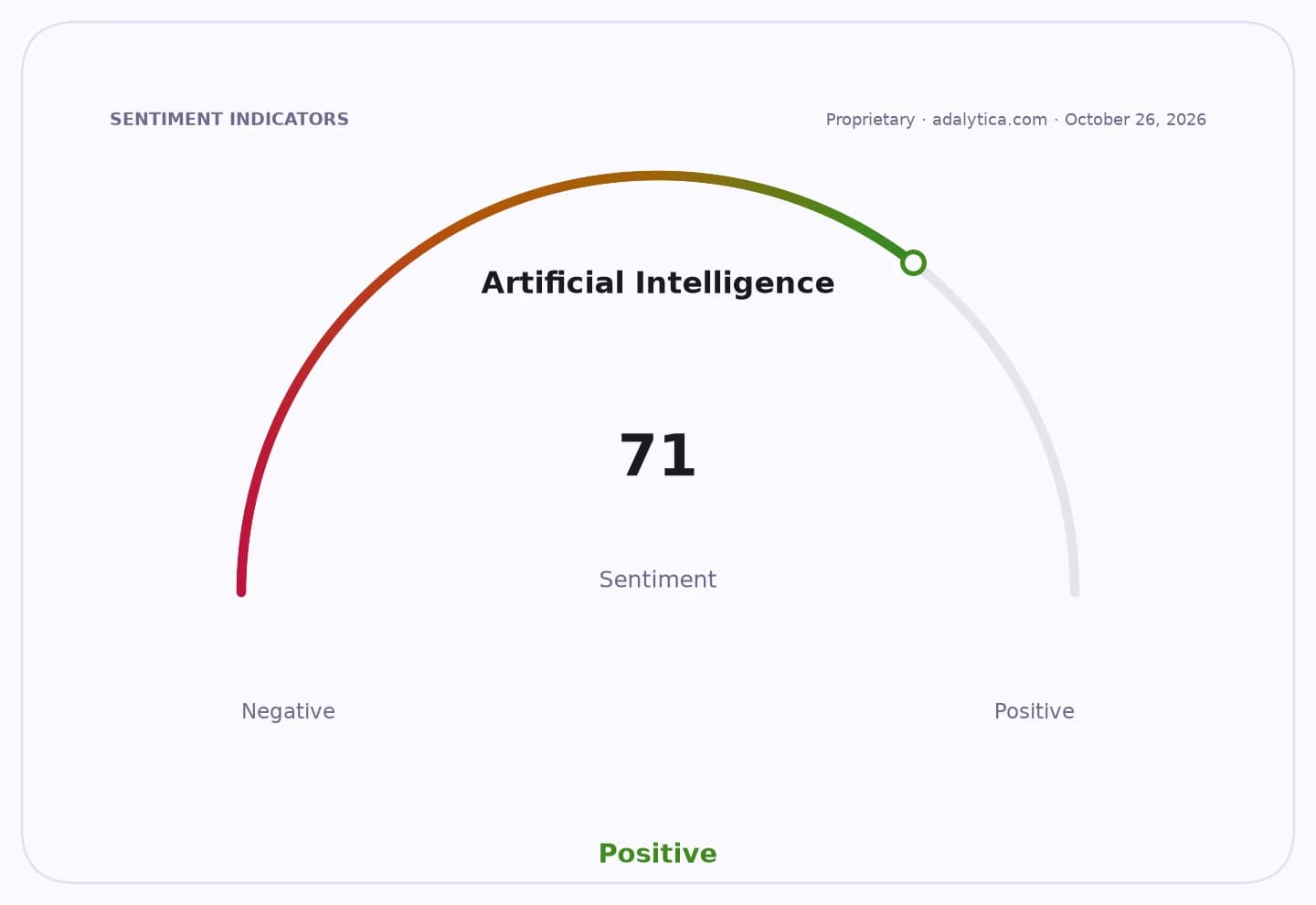
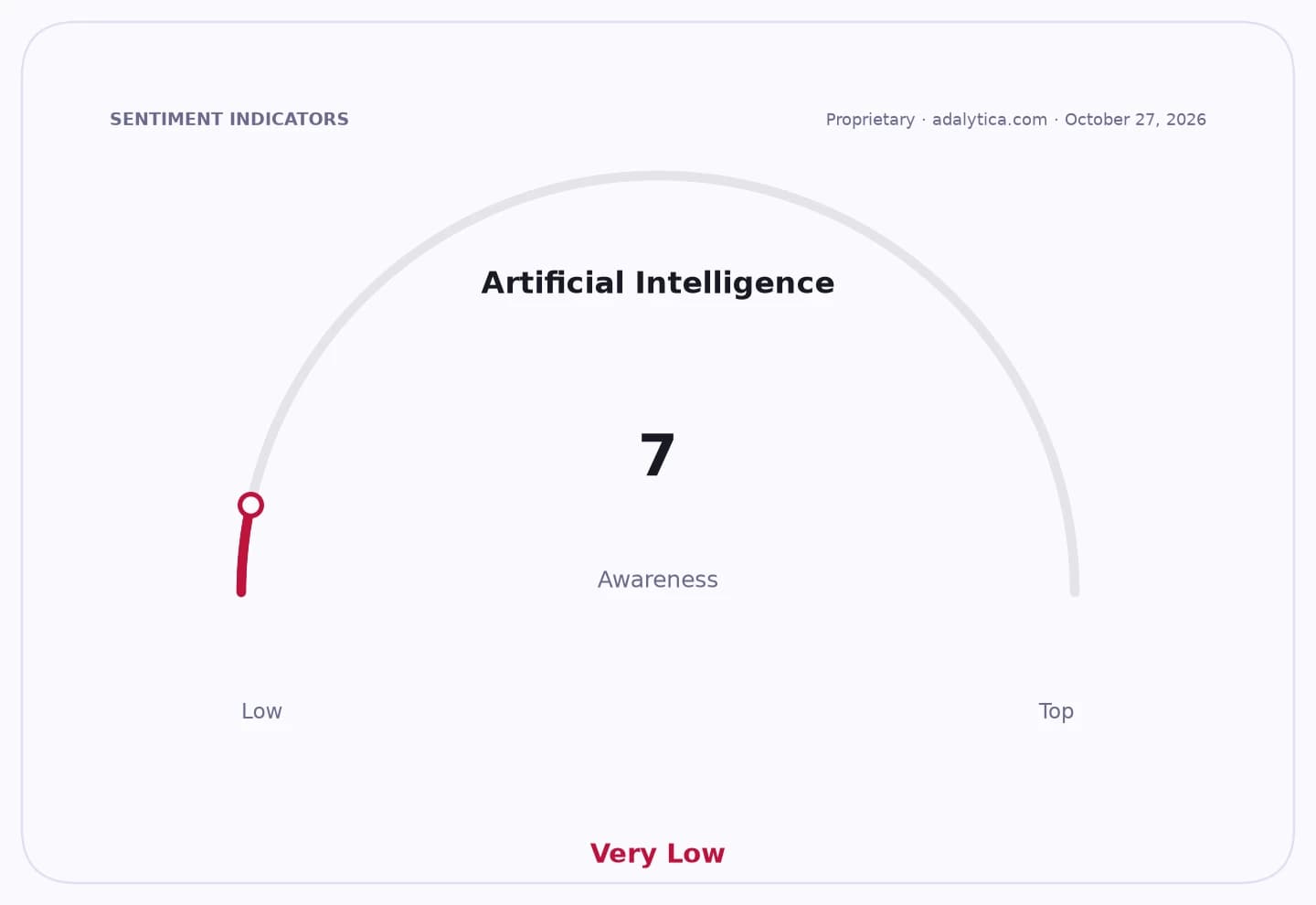
Artificial Intelligence — 30-day sentimentadalytica.com
Explore this data interactively — full history, time series and cross-market comparisons.
Huawei also tied the AI buildout to lower operating costs. It said AI-assisted Wi-Fi optimization can lift speeds by about 20% in interference-heavy environments, while smart traffic analysis can cut energy use in network equipment by more than 20%. That is significant for carriers facing heavy capex burdens, slower consumer broadband growth and pressure to improve margins through automation.
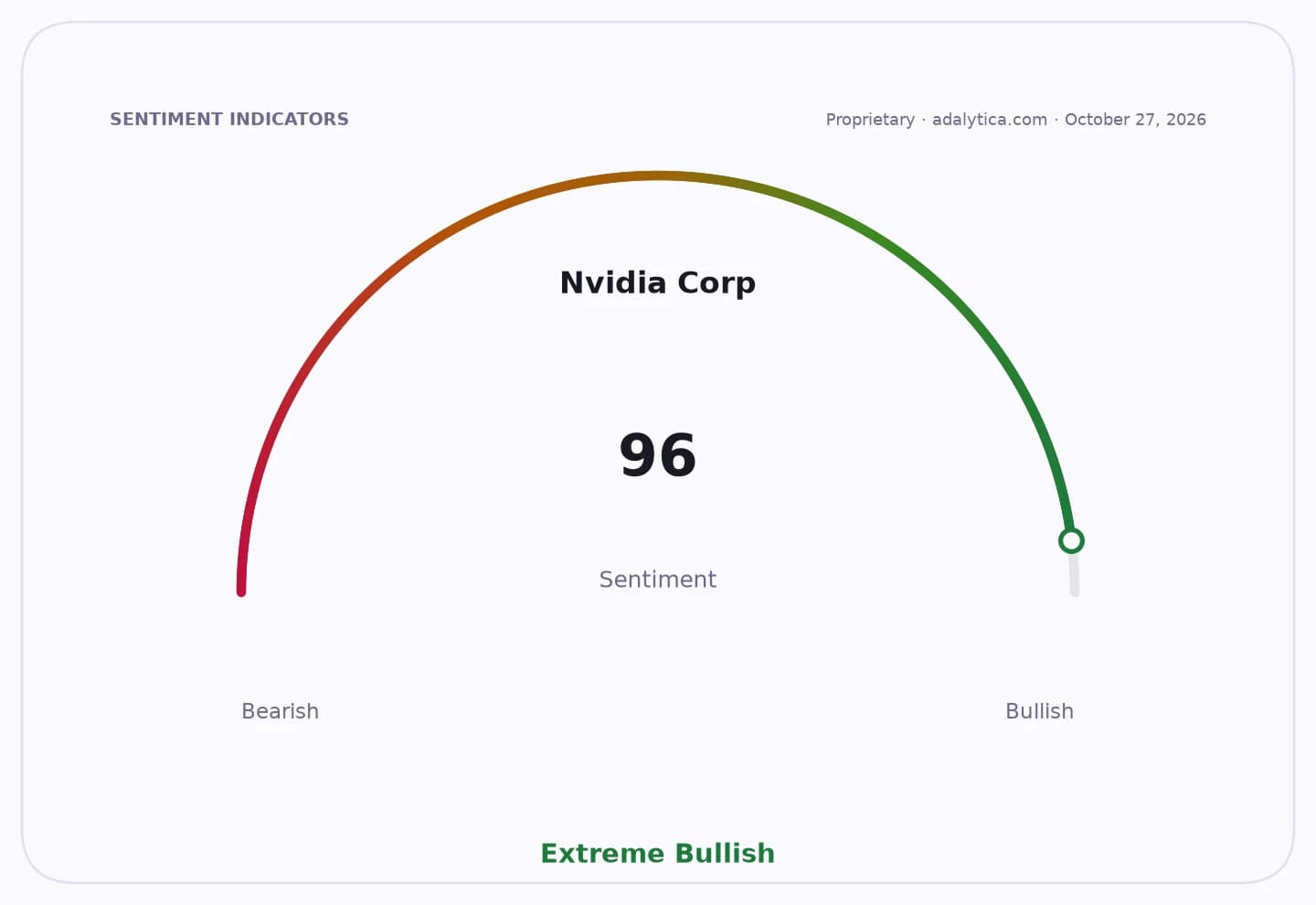
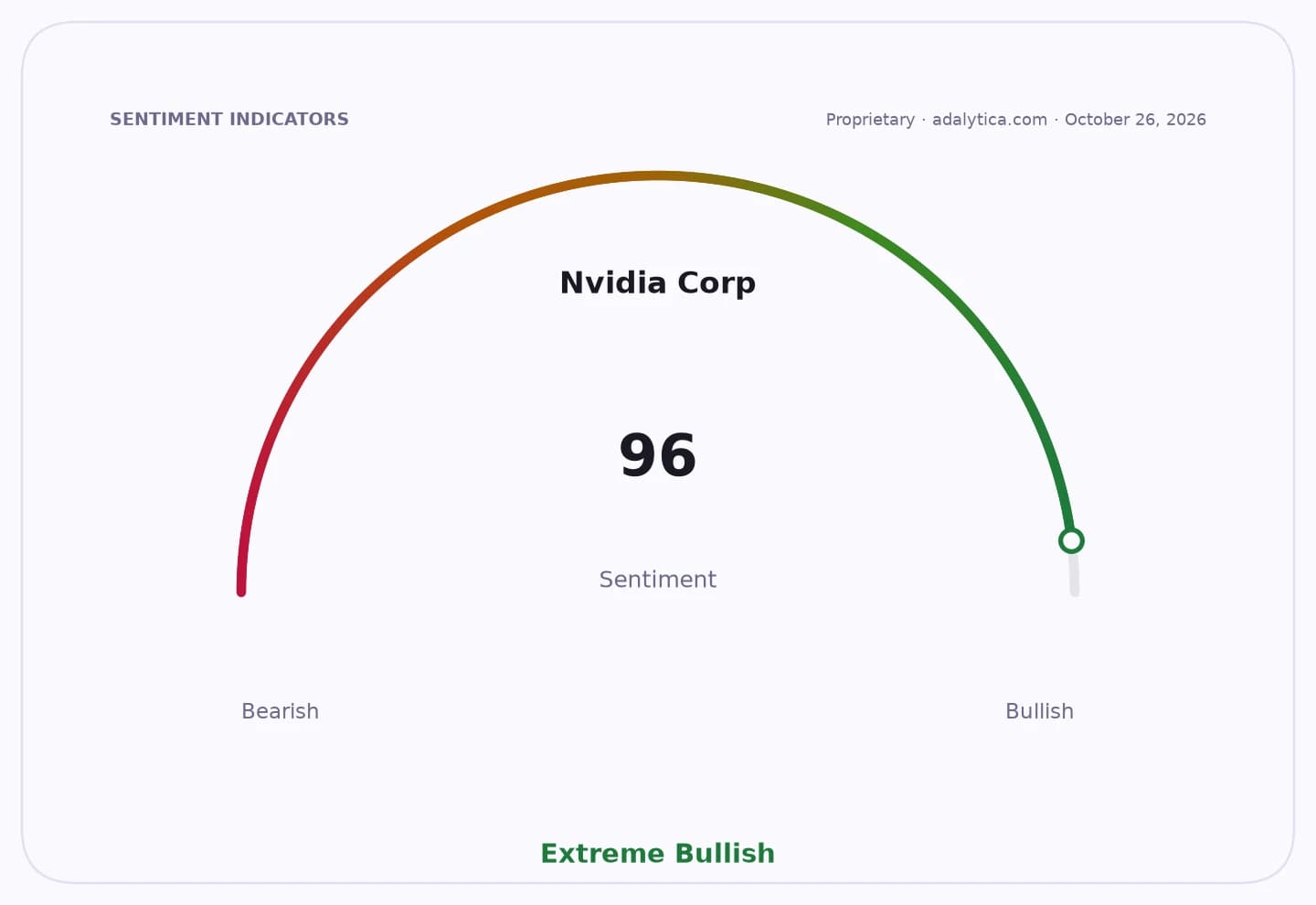
The remarks arrive as the AI trade stays central to market sentiment, even as investors look for the next layer of spending after semiconductors and cloud capacity. Nvidia shares fell to $214.13 on Oct. 16, below their 50-day moving average of $222.96, while Microsoft closed at $529.05, still above its 50-day average of $505.37. In Adalytica’s AI snapshot, sentiment on AI remains in “Greed” territory at 75, underscoring how strongly the theme still drives capital allocation.
For investors, the key question is whether AI demand translates into a wider capex cycle for optical networks, fiber backhaul, data center interconnect and carrier software. Huawei is betting that the value shift in AI will not stop at chips and model training, but will run through the network stack that connects them.
The next catalyst is whether operators in major markets start adopting AI-centered network design and premium service pricing, which would determine how much of the AI boom flows into telecom infrastructure vendors.
| Entity | Gains | Losses |
|---|---|---|
| Huawei | ▲Broader optical/network demand | ▼Price-only bandwidth model |
| Telecom operators | ▲Higher-margin AI services | ▼Legacy network architecture |
| Network gear vendors | ▲More AI infrastructure spending | ▼Commodity transport pricing |
| Enterprises with AI workloads | ▲Lower latency, better reliability | ▼Basic broadband-only plans |