China’s rapid improvement in cheaper AI models is becoming a new pressure point for global technology stocks, raising the risk that the current correction in equities is not finished and that the market’s AI spending boom is starting to lose momentum.
China AI Models Pressure Tech Stocks

The immediate issue is not just sentiment. It is the economics of the AI capex cycle. If companies can now rely on lower-cost Chinese models for a growing share of queries and workloads, the pricing power of premium frontier labs weakens, and that flows straight through to revenue growth, cloud demand and the appetite for data-center buildouts. When the top line stops accelerating, the whole investment chain from software to semiconductors starts to wobble.
Sentiment IndicatorsⓘProprietary · adalytica.com · October 27, 2026
This is a snapshot — live sentiment, awareness and momentum for 130+ markets update continuously in the dashboard.Open AlphaPulse

That is why the latest warnings from Korean market commentators matter. One view is that the Kospi’s correction is still in its early innings, with room for another leg down. The bigger message is that investors may be underestimating how quickly the AI trade can shift from scarcity to commoditization. Anthropic’s annualized revenue run rate has reportedly flattened since July, a sign that even the best-known names in the sector are not immune to slowing demand. At the same time, AI start-ups are increasingly mixing expensive Western models with cheaper Chinese alternatives depending on task complexity, a classic sign that customers are becoming cost-sensitive.
This matters far beyond China. The market has spent the past two years pricing AI as an unbroken supercycle: more revenue for model makers, more spending for hyperscalers, more orders for chips, and more upside for the entire infrastructure stack. But if model performance converges faster than expected, the winners narrow. That is especially important for investors in Nvidia, Broadcom, the SOXX semiconductor ETF and the Nasdaq-heavy QQQ, all of which remain tied to the pace of AI infrastructure spending.
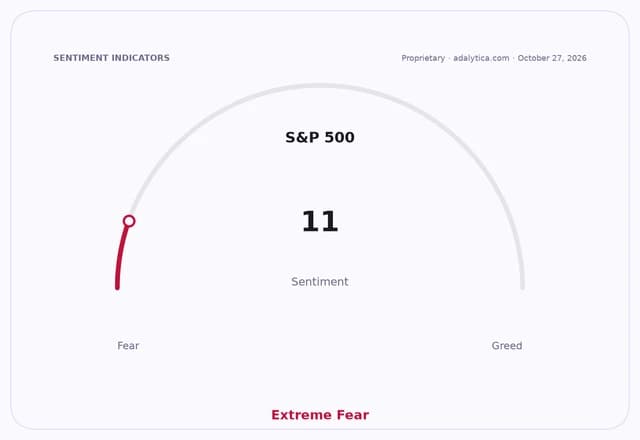
The price action is already hinting at fragility. QQQ is trading below its 50-day moving average and its relative strength index remains weak, while SOXX is still trying to stabilize after a sharp drawdown. Nvidia has also pulled back from its highs, even after a powerful run, suggesting the market is no longer willing to pay endlessly for AI optimism without visible monetization. In other words, technicals and fundamentals are starting to rhyme.
The geopolitical layer makes the setup even more interesting. Washington’s export controls have not stopped China from improving its models, and Beijing has every incentive to push domestic AI adoption and lower-cost deployment. That creates a split market: premium U.S. AI infrastructure names may still win on scale and performance, but the overall industry margin pool could shrink if Chinese alternatives keep improving and spreading. For investors, that is a warning to stop treating every AI name as a monopoly and start focusing on the picks-and-shovels that benefit from usage, not just model pricing.
My view is that this is the point where the market becomes selective. The easy money in AI may be over, but the next phase could be even more lucrative for investors who own the infrastructure and power names tied to real compute demand, rather than the most expensive model narratives. If AI revenue growth keeps flattening, the correction in tech could deepen before the durable winners separate from the crowd.
| Entity | Gains | Losses |
|---|---|---|
| Chinese AI developers | ▲Lower-cost adoption | ▼Premium pricing pressure |
| U.S. frontier labs | ▲Brand prestige | ▼Revenue growth momentum |
| Semiconductor suppliers | ▲Selective infrastructure demand | ▼Broad AI capex enthusiasm |
| AI investors | ▲Entry points in winners | ▼Overvalued model stocks |