Asian stocks closed mixed Monday as a better-than-expected 4.5% jump in China’s third-quarter growth did little to calm investors rattled by another swing in technology shares, underscoring how quickly the AI trade is moving from one-way enthusiasm to a more selective market.
Asian Stocks Mixed After China GDP Beats Expectations

The growth reading mattered because it showed the world’s second-largest economy is still expanding at a pace that can support regional earnings, trade and demand for chips, machinery and consumer goods. But it also came with a clear caveat for investors: stronger headline growth does not automatically translate into a broad market rally when the biggest engines of recent gains — technology and artificial intelligence — are under pressure.
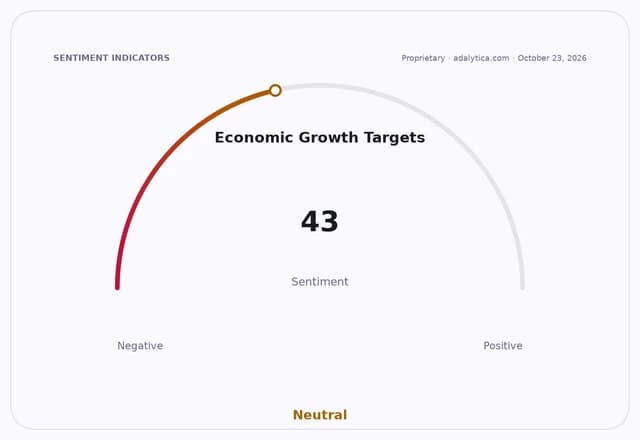
Sentiment IndicatorsⓘProprietary · adalytica.com · October 23, 2026
This is a snapshot — live sentiment, awareness and momentum for 130+ markets update continuously in the dashboard.Open AlphaPulse
That tension showed up across the region. Japan’s Nikkei slipped 0.62% to 64,916.70, dragged lower by SoftBank and Tokyo Electron after the Nasdaq tumbled 4.5% last week on renewed concerns about the scale of spending on AI infrastructure. South Korea’s Kospi rose 1.76% to 5,768.01, helped by Samsung Electronics and SK Hynix, though the benchmark is still more than 17% below the peak it reached in June at the height of global AI optimism.
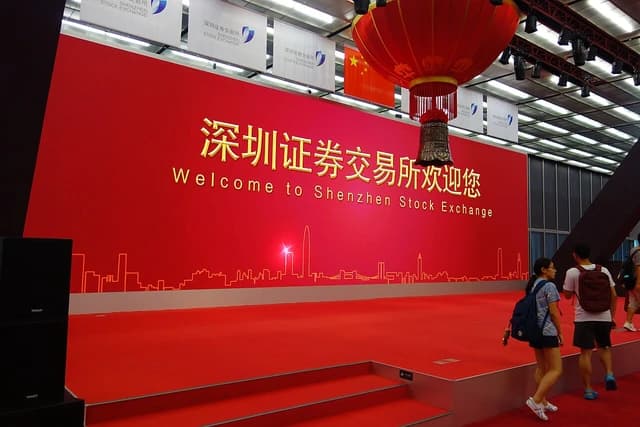
China’s mainland gauges edged higher, with the Shanghai Composite up 0.39% and the Shenzhen Composite adding 0.10%, while Taiwan’s Taiex fell 0.61%. Hong Kong was shut for a holiday, and Australia’s S&P/ASX 200 gained 0.44%.
For long-term investors, the bigger story is not a single day’s mixed close but the market’s increasing discrimination. The China growth print reduces the urgency for fresh stimulus in the near term, which may be enough to steady some cyclical names. Yet the recent drop in AI-related stocks suggests investors are starting to ask a tougher question: which companies can turn massive capital spending into durable earnings and free cash flow, and which are simply riding the theme?
That is why the pullback in names such as SoftBank, Tokyo Electron and TSMC deserves attention even after periods of strong gains. In the AI boom, volatility is likely to remain high, especially in the chip and equipment suppliers that sit closest to the cycle. By contrast, firms with real pricing power, strong balance sheets and visible demand may continue to reward patient shareholders even if the path is bumpy.
The message for investors is simple: China’s economy is still doing enough to support the region, but the market’s next leg higher will probably depend less on broad macro recovery and more on disciplined stock selection. In a market this crowded, that can be a feature, not a bug, for those willing to hold quality names for three to five years or longer.
| Entity | Gains | Losses |
|---|---|---|
| China economy | ▲Better growth credibility | ▼Stimulus urgency |
| Chipmakers and AI suppliers | ▲Long-term demand theme | ▼Short-term valuation support |
| Japan tech stocks | ▲None from Monday’s move | ▼Nasdaq-driven selling pressure |
| Patient long-term investors | ▲Better entry points | ▼Fast-money momentum traders |